
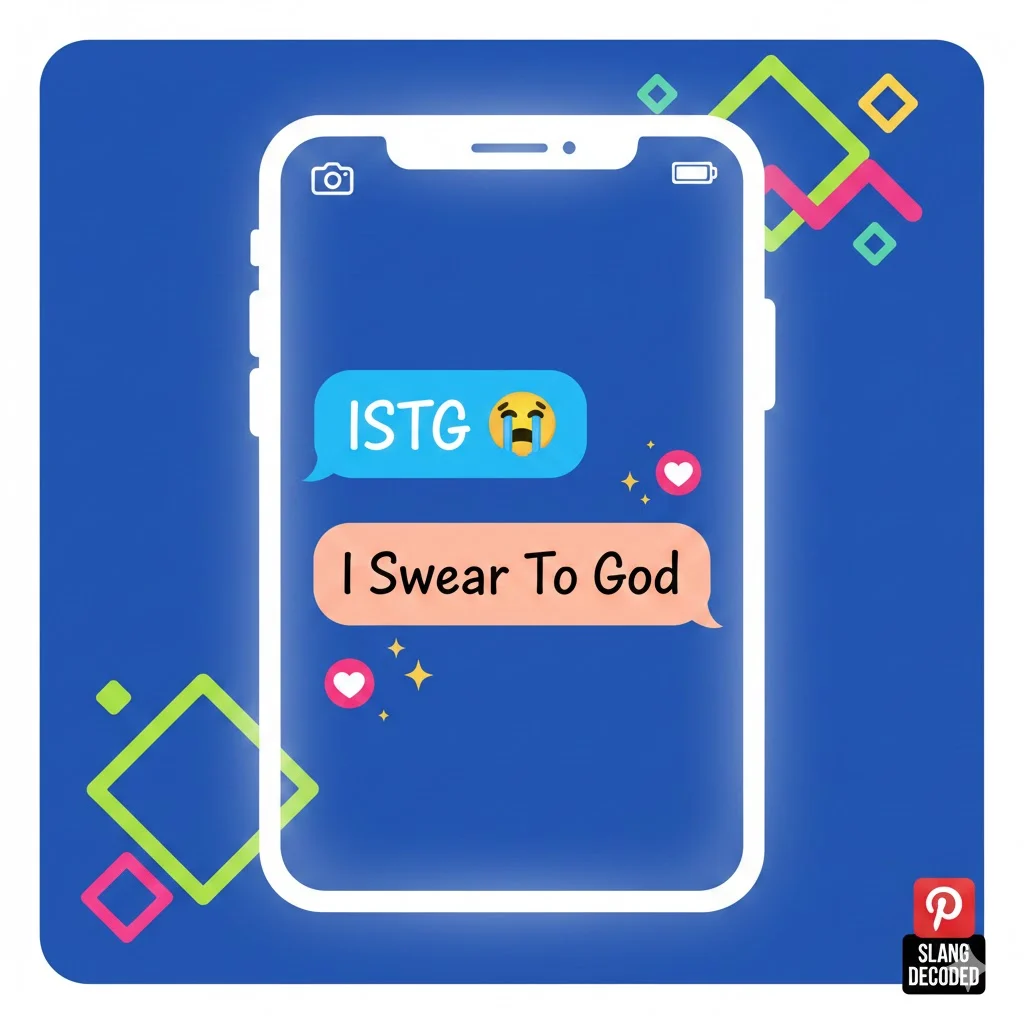

ISTG stands for “I Swear To God.” In texting and online conversations, it is used to emphasize honesty, frustration, seriousness, or strong emotion. Depending on context, it can sound sincere, dramatic, funny, or annoyed.
If you spend any time on social media, texting, or scrolling through comment sections, you have probably seen someone type “ISTG.” At first glance, it looks like random letters. However, in digital communication, abbreviations often carry strong emotional meaning.
So, what exactly does ISTG mean in text, and how should you interpret it?
In this complete guide, you will learn the meaning of ISTG, where it came from, how it is used in real conversations, tone variations, examples, comparisons with similar slang, polite alternatives, and frequently asked questions. By the end, you will understand when ISTG sounds serious and when it is simply playful exaggeration.
What Does ISTG Mean in Text?
In texting, ISTG means “I Swear To God.”
People use it to:
- Emphasize truth
- Express frustration
- Show strong emotion
- Add dramatic effect
- Make a serious point
Although it literally references swearing to God, in modern digital conversations it is often used casually rather than religiously.
Origin and Popularity of ISTG
Where Did ISTG Come From?
The full phrase “I swear to God” has been used in spoken English for generations to emphasize sincerity or seriousness. Over time, as texting and online chat became more common, longer phrases were shortened into abbreviations.
As a result, ISTG emerged as a quick and efficient way to express strong emotion in digital spaces.
Why ISTG Became Popular
Several factors contributed to ISTG becoming widely used:
- Text messaging encouraged shorter phrases
- Social media platforms favor quick reactions
- Online culture often uses exaggerated humor
- Younger generations prefer expressive slang
Today, ISTG is commonly seen on:
- TikTok
- Twitter X
- Snapchat
- Group chats
- Comment sections
How ISTG Is Used in Text Conversations
The meaning of ISTG depends heavily on tone and context. While the core meaning remains the same, the emotional delivery can change significantly.
1. To Emphasize Honesty
First, ISTG is often used to stress that someone is telling the truth.
Example:
ISTG I did not eat your fries
In this case, the speaker is strongly insisting on their honesty.
2. To Express Frustration
In addition, ISTG can signal irritation or warning.
Example:
ISTG if this wifi stops working again
Here, the sentence feels incomplete but clearly conveys frustration.
3. For Dramatic or Playful Exaggeration
Sometimes ISTG is not serious at all. Instead, it adds humor or drama.
Example:
ISTG that was the best pizza I have ever had
Although dramatic, the tone may be playful.
4. As a Warning Tone
In certain contexts, ISTG can sound intense or confrontational.
Example:
ISTG do not touch my phone
Depending on delivery, this may feel humorous or genuinely stern.
Tone Variations of ISTG
Understanding tone is crucial when interpreting ISTG.
Friendly Tone 😊
ISTG you are the funniest person ever
This sounds lighthearted and affectionate.
Neutral Emphasis
ISTG I finished the assignment
This version simply stresses truthfulness.
Frustrated Tone 😐
ISTG I am so tired of this
This conveys emotional exhaustion or annoyance.
Dramatic Humor 😭
ISTG if I fail this test I am moving to another country
This is exaggerated for comedic effect.
Example Table: ISTG in Context
| Text Message | Meaning | Tone |
|---|---|---|
| ISTG I did not see your message | I promise I did not see it | Defensive but sincere |
| ISTG this traffic is horrible | I am very frustrated | Annoyed |
| ISTG that show made me cry | I genuinely felt emotional | Emotional |
| ISTG if he cancels again | I will be very upset | Warning |
As shown above, context determines whether ISTG feels serious, playful, or dramatic.
ISTG vs Similar Texting Abbreviations
Since texting culture includes many emotional abbreviations, it helps to compare ISTG with related terms.
| Abbreviation | Meaning | Emotional Level |
|---|---|---|
| ISTG | I Swear To God | Strong emphasis |
| OMG | Oh My God | Surprise or shock |
| FR | For Real | Agreement or seriousness |
| NGL | Not Gonna Lie | Honest admission |
| TBH | To Be Honest | Sincere opinion |
While OMG expresses surprise, ISTG emphasizes sincerity or intensity. Meanwhile, FR simply confirms something is true, but with less emotional force.
When to Use ISTG
ISTG works best in casual conversations. For example:
- Group chats
- Texting friends
- Social media comments
- Informal online posts
However, it is usually inappropriate in professional settings.
Avoid using ISTG in:
- Work emails
- Academic writing
- Formal communication
- Professional messages
Instead, use full phrases or more neutral expressions.
Polite or Professional Alternatives to ISTG
If you want to express emphasis without slang, consider these alternatives:
Instead of ISTG I did not do that
Say: I assure you I did not do that
ISTG this is frustrating
Say: This is extremely frustrating
Instead of ISTG I am telling the truth
Say: I am being completely honest
These options maintain clarity while sounding more professional.
Common Misunderstandings About ISTG
Although ISTG includes a religious reference, many people use it casually without religious intent. Nevertheless, some individuals may find it inappropriate depending on cultural or personal beliefs.
Additionally, ISTG does not always mean anger. Sometimes it is simply playful exaggeration.
Finally, tone can be misread in text. Without facial expression or voice, ISTG might appear harsher than intended.
Alternate Meanings of ISTG
In modern texting culture, ISTG almost always means “I Swear To God.”
It does not commonly have alternate definitions. However, interpretation can vary based on tone and context.
Frequently Asked Questions
1. What does ISTG stand for in text?
ISTG stands for “I Swear To God.”
2. Is ISTG rude?
Not necessarily. However, it can sound intense depending on context.
3. Is ISTG religious?
Although it references God, most people use it casually rather than religiously.
4. Can ISTG be used jokingly?
Yes. It is often used for dramatic humor.
5. Is ISTG appropriate for work?
No. It is best kept for informal communication.
6. What is the difference between ISTG and OMG?
ISTG emphasizes sincerity, while OMG expresses surprise.
7. Why do people use ISTG?
People use it to show strong emotion or emphasize truth.
8. Does ISTG always mean someone is angry?
No. It can signal excitement, humor, frustration, or honesty.
Conclusion
So, what is the ISTG meaning in text?
Simply put, ISTG stands for “I Swear To God.” It is used to emphasize honesty, show frustration, add dramatic effect, or express strong emotion in digital conversations.
To summarize:
- ISTG signals emphasis and intensity
- Tone determines whether it sounds serious or playful
- It is common in texting and social media
- It should be avoided in professional communication
- Context is essential for accurate interpretation
Once you understand how ISTG works, you can confidently interpret it in messages and decide when it is appropriate to use it yourself.
Discover More Post
What Does PSA Mean in Text Talk? Definition and Examples …
7 Mean in Point Spread? Simple Betting Explanation for 2026


