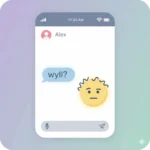


In text messaging, “…” means an ellipsis, a punctuation mark used to show a pause, hesitation, unfinished thought, or implied meaning. In digital conversations, it often signals emotional nuance such as uncertainty, suspense, awkwardness, or passive aggression.
If you have ever wondered what does … mean in text, you are not alone. Those three small dots, known as an ellipsis, can completely change the tone of a message. In modern texting, “…” rarely feels neutral. Instead, it often suggests something unspoken, emotionally layered, or intentionally left hanging. Because tone is harder to read in digital communication, understanding what an ellipsis means in text messages is essential to avoiding confusion.
In this guide, you will learn exactly what “…” means in texting, how context changes its interpretation, when it sounds friendly or awkward, and how it compares to other punctuation marks.
What Does … Mean in Text?
In texting and online communication, “…” represents a pause, hesitation, or something left unsaid.
Depending on the situation, it can suggest:
- A trailing or unfinished thought
- Emotional hesitation
- Suspense or anticipation
- Disappointment
- Passive aggression
- Sarcasm
- Awkwardness
- Thoughtfulness
Because meaning depends heavily on tone and context, the same ellipsis can feel completely different in different conversations.
What Is an Ellipsis?
The symbol “…” is formally called an ellipsis.
Traditionally, in writing, an ellipsis is used to:
- Show omitted words in a quotation
- Indicate a pause in dialogue
- Suggest that a sentence trails off
However, in messaging and social media, the ellipsis has taken on broader emotional meaning.
Why Does … Feel So Different in Text Messages?
In face to face conversations, people rely on tone of voice, facial expressions, and body language. In contrast, texting removes those cues. As a result, punctuation carries extra emotional weight.
Consider the difference:
Okay
Okay!
Okay…
Although the word stays the same, the emotional tone shifts dramatically. The version with “…” often feels hesitant, uncertain, or slightly uncomfortable.
Common Meanings of … in Texting
While context always matters, certain interpretations are especially common.
1. Hesitation or Uncertainty
Often, “…” signals doubt or reluctance.
Example:
I guess we can try that…
Here, the ellipsis suggests the person is unsure or not fully confident.
2. Suspense or Dramatic Effect
Ellipses are frequently used to build anticipation.
Example:
You will not believe what just happened…
In this case, it creates curiosity and excitement.
3. Disappointment or Emotional Softness
Sometimes, “…” communicates subtle hurt or sadness.
Example:
Oh… I see.
Compared to “Oh,” the ellipsis adds emotional weight.
4. Passive Aggressive Tone
In certain short replies, the ellipsis can feel dismissive.
Example:
Sure…
This may imply reluctance rather than agreement.
5. Leaving Something Unsaid
At times, the ellipsis hints at unspoken meaning.
Example:
If you really wanted to…
The sentence feels incomplete on purpose, inviting the reader to fill in the rest.
6. Casual Conversational Pause
Some people simply use “…” to mimic natural speech pauses.
Example:
So… what are you doing later?
In this situation, it feels conversational rather than negative.
Tone Comparison Table
| Message | Likely Tone |
|---|---|
| Okay | Neutral |
| Okay. | Final or firm |
| Okay! | Enthusiastic |
| Okay… | Hesitant or emotionally layered |
| Sure | Neutral |
| Sure… | Reluctant or doubtful |
As this table shows, punctuation alone can reshape interpretation.
Generational Differences in Interpreting …
Interestingly, age plays a role in how ellipses are perceived.
Younger texters often associate “…” with awkwardness, tension, or passive aggression.
Meanwhile, older texters sometimes use ellipses simply to indicate a pause, without negative intent.
Because of these generational differences, misunderstandings can happen easily.
When to Use … Carefully
Although ellipses add nuance, they can also create confusion.
It is best to avoid “…” when:
- Confirming plans
- Giving professional instructions
- Discussing serious matters
- Communicating in formal settings
For example:
I will send the report…
This may sound hesitant instead of confident.
Instead, a direct statement feels clearer.
When Ellipses Work Well
Despite potential misunderstandings, ellipses can enhance tone in certain situations.
They are especially effective when:
- Writing creative dialogue
- Building suspense
- Expressing vulnerability
- Telling a story
- Playfully teasing someone
Example:
Just wait until you see this…
Here, the ellipsis creates excitement rather than tension.
… Compared to Other Punctuation
Understanding punctuation differences can prevent mixed signals.
Ellipsis vs Period
Period:
That is fine.
Feels final or firm.
Ellipsis:
That is fine…
Feels hesitant or emotionally layered.
Ellipsis vs Exclamation Mark
Exclamation:
That is fine!
Sounds enthusiastic.
Ellipsis:
That is fine…
Sounds uncertain.
Ellipsis vs Question Mark
Question mark:
Really?
Direct question.
Ellipsis:
Really…
Implies skepticism or doubt.
Does … Always Mean Something Negative?
No. While it can sometimes feel passive aggressive, it often simply represents thinking or pacing.
For example:
I was just wondering…
This feels thoughtful rather than negative.
Nevertheless, because interpretation varies, clarity is often safer in important conversations.
Alternate Uses of … in Text
Beyond pauses and hesitation, “…” can also signal:
- Emotional processing
- Intentional ambiguity
- A dramatic pause in storytelling
- Reflective tone
Its meaning depends almost entirely on context rather than dictionary definition.
Clear Alternatives to Using …
If you want to avoid emotional ambiguity, you can replace ellipses with clearer language.
Instead of:
Maybe…
You could say:
I need more time to decide.
Instead of:
Fine…
You could say:
That works for me.
Instead of:
We should talk…
You could say:
Can we set aside time to discuss something important?
These alternatives reduce the risk of misunderstanding.
Frequently Asked Questions
1. What does … mean in texting?
It usually represents a pause, hesitation, or implied meaning.
2. Is … passive aggressive?
It can be, especially in short or emotionally charged responses.
3. Why do people use ellipses in text messages?
They use them to mimic speech pauses, add suspense, or convey emotion.
4. Is using … rude?
Not necessarily, but it can feel dismissive depending on context.
5. What does “Okay…” mean in a text?
It often signals uncertainty, disappointment, or reluctance.
6. Is it unprofessional to use … in emails?
In formal communication, ellipses may seem unclear or hesitant.
7. Do younger people interpret … differently?
Yes. Younger texters may view it as awkward or passive aggressive.
8. Should I avoid using … altogether?
No, but use it intentionally and be aware of tone.
Conclusion
So, what does … mean in text? At its core, it represents a pause or something left unsaid. However, in modern digital communication, those three small dots can signal hesitation, suspense, disappointment, sarcasm, or emotional depth.
Because tone is not visible in text, punctuation carries extra weight. Therefore, understanding how ellipses affect interpretation helps prevent misunderstandings.
Key takeaways:
- “…” is called an ellipsis
- It signals a pause or implied meaning
- Context determines whether it sounds positive, neutral, or negative
- It can feel hesitant, dramatic, or passive aggressive
- Professional settings often require clearer punctuation
Ultimately, ellipses are powerful tools. When used thoughtfully, they add nuance and personality. When used carelessly, they can create confusion. Choose them intentionally, and your messages will communicate exactly what you mean.
discover more post
What Does IR Mean in Football? Injured Reserve Explained …
What Does LFG Mean in Texting? Full Meaning and Examples …
What Does Slope Mean in Golf? Simple Explanation for …