
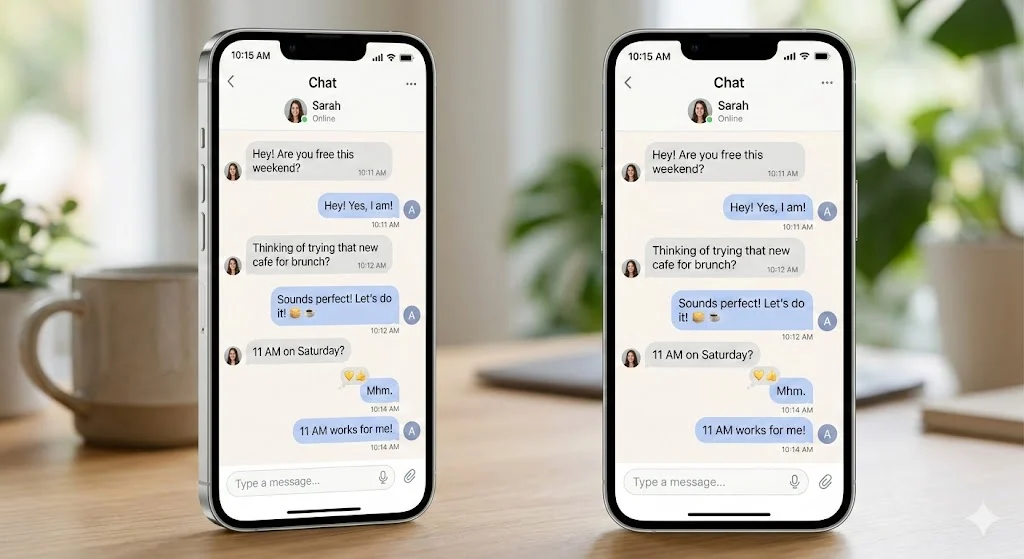

Mhm in text messaging means “yes,” “I agree,” or “I’m listening.” It is an informal way to show acknowledgment, confirmation, or mild agreement in casual conversations.
If you have ever received a simple “mhm” in a text message, you might have paused and wondered what the sender really meant. Was it enthusiastic agreement? Passive acknowledgment? Slight annoyance? Or just multitasking?
In digital communication, tone can be tricky. Short responses like mhm carry subtle emotional meaning depending on context, punctuation, and relationship dynamics. That is exactly why understanding mhm meaning in text is important.
In this complete guide, you will learn what mhm means, where it comes from, how it is used in real conversations, tone variations, comparisons with similar expressions, and when you might want to choose a clearer alternative.
What Does Mhm Mean in Text?
In texting, mhm is a written version of a humming sound people make in speech to signal agreement or acknowledgment.
Most commonly, mhm means:
- Yes
- I agree
- I hear you
- Go on
- I am listening
Unlike a strong “YES,” mhm is softer and more subtle. It often suggests agreement without excitement.
Where Does Mhm Come From?
Mhm originates from spoken language rather than written language.
In face to face conversations, people often make small vocal sounds such as:
- Mm
- Mhm
- Uh huh
These sounds are called backchannel responses, which help keep conversations flowing. They signal that the listener is engaged without interrupting.
When texting became popular, people began typing these sounds exactly as they are spoken. As a result, mhm entered digital conversations.
How Mhm Is Used in Text Conversations
Because tone is everything in texting, mhm can mean slightly different things depending on context.
Let us break down the most common uses.
1. Simple Agreement
In many cases, mhm simply means yes.
Example:
Person A: Are you coming later?
Person B: Mhm
Here, mhm functions as a relaxed confirmation.
2. Acknowledgment
Sometimes, mhm does not mean agreement. Instead, it signals that the person is listening.
Example:
Person A: So then she said she was moving next month.
Person B: Mhm
In this case, it means “I am following.”
3. Mild or Low Energy Response
At times, mhm can feel neutral or slightly unenthusiastic.
Example:
Person A: I think pineapple belongs on pizza.
Person B: Mhm
Depending on tone, this could mean agreement or polite indifference.
4. Slight Annoyance or Dismissiveness
Although less common, mhm can sound dismissive if the context suggests tension.
Example:
Person A: You forgot again.
Person B: Mhm
Here, it may indicate irritation or unwillingness to engage further.
Context matters greatly when interpreting mhm.
Tone Variations of Mhm
Even small differences in spelling or punctuation can change the meaning.
Mhm
Neutral agreement or acknowledgment
Mhm 🙂
Friendly and warm agreement
Mhm…
Hesitation or doubt
Mhm!
Enthusiastic agreement
Mhm okay
Polite but possibly disengaged
Because texting lacks vocal tone, punctuation becomes the emotional signal.
Mhm vs Similar Texting Expressions
Understanding mhm becomes easier when compared to similar responses.
Comparison Table
| Expression | Meaning | Tone Level | Enthusiasm |
|---|---|---|---|
| Mhm | Yes or acknowledgment | Soft | Low to medium |
| Mm | Listening sound | Very soft | Low |
| Uh huh | Agreement | Casual | Medium |
| Yeah | Yes | Neutral | Medium |
| Yep | Casual yes | Friendly | Medium |
| Okay | Confirmation | Neutral | Medium |
| Sure | Agreement | Polite | Medium |
In short, mhm is softer than “yeah” and less enthusiastic than “yep.”
When to Use Mhm in Text
Mhm works best in informal, relaxed conversations.
It is appropriate when:
- You are casually chatting
- You want to show you are listening
- You agree but do not want to overemphasize
- You are multitasking
However, mhm may not be ideal in professional settings.
When Not to Use Mhm
Although mhm is common, it can sometimes cause confusion.
Avoid using mhm when:
- A clear yes or no is required
- The conversation is serious or emotional
- You want to show strong enthusiasm
- You are in a formal or professional context
For example, replying “mhm” to a job interview email would appear unprofessional.
Examples of Mhm in Different Contexts
Here are practical examples with emotional tone explained.
Friendly Tone 😊
Friend: Movie tonight?
You: Mhm!
Meaning: Yes, sounds good.
Neutral Tone
Coworker: Meeting at 3 PM.
You: Mhm
Meaning: Acknowledged.
Low Energy Tone 😐
Partner: Are you even listening?
You: Mhm
Meaning: Possibly distracted or uninterested.
Supportive Listening
Friend: I have just been stressed lately.
You: Mhm, that sounds tough.
Meaning: I am listening and engaged.
Adding extra words improves clarity.
Psychological Aspect of Mhm
Interestingly, mhm often reflects conversational dynamics.
Because it is brief and low effort, it can signal:
- Comfort and familiarity
- Passive listening
- Emotional distance
- Calm agreement
In close relationships, mhm often feels natural and safe. In new relationships, however, it might feel distant or unclear.
Polite or Clearer Alternatives to Mhm
If you want to avoid misunderstandings, consider these alternatives.
Instead of mhm, you could say:
- Yes
- Yes, I agree
- That makes sense
- I hear you
- Absolutely
- Got it
- I understand
In professional communication, clarity always wins over brevity.
Common Misinterpretations of Mhm
Because texting removes voice tone, mhm can be misunderstood.
Some people interpret mhm as:
- Passive aggressive
- Bored
- Annoyed
- Not fully engaged
Others simply see it as casual acknowledgment.
Therefore, context and relationship history play a major role.
Frequently Asked Questions
1. What does mhm mean in text from a girl?
It usually means yes or acknowledgment. Tone depends on context, not gender.
2. Is mhm rude in texting?
Not inherently. However, it can feel dismissive if used during serious discussions.
3. Is mhm the same as yes?
It often means yes, but it is softer and less enthusiastic.
4. Why do people text mhm instead of yes?
It feels more conversational and mimics natural speech sounds.
5. Can mhm mean no?
Rarely. It almost always implies agreement or acknowledgment, not refusal.
6. Is mhm passive aggressive?
Only if the context suggests tension. By itself, it is neutral.
7. What is the difference between mhm and mm?
Mhm usually signals agreement. Mm often just signals listening.
8. Should I use mhm in professional texts?
It is better to use clearer words like yes or confirmed in professional settings.
Conclusion
So, what is the real mhm meaning in text?
At its core, mhm is an informal way to say “yes,” “I agree,” or “I am listening.” While it seems simple, its tone depends heavily on context, punctuation, and relationship dynamics.
To summarize:
- Mhm signals agreement or acknowledgment
- It mimics spoken conversational sounds
- It is casual and informal
- It can feel neutral, friendly, or mildly disengaged
- Clearer alternatives are better in professional settings
Understanding small expressions like mhm helps you navigate digital communication more confidently. After all, sometimes the smallest words carry the most subtle meaning.
Discover More Post
What Does Proximal Mean in Anatomy? Clear Definition and …
What Does Excluded Mean in PowerSchool – DefineHubs.com –