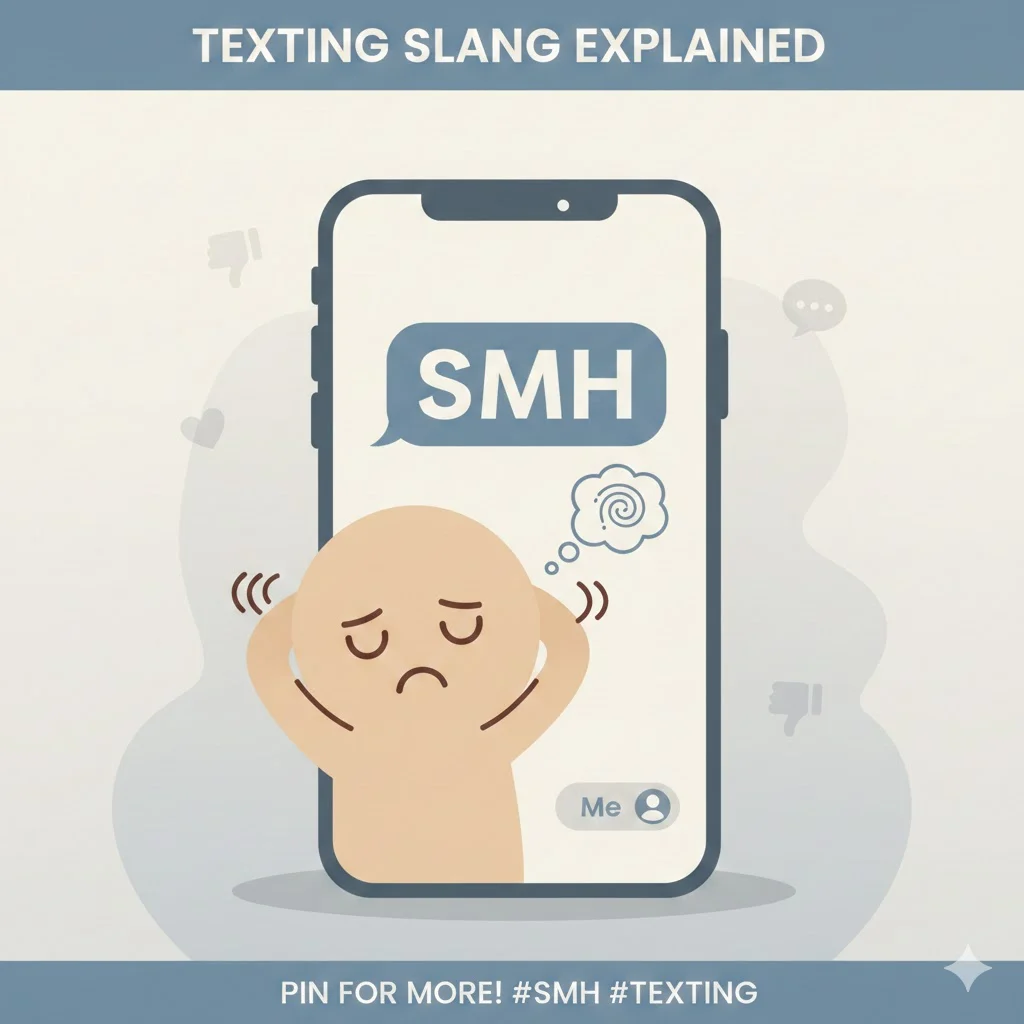

SMH in text means “shaking my head.” It is used in texting and online conversations to express disappointment, disbelief, frustration, or mild disapproval about something.
You have probably seen SMH pop up in messages, social media comments, or memes. Maybe someone replied with just “smh” after reading a story. Or perhaps you received it in response to something you said and wondered whether it was playful or serious.
Modern texting is full of abbreviations, and understanding them helps you read tone correctly. While SMH is short and simple, it carries emotional weight depending on context. Therefore, knowing when and how it is used can prevent confusion and awkward misunderstandings.
In this complete guide, you will learn what SMH means in text, where it came from, how people use it today, tone variations, polite alternatives, comparisons with similar slang, and answers to common questions.
What Does SMH Mean in Text?
In texting and online communication, SMH stands for “shaking my head.”
People use it to show:
- Disappointment
- Frustration
- Disbelief
- Mild judgment
- Embarrassment for someone else
Essentially, it represents the physical gesture of shaking your head when something seems ridiculous, disappointing, or hard to believe.
Origin and Popularity of SMH
Where Did SMH Come From?
SMH became popular in early internet chat rooms and forums. As texting grew and character limits mattered, short expressions like SMH made communication faster.
Eventually, the abbreviation spread across:
- SMS texting
- Instagram comments
- TikTok captions
- Reddit threads
- Online gaming chats
Because it is quick and expressive, SMH remains widely used today.
How SMH Is Used in Real Conversations
Although SMH looks simple, context changes its tone. Let us look at different ways it appears in text.
1. Expressing Disappointment
This is the most common use.
Example:
- You forgot my birthday again. SMH.
Here, the tone suggests frustration or sadness.
2. Reacting to Something Silly or Ridiculous
Sometimes SMH is used playfully.
Example:
- You tried to microwave metal? SMH 😂
In this case, it feels more humorous than angry.
3. Showing Mild Judgment
People also use SMH when they disagree or disapprove.
Example:
- He cheated on the test and bragged about it. SMH.
This suggests moral disappointment.
4. Responding to Shocking News
When something unbelievable happens, SMH can signal disbelief.
Example:
- They raised prices again? SMH.
Here, it shows frustration mixed with disbelief.
Tone Variations of SMH
The meaning of SMH changes depending on punctuation, emojis, and context.
Neutral Tone
SMH
Simple reaction, slightly critical.
Playful Tone 😊
SMH lol
SMH 😂
Feels teasing rather than harsh.
Strong Frustration 😐
SMH…
SMH seriously
This suggests deeper annoyance.
Because tone is not always obvious in text, context matters a lot.
Example Table: SMH in Different Situations
| Situation | Text Example | Tone |
|---|---|---|
| Friend did something silly | You wore socks with sandals? SMH 😂 | Playful |
| Disappointing behavior | He lied again. SMH. | Frustrated |
| Shocking news | They canceled the event last minute. SMH | Annoyed |
| Mild disagreement | You think that is healthy? SMH | Critical |
This table shows how the same abbreviation can shift tone easily.
When to Use SMH
SMH works best in casual conversations. For example, it fits naturally in texts between friends or informal online chats.
However, it is not appropriate for:
- Professional emails
- Formal communication
- Academic writing
- Job applications
In professional settings, clearer language is always better.
When Not to Use SMH
Although common, SMH can sound dismissive. Therefore, avoid using it when:
- You want to give constructive feedback
- The topic is serious or sensitive
- You do not want to appear judgmental
For example, replying “SMH” to someone sharing a personal struggle could seem cold or insensitive.
SMH vs Similar Texting Abbreviations
Because texting slang overlaps, it helps to compare SMH with similar terms.
Comparison Table
| Abbreviation | Meaning | Emotional Tone |
|---|---|---|
| SMH | Shaking my head | Disappointment or disbelief |
| OMG | Oh my God | Surprise or shock |
| LOL | Laughing out loud | Amusement |
| Facepalm | Gesture of frustration | Embarrassment |
| SMDH | Shaking my damn head | Stronger frustration |
SMH is usually milder than SMDH but stronger than a neutral reaction.
Does SMH Always Mean Something Negative?
Not always. While it often signals disapproval, it can also be playful.
For instance:
- You ate my fries again? SMH 😂
In this case, the emoji softens the tone.
Still, without context, SMH may seem critical. That is why many people add emojis to clarify intention.
Polite and Professional Alternatives to SMH
If you want to express disappointment more politely, try these alternatives instead.
Casual Alternatives
- Wow, that is surprising.
- I cannot believe that happened.
- That is disappointing.
Professional Alternatives
- That is concerning.
- I am disappointed to hear that.
- That seems problematic.
Using full sentences reduces misunderstanding.
Common Misunderstandings About SMH
Some people assume SMH always means anger. However, it often reflects mild frustration rather than rage.
Others think SMH is rude. In reality, tone determines whether it feels playful or harsh.
Additionally, some confuse SMH with sarcasm. Although it can be sarcastic, it does not automatically imply sarcasm.
Alternate Meanings of SMH
In texting and social media, SMH almost always means “shaking my head.”
Outside of texting, however, SMH can stand for other things, such as:
- Sydney Morning Herald, an Australian newspaper
- So Much Hate, in some online contexts
Nevertheless, in everyday digital communication, “shaking my head” is the dominant meaning.
Cultural and Generational Usage
Younger users tend to use SMH more frequently in casual conversation. Meanwhile, older generations may prefer full phrases instead of abbreviations.
Even so, SMH remains widely understood across age groups because of social media exposure.
Frequently Asked Questions
1. What does SMH stand for in texting?
SMH stands for “shaking my head.”
2. Is SMH rude?
Not necessarily. It can sound rude if used in a serious context, but it is often mild or playful.
3. Can SMH be positive?
Usually it expresses disappointment, but it can be teasing or humorous depending on tone.
4. What is the difference between SMH and SMDH?
SMDH adds emphasis and signals stronger frustration.
5. Is SMH appropriate in professional messages?
No. It is best reserved for casual communication.
6. Why do people use SMH instead of writing it out?
It saves time and fits texting culture.
7. Does SMH mean the same as facepalm?
They are similar, but facepalm suggests embarrassment while SMH suggests disappointment.
8. Should I use emojis with SMH?
Adding emojis can soften the tone and prevent misunderstandings.
Conclusion
So, what is the SMH meaning in text? Simply put, it stands for “shaking my head” and expresses disappointment, disbelief, or mild frustration.
To summarize:
- SMH is common in texting and social media
- It reflects emotional reaction through a gesture
- Tone depends heavily on context
- It is casual and not suitable for formal settings
- Emojis can soften its impact
Understanding SMH helps you interpret online conversations more accurately. Moreover, using it correctly ensures your tone matches your intention.
Discover More Post
What Does PSA Mean in Text Talk? Definition and Examples …
7 Mean in Point Spread? Simple Betting Explanation for 2026