
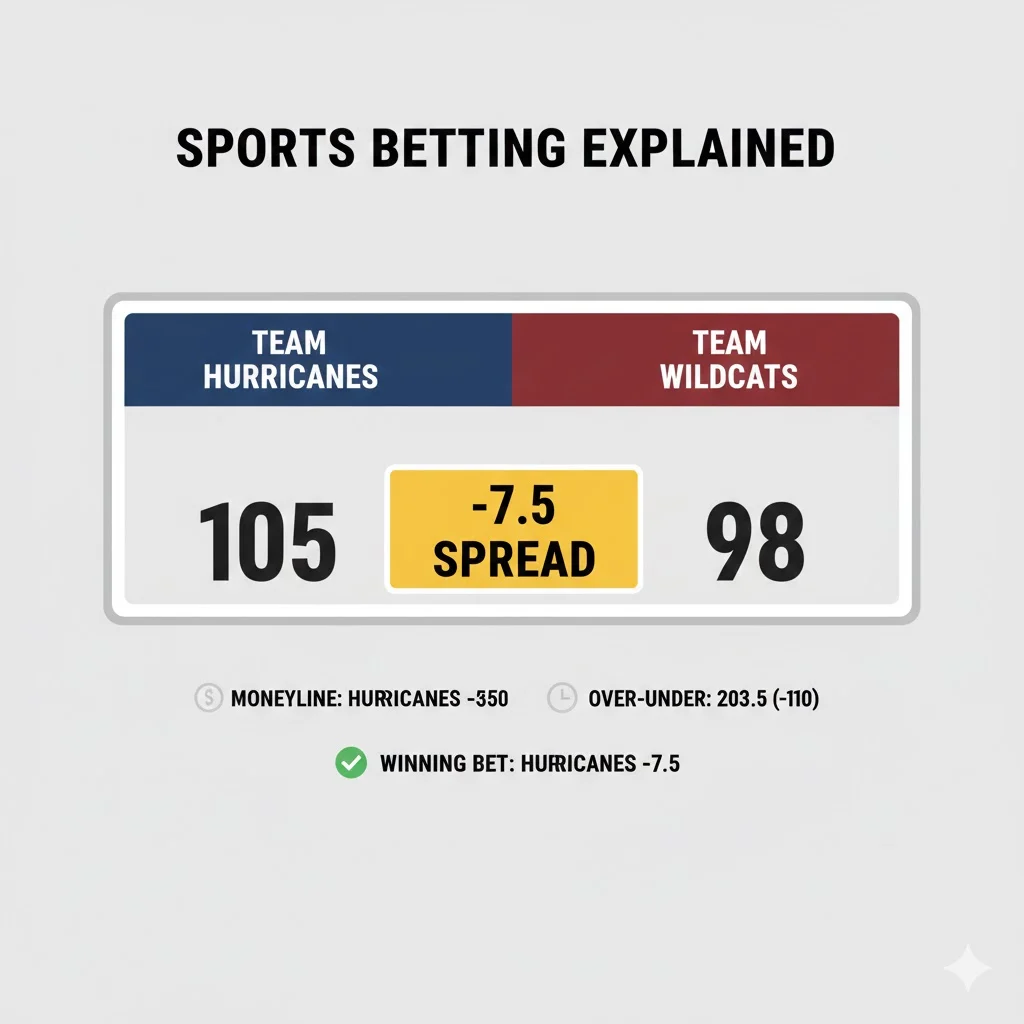

A spread in betting refers to a point handicap set by sportsbooks to level the playing field between two teams. Bettors wager on whether a team will win or lose by more or fewer points than the spread, rather than simply picking the outright winner.
Sports betting can feel confusing at first, especially when you start seeing unfamiliar terms like spreads, lines, and odds. One of the most important concepts to understand is the spread. It appears in nearly every major sport and is central to how many bets are priced.
If you have ever wondered what does a spread mean in betting, this guide will walk you through it step by step. You will learn what a spread is, why it exists, how to read it, how to bet on it, and how it differs from other common betting options. By the end, you will understand spreads well enough to place bets with confidence.
What Does a Spread Mean in Betting?
In betting, a spread is a number set by bookmakers that represents the expected margin of victory between two teams.
Instead of betting on who will win outright, you are betting on whether a team will cover the spread.
The favorite must win by more than the spread.
The underdog can either lose by fewer points than the spread or win the game outright.
This system makes betting more balanced and competitive.
Why Sportsbooks Use Point Spreads
Sportsbooks use spreads to even out mismatches between strong and weak teams.
If betting only involved picking winners, most people would always choose the favorite. To prevent this, sportsbooks introduce a spread that gives the underdog a virtual head start.
As a result, spreads:
- Balance betting action on both sides
- Make games more interesting to bet on
- Reflect expected performance differences
- Reduce risk for sportsbooks
In short, spreads create fairer betting opportunities.
How a Betting Spread Works
To understand spreads clearly, it helps to look at a simple example.
Example Matchup
Team A vs Team B
Team A is the stronger team.
The sportsbook sets the spread as:
Team A minus 6.5
Team B plus 6.5
This means:
- Team A must win by 7 or more points to cover the spread
- Team B can lose by 6 points or fewer or win outright
The half point avoids ties, which simplifies settlement.
Spread Betting Example Table
| Team | Spread | Outcome Needed to Win Bet |
|---|---|---|
| Team A | minus 6.5 | Must win by 7 or more |
| Team B | plus 6.5 | Can lose by 6 or less or win |
This structure applies across most point spread bets.
What Does It Mean to Cover the Spread?
One of the most common phrases you will hear in betting is covering the spread.
A team covers the spread when the final score lands on the winning side of the spread for that team.
For example:
- If Team A wins by 10 points and the spread is minus 6.5, Team A covers
- If Team A wins by 3 points, Team B covers
Covering the spread is different from simply winning the game.
Favorite vs Underdog in Spread Betting
Understanding favorites and underdogs is essential when learning spreads.
The Favorite
The favorite is the team expected to win.
It is marked with a minus sign.
Example:
Team A minus 6.5
This team must win by more than the spread.
The Underdog
The underdog is the team expected to lose.
It is marked with a plus sign.
Example:
Team B plus 6.5
This team benefits from the spread and has more margin for error.
Common Sports That Use Point Spreads
Spreads are most common in sports with higher scoring.
These include:
- American football
- Basketball
- College football
- College basketball
Although spreads exist in other sports, they are less common where scoring is low.
Spread vs Moneyline Betting
To fully understand spreads, it helps to compare them with moneyline bets.
Comparison Table
| Bet Type | What You Bet On | Risk Level | Typical Payout |
|---|---|---|---|
| Spread | Margin of victory | Medium | Balanced |
| Moneyline | Straight winner | Low to High | Varies |
With spreads, odds are often similar for both teams. With moneylines, favorites pay less while underdogs pay more.
Spread vs Totals Betting
Another common comparison is between spreads and totals.
Totals betting involves predicting the combined score of both teams rather than who wins.
Spreads focus on performance margin. Totals focus on scoring volume.
Both offer different strategic opportunities.
Pushes and Whole Number Spreads
Sometimes spreads include whole numbers instead of decimals.
Example:
Team A minus 7
Team B plus 7
If Team A wins by exactly 7 points, the bet is a push.
A push means:
- No winner
- Your stake is refunded
Because of this, sportsbooks often use half points to avoid pushes.
Real World Spread Examples
Here are a few realistic examples to show how spreads play out.
Football Example
Team A minus 3.5
Team B plus 3.5
Final score:
Team A 24
Team B 21
Team A wins by 3 points.
Team B covers the spread.
Basketball Example
Team C minus 10.5
Team D plus 10.5
Final score:
Team C 112
Team D 98
Team C wins by 14 points.
Team C covers the spread.
Emotional Tone of Spread Betting Language
Spread betting language is usually neutral and analytical.
However, tone can change depending on context.
Neutral:
They covered the spread easily.
Excited:
That late touchdown helped them cover.
Frustrated:
They won but did not cover.
These expressions are common among bettors and commentators.
Common Mistakes Beginners Make With Spreads
Many new bettors misunderstand spreads at first.
Common mistakes include:
- Thinking the favorite only needs to win
- Ignoring half points
- Forgetting about pushes
- Confusing spread odds with moneylines
By slowing down and reading the line carefully, these mistakes are easy to avoid.
Polite and Professional Ways to Explain a Spread
In professional or educational settings, spreads are often explained more formally.
Examples:
- The spread represents the expected scoring margin.
- The favorite must exceed the point spread to win the wager.
- The underdog benefits from the assigned handicap.
These explanations are commonly used in articles, broadcasts, and training materials.
FAQs
1. What does a spread mean in betting?
A spread is a point handicap that determines whether a team covers based on the margin of victory.
2. Is betting the spread risky?
It carries moderate risk and requires understanding the matchup rather than just picking a winner.
3. Why do sportsbooks use half point spreads?
Half points reduce the chance of ties and pushes.
4. Can an underdog win the game and the spread?
Yes. Winning outright automatically covers the spread.
5. What happens if the score matches the spread?
If the spread is a whole number, the bet becomes a push and the stake is returned.
6. Are spreads the same in every sport?
The concept is the same, but the numbers vary depending on scoring patterns.
7. Is spread betting better than moneyline betting?
Neither is better overall. Each suits different strategies and risk levels.
8. Do professional bettors use spreads?
Yes. Many experienced bettors focus heavily on spread betting.
Conclusion
So, what does a spread mean in betting? It represents the expected margin between two teams and allows bettors to wager on performance rather than just the winner.
To recap:
- Spreads balance uneven matchups
- Favorites must win by more than the spread
- Underdogs gain a scoring advantage
- Covering the spread determines the winning bet
- Spreads are common in football and basketball
Once you understand spreads, sports betting becomes clearer and more strategic. Instead of simply asking who will win, you start asking by how much.
Discover More Post
What Does Fornication Mean in the Bible? Biblical Meaning …
What Does PIM Mean in Hockey? Simple Explanation for New …
What Does IB Mean in School – Complete Guide for Students …