
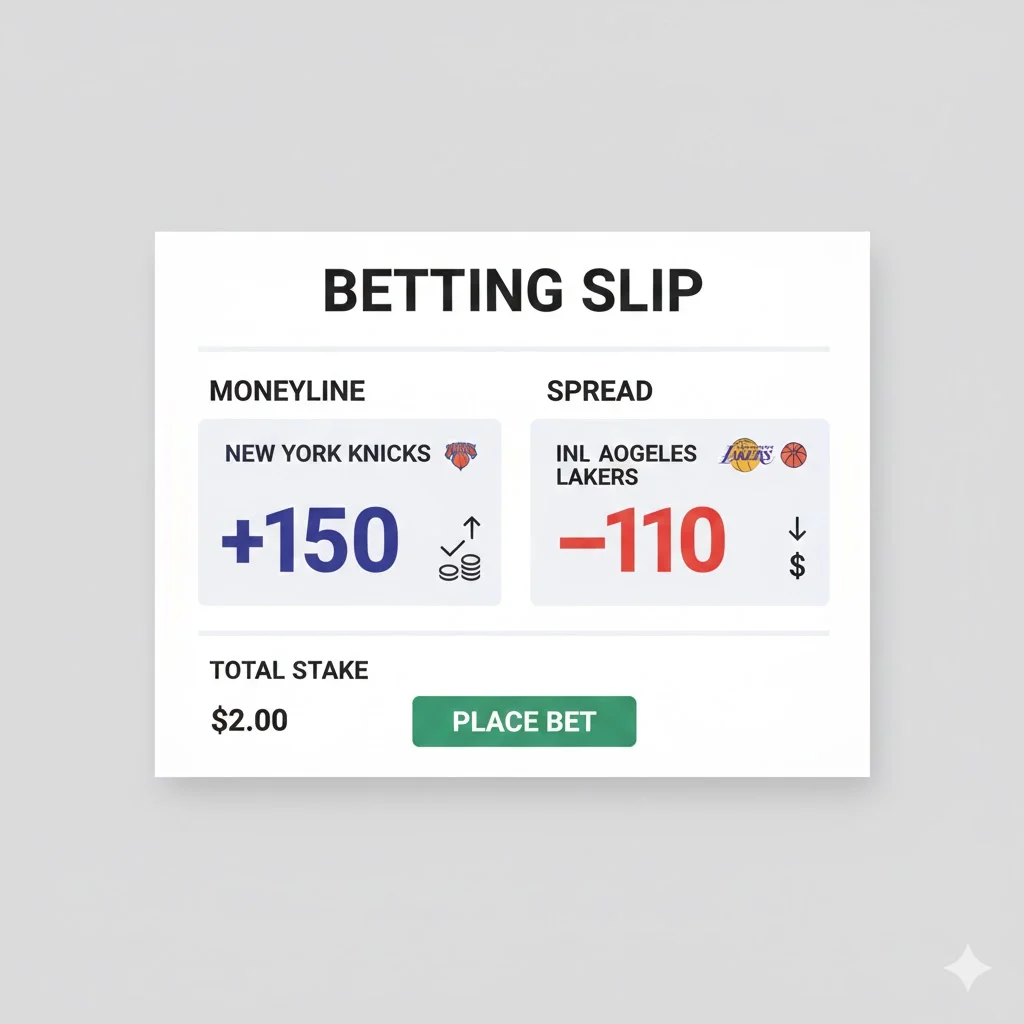

In betting, the plus sign + and minus sign − show who is favored and how much you can win or need to risk. A minus sign means the team or player is the favorite and you must risk more to win less. A plus sign means the underdog and shows how much you win if you risk a standard amount.
If you are new to sports betting, few things are as confusing at first glance as the plus and minus numbers next to teams. You might see something like −150 or +200 and wonder what those symbols actually mean for your money.
Fortunately, once you understand the logic behind + and − in betting, everything becomes much clearer. These symbols are not random. Instead, they communicate risk, reward, and probability in a simple numerical format.
In this guide, you will learn exactly what + and − mean in betting, how to read them correctly, how payouts work, and how bettors use them to make smarter decisions.
What Do + and − Mean in Betting?
In betting, the minus sign − indicates the favorite, while the plus sign + indicates the underdog.
More importantly, these symbols tell you how much you must bet to win a certain amount or how much you can win from a set bet.
Here is the basic idea:
- Minus odds − show how much money you need to risk to win 100
- Plus odds + show how much money you win if you bet 100
As a result, the symbols instantly reveal both confidence level and potential payout.
Why Betting Uses Plus and Minus Signs
Sportsbooks use plus and minus signs to reflect implied probability.
The favorite is expected to win, so the payout is smaller. That is why favorites carry a minus sign.
On the other hand, the underdog is less likely to win. Because of that risk, the sportsbook offers a higher payout, shown with a plus sign.
In short:
- Lower risk equals lower reward
- Higher risk equals higher reward
This system helps balance betting action on both sides.
Understanding Minus Odds in Betting
When you see a minus sign, the team or player is favored.
What Minus Odds Mean
Minus odds show how much you must risk to win 100.
For example:
- −150 means you must bet 150 to win 100
- −200 means you must bet 200 to win 100
Although you can bet any amount, the ratio always stays the same.
Example of Minus Odds
Let us say a football team is listed at −120.
This means:
- You must bet 120 to win 100
- If you bet 60, you win 50
- If the team loses, you lose your stake
Because the payout is smaller, minus odds reflect a higher chance of winning.
Understanding Plus Odds in Betting
Plus odds work in the opposite direction.
What Plus Odds Mean
Plus odds show how much you win if you bet 100.
For example:
- +150 means a 100 bet wins 150
- +300 means a 100 bet wins 300
Here, the potential reward is larger because the outcome is less likely.
Example of Plus Odds
Imagine a basketball team listed at +250.
This means:
- A 100 bet wins 250
- A 20 bet wins 50
- If the team loses, you lose your bet
Because underdogs are riskier, sportsbooks compensate with higher payouts.
Side by Side Comparison of Plus and Minus Odds
| Odds Type | Symbol | What It Means | Risk Level | Payout |
|---|---|---|---|---|
| Favorite | − | Amount you must bet to win 100 | Lower | Smaller |
| Underdog | + | Amount you win from a 100 bet | Higher | Larger |
This comparison shows why understanding the symbols is essential before placing any bet.
How Much Do You Win With + and − Odds?
To truly understand betting odds, it helps to see real payout examples.
Minus Odds Payout Example
Odds: −110
Bet: 110
Result:
- Win: You profit 100
- Loss: You lose 110
This is common in point spread and totals betting.
Plus Odds Payout Example
Odds: +180
Bet: 100
Result:
- Win: You profit 180
- Loss: You lose 100
The reward is higher, but so is the risk.
Why Sportsbooks Adjust Plus and Minus Odds
Odds are not static. They change based on several factors.
These include:
- Betting volume
- Injuries or lineup changes
- Weather conditions
- Public perception
For example, if many bettors place money on one side, the sportsbook may adjust the plus or minus number to encourage balance.
Therefore, odds movement is an important signal for experienced bettors.
Common Betting Markets That Use + and −
Plus and minus signs appear in several betting markets.
Moneyline Bets
This is where plus and minus signs are most common.
Example:
- Team A −140
- Team B +120
You are betting simply on who wins.
Point Spread Bets
Although spreads include numbers like −3.5, the odds themselves often use −110.
This indicates:
- You must bet 110 to win 100
Totals or Over Under Bets
Totals also frequently use minus odds such as −110.
In this case, the plus or minus refers to payout, not points.
Common Misunderstandings About + and − in Betting
Many beginners assume plus odds are always better. That is not true.
While plus odds offer higher payouts, they also carry lower chances of winning.
Similarly, minus odds feel safer, but over time, betting heavy favorites can reduce profitability.
Smart bettors evaluate value, not just the symbol.
Are Plus or Minus Odds Better?
Neither is automatically better.
Instead, the better choice depends on:
- Your risk tolerance
- Your analysis of the matchup
- Whether the odds reflect true probability
For example, a small underdog with +120 might offer better value than a heavy favorite at −250.
Polite and Professional Betting Terms Related to + and −
Instead of casually saying plus or minus, bettors and analysts often use more formal language.
Examples:
- Favorite and underdog
- Positive odds and negative odds
- Laying the juice for minus odds
- Taking the plus money for underdogs
These terms are common in professional betting discussions.
Frequently Asked Questions
1. What does the plus sign mean in betting?
The plus sign means the underdog and shows how much you win if you bet 100.
2. What does the minus sign mean in betting?
The minus sign means the favorite and shows how much you must bet to win 100.
3. Are minus odds safer than plus odds?
They usually have a higher probability of winning, but they are not guaranteed.
4. Can I bet less than 100 with plus odds?
Yes. The payout scales proportionally based on your bet size.
5. Why is −110 so common?
It includes the sportsbook’s commission and is standard for many markets.
6. Do plus odds mean a team is bad?
No. They simply indicate the team is less likely to win compared to the opponent.
7. Can odds change from plus to minus?
Yes. Odds can shift based on betting action or new information.
8. Which odds are better for beginners?
Beginners often prefer minus odds, although learning to spot value is more important than the symbol itself.
Conclusion
So, what does + and − mean in betting? These symbols tell you who is favored, who is the underdog, and how payouts work.
To recap:
- Minus odds show how much you must risk to win 100
- Plus odds show how much you win from a 100 bet
- Favorites carry lower payouts and higher probability
- Underdogs carry higher payouts and higher risk
Once you understand these symbols, betting lines become far less intimidating. With practice, reading plus and minus odds will feel as natural as reading a scoreline.
Discover More Post
What Does a Spread Mean in Betting? Simple Explanation …
What Does Delta H Mean in Chemistry? Simple Explanation …