
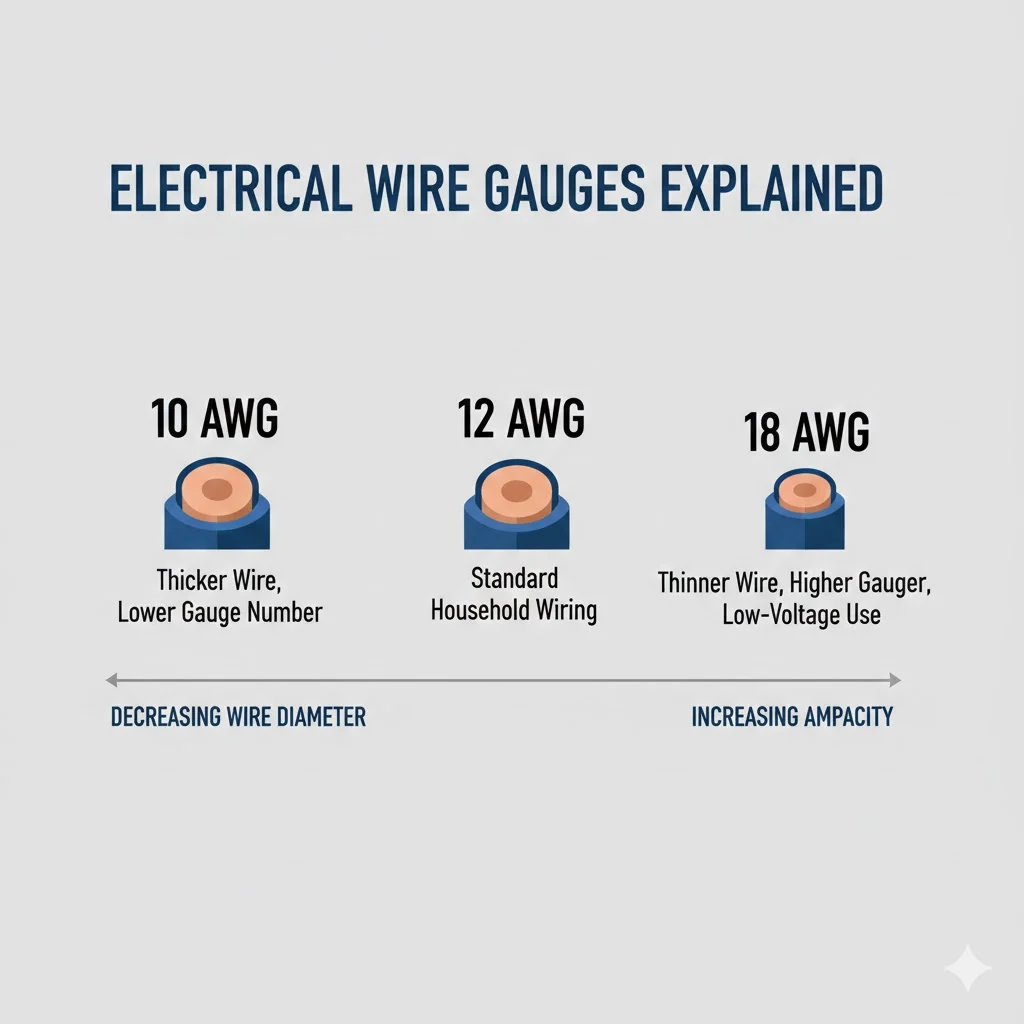

AWG in wire stands for American Wire Gauge. It is a standardized system used to measure the diameter and thickness of electrical wires, where a smaller AWG number means a thicker wire and a larger AWG number means a thinner wire.
If you have ever looked at electrical wire packaging, appliance manuals, or DIY wiring guides, you have likely seen numbers like 12 AWG, 14 AWG, or 18 AWG. At first, these numbers can feel confusing, especially if you are new to electrical work or electronics. However, once you understand what AWG means in wire, choosing the right wire becomes much easier and safer.
In this guide, you will learn exactly what AWG means in wire, how the system works, why it matters, and how it is used in real world applications. By the end, you will be able to read wire labels with confidence and make better decisions for electrical and electronic projects.
What Does AWG Mean in Wire?
In wiring and electrical contexts, AWG means American Wire Gauge.
It is a numerical system that defines the diameter, thickness, and current carrying capacity of a wire. The AWG system is mainly used in the United States and several other countries for electrical and electronic wiring.
Most importantly, the lower the AWG number, the thicker the wire. On the other hand, higher AWG numbers indicate thinner wires.
The Purpose of the AWG System
Before standardized gauges existed, wire sizes varied widely. As a result, this caused confusion, inefficiency, and safety issues. The AWG system was developed to create consistency and reliability.
Because of this system, manufacturers, electricians, and engineers can all communicate wire size clearly without confusion.
The AWG system helps determine:
- How much current a wire can safely carry
- How much resistance the wire has
- Which wire is suitable for specific applications
- Whether a wire meets electrical safety codes
How the AWG Numbering System Works
At first glance, the AWG numbering system may seem backward. However, it follows a precise mathematical pattern.
Key Rule to Remember
- Smaller AWG number equals thicker wire
- Larger AWG number equals thinner wire
For example:
- 10 AWG is thicker than 14 AWG
- 18 AWG is thinner than 12 AWG
This happens because AWG is based on how many times a wire is drawn through dies during manufacturing. More draws result in thinner wire and a higher gauge number.
Common AWG Wire Sizes and Their Uses
To better understand AWG, it helps to see how different sizes are used in real applications.
Common AWG Sizes Table
| AWG Size | Wire Thickness | Typical Uses |
|---|---|---|
| 4 AWG | Very thick | Large appliances, sub panels |
| 6 AWG | Thick | Electric ranges, feeders |
| 8 AWG | Thick | Air conditioners, ovens |
| 10 AWG | Medium thick | Water heaters, dryers |
| 12 AWG | Medium | Household outlets, circuits |
| 14 AWG | Medium thin | Lighting circuits |
| 18 AWG | Thin | Low voltage wiring, speakers |
| 22 AWG | Very thin | Electronics, signal wiring |
As you can see, thicker wires are used for high power applications, while thinner wires are reserved for low power or signal use.
Why AWG Matters in Electrical Wiring
Understanding AWG is not just about numbers. It directly affects safety, performance, and efficiency.
Electrical Safety
If a wire is too thin for the current flowing through it, it can overheat. Over time, this overheating may damage insulation or even cause a fire. Therefore, choosing the correct AWG size is critical.
Electrical Performance
Thicker wires have less resistance. Because of that, they allow electricity to flow more efficiently, especially over longer distances.
Code Compliance
Electrical codes often specify minimum AWG sizes for different circuits. Following AWG guidelines ensures installations meet safety standards.
AWG and Current Capacity
One of the most important aspects of AWG is how it relates to current capacity, also known as ampacity.
In general:
- Lower AWG wires can carry more current
- Higher AWG wires can carry less current
For example:
- 12 AWG wire is commonly rated for 20 amps
- 14 AWG wire is commonly rated for 15 amps
- 10 AWG wire is commonly rated for 30 amps
Using the wrong AWG size for a given current can lead to overheating and equipment damage.
AWG in Household Wiring
In residential electrical systems, AWG sizes are standardized for safety.
Typically:
- 14 AWG is used for lighting circuits
- 12 AWG is used for outlets and general purpose circuits
- 10 AWG is used for large appliances
Because these standards are well established, electricians rely heavily on AWG ratings when planning installations.
AWG in Electronics and Low Voltage Systems
While household wiring uses thicker gauges, electronics require much thinner wires.
In electronics:
- 18 AWG to 22 AWG is common
- Smaller wires are easier to route
- Current requirements are much lower
As a result, AWG helps engineers balance flexibility, size, and electrical performance.
AWG vs Wire Diameter
Although AWG is related to diameter, it is not measured directly in millimeters or inches.
Instead, each AWG number corresponds to a specific diameter. For example:
- 12 AWG has a diameter of about 2.05 millimeters
- 18 AWG has a diameter of about 1.02 millimeters
This standardization allows precise engineering and consistent manufacturing.
AWG Compared to Metric Wire Sizes
Outside the United States, many countries use metric wire sizing based on square millimeters.
Here is how they compare conceptually:
- AWG uses gauge numbers
- Metric systems use cross sectional area
- Both systems aim to define wire capacity and safety
Although the systems differ, conversion charts are commonly used in international projects.
Common Misconceptions About AWG
There are several misunderstandings about AWG that can cause mistakes.
Bigger Number Means Bigger Wire
This is false. In AWG, a smaller number means a bigger wire.
One Wire Size Fits All
Different applications require different AWG sizes. Using the same gauge everywhere is unsafe and inefficient.
AWG Only Matters for Power
AWG also matters for signal quality, voltage drop, and heat dissipation, even in low voltage systems.
Alternate Meanings of AWG
In technical and industrial contexts, AWG almost always means American Wire Gauge.
In rare cases, AWG may appear as an abbreviation in unrelated fields. However, in wiring, electronics, and electrical discussions, its meaning is consistent and clear.
Polite and Professional Usage of AWG
AWG is commonly used in professional documentation, product specifications, and technical conversations.
Examples:
- This device requires 12 AWG copper wire
- Use 18 AWG wire for signal connections
- The circuit is rated for 14 AWG conductors
Using AWG correctly demonstrates technical understanding and professionalism.
Frequently Asked Questions
1. What does AWG stand for in wire?
AWG stands for American Wire Gauge.
2. Is a lower AWG number better?
Not always. Lower AWG means thicker wire, which is better for high current applications but unnecessary for low power uses.
3. What AWG is best for home wiring?
Most homes use 12 AWG for outlets and 14 AWG for lighting, depending on the circuit.
4. Why does AWG numbering seem backward?
The numbering comes from the wire drawing process used during manufacturing.
5. Can I use a thicker wire than required?
Yes. Using a thicker wire is generally safe, although it may cost more and be harder to work with.
6. What happens if I use the wrong AWG size?
Using a wire that is too thin can cause overheating, voltage drop, or fire hazards.
7. Is AWG used worldwide?
AWG is mainly used in the United States, while many other countries use metric sizing.
8. Does AWG apply to stranded and solid wire?
Yes. AWG applies to both stranded and solid wire based on total conductor size.
Conclusion
So, what does AWG mean in wire? It stands for American Wire Gauge, a standardized system that defines wire thickness, current capacity, and safe usage.
To summarize:
- AWG tells you how thick a wire is
- Lower numbers mean thicker wires
- Thicker wires carry more current safely
- AWG is essential for safety and performance
- It is used in homes, electronics, and industry
Once you understand AWG, reading wire labels and choosing the correct wire becomes straightforward and stress free