
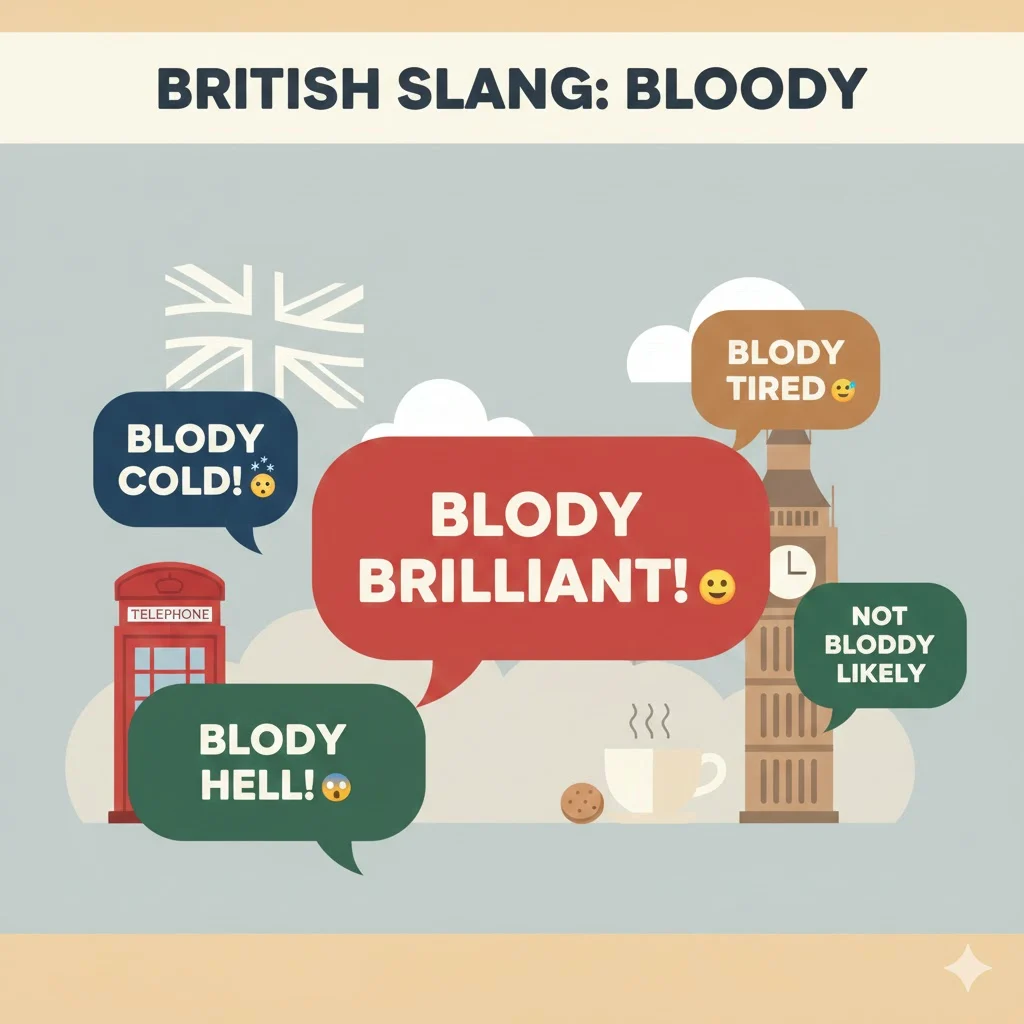

Bloody in England is a common British word used mainly as an intensifier to add emphasis to a statement. Depending on context and tone, it can sound mildly rude, humorous, frustrated, or completely casual, and it does not usually refer to actual blood.
If you have watched a British TV show, spoken with someone from the UK, or read online comments from British users, you have almost certainly heard the word bloody. For many learners of English, this word can be confusing. Sometimes it sounds angry. Other times it seems funny or even friendly.
So what does bloody really mean in England?
The answer depends heavily on context, tone, and situation. In this article, we will explore the meaning of bloody in British English, where it comes from, how it is used in real life, when it is acceptable, and when it might be better avoided. By the end, you will understand why this small word plays such a big role in everyday British speech.
What Does Bloody Mean in England?
In England, bloody is most often used as an emphatic adjective or adverb. It adds emotional force to what someone is saying.
In simple terms, bloody means “very” or “extremely,” often expressing annoyance, surprise, emphasis, or strong feeling.
For example:
- It is bloody cold today
It is very cold today - That was a bloody good movie
That was an extremely good movie
Although it once carried stronger offense, today it is generally considered mild swearing in British English.
The Origin of Bloody in British English
Understanding where the word comes from helps explain why it feels different from other swear words.
Historical Background
The exact origin of bloody is debated, but there are two common theories.
One theory links it to religious language, possibly referencing “God’s blood,” which made it offensive in earlier centuries.
Another theory connects it to violence or literal blood, which also made it shocking in polite society.
Because of these associations, bloody was considered very rude in England during the 18th and 19th centuries.
How the Meaning Changed Over Time
Over time, social attitudes shifted.
By the mid 20th century, bloody lost much of its shock value. As stronger swear words became more common, bloody moved into a softer category.
Today, most people in England see bloody as:
- Mild
- Informal
- Emotionally expressive
- Rarely offensive to adults
However, context still matters.
How Bloody Is Used in Everyday British Speech
Bloody appears in many everyday situations. It is flexible and expressive, which is why British speakers use it so often.
1. Bloody as an Intensifier
Most commonly, bloody strengthens an adjective or noun.
Examples:
- It is bloody freezing outside
- This is a bloody mess
- That exam was bloody difficult
In these cases, bloody works like “very,” but with emotional flavor.
2. Expressing Annoyance or Frustration
Bloody is often used when something is irritating.
Examples:
- I lost my bloody keys
- This bloody computer keeps crashing
Here, the word signals frustration rather than aggression.
3. Expressing Surprise or Emphasis
Interestingly, bloody can also appear in positive or surprised reactions.
Examples:
- That was bloody amazing
- You did a bloody great job
Tone makes all the difference here.
4. As Part of Fixed British Expressions
Some phrases are strongly associated with British English.
Examples:
- Bloody hell
- Bloody brilliant
- Bloody typical
These expressions are extremely common and widely understood.
Tone Matters: How Bloody Can Sound
The meaning of bloody changes depending on how it is said.
Casual or Friendly Tone 😊
- Bloody lovely weather today
- That meal was bloody good
This sounds relaxed and conversational.
Neutral or Emphatic Tone
- It is bloody expensive
- The traffic is bloody awful
This adds emphasis without strong emotion.
Angry or Frustrated Tone 😐
- Turn that bloody noise off
- I am sick of this bloody delay
Here, bloody carries irritation but not extreme anger.
Is Bloody Considered a Swear Word in England?
Yes, but it is considered very mild.
In modern England:
- Adults use it freely
- It is common in TV shows and movies
- It may be avoided around young children or in formal settings
It is far less offensive than stronger swear words and is often described as soft swearing.
Bloody in British English vs American English
This word behaves very differently depending on the country.
In England
- Common
- Mild
- Used daily
- Emotionally expressive
In the United States
- Rare
- Sounds foreign or dramatic
- Often associated with British accents
- Sometimes misunderstood
An American hearing “bloody cold” may find it unusual rather than rude.
Comparison Table: Bloody and Similar Words
| Word | Meaning | Strength Level | Common in England |
|---|---|---|---|
| Bloody | Very extremely | Mild | Yes |
| Very | Emphasis | Neutral | Yes |
| Damn | Emphasis frustration | Mild to medium | Yes |
| Extremely | Strong emphasis | Neutral | Yes |
| Really | Emphasis | Neutral | Yes |
Bloody stands out because it adds emotion rather than just intensity.
Common Examples of Bloody in Context
Here are labeled examples showing how bloody works in real speech.
Example Table
| Sentence | Meaning | Tone |
|---|---|---|
| It is bloody raining again | It is raining again and I am annoyed | Frustrated |
| That was bloody brilliant | That was extremely good | Positive |
| This is a bloody nightmare | This is very stressful | Negative |
| Bloody hell that scared me | I was very surprised | Shocked |
When You Should Avoid Using Bloody
Although it is mild, there are situations where bloody may not be appropriate.
Avoid using it:
- In formal writing
- In professional emails
- When speaking to children
- In very polite or ceremonial settings
In these cases, neutral alternatives are safer.
Polite and Professional Alternatives to Bloody
If you want the same meaning without informality, consider these options.
Instead of:
- Bloody expensive
Use:
- Very expensive
- Quite expensive
- Extremely expensive
Instead of:
- Bloody annoying
Use:
- Very frustrating
- Quite irritating
These alternatives maintain clarity without casual tone.
Alternate Meanings of Bloody
While the focus here is British slang, bloody can also have its literal meaning.
Literal meaning:
- Covered in blood
- Related to blood
Example:
- His shirt was bloody after the accident
Context usually makes the meaning clear.
Frequently Asked Questions
1. What does bloody mean in England?
In England, bloody is a mild swear word used to add emphasis, similar to “very.”
2. Is bloody rude in the UK?
It is mildly rude but widely accepted in casual conversation.
3. Do British people use bloody a lot?
Yes. It is very common in everyday speech.
4. Can bloody be positive?
Yes. It can express excitement or praise.
5. bloody stronger than damn?
Generally, bloody is considered slightly milder in England.
6. Can foreigners use bloody?
Yes, but it should be used carefully and in informal settings.
7. Is bloody used in formal British English?
No. It is avoided in formal writing and speech.
8. Why do Americans find bloody unusual?
Because it is rarely used in American English and is strongly associated with British speech.
Conclusion
So, what does bloody mean in England? It is a versatile British word used mainly to add emphasis and emotion. While it once carried strong offense, it is now considered mild and casual in most situations.
To recap:
- Bloody is an intensifier, similar to “very”
- It expresses frustration, surprise, or enthusiasm
- It is common in British English
- Tone and context determine how it sounds
- It should be avoided in formal settings
Understanding bloody gives you deeper insight into British culture and communication. When used carefully, it helps you sound more natural and better understand everyday English in England.
Discover More Post
What Does Neutral Mean in a Car? Meaning, Use, and Safety …
What Does Run Line Mean in Baseball? Complete Guide with …
What Does On Account Mean in Accounting? Clear Definition …