
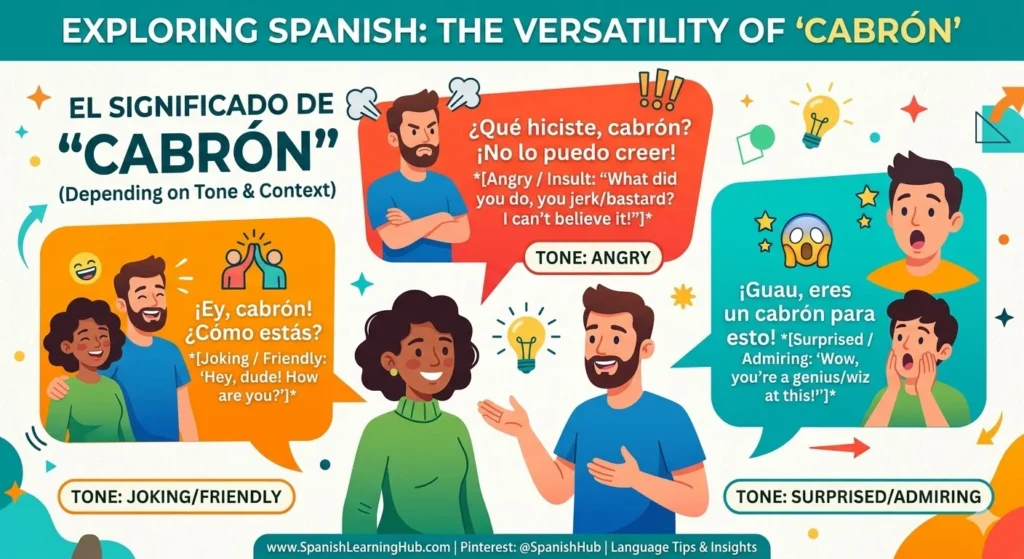

Cabron is a Spanish word that can mean “jerk,” “idiot,” “tough guy,” or “cunning person,” depending on context and tone. In some situations it can be insulting, while in others it can be used jokingly among friends. The meaning varies by country and the relationship between speakers.
Spanish is a rich language filled with words that change meaning depending on tone, region, and social context. One of the most misunderstood words for Spanish learners is cabron. While it often appears in movies, music, and casual conversations, its meaning is not always straightforward.
For someone learning Spanish, hearing cabron might be confusing because the same word can sound playful in one situation and offensive in another. Understanding how this word works requires looking at culture, tone, and context.
In this guide, you will learn exactly what cabron means in Spanish, where it comes from, how people use it in real conversations, and when you should avoid using it.
What Does Cabron Mean in Spanish?
The word cabron has several meanings in Spanish. Most commonly, it can refer to someone who is:
- Annoying or rude
- Tough or aggressive
- Clever or cunning
- A jerk or unpleasant person
However, the exact meaning changes depending on tone, region, and context.
For example:
Cabron can be an insult when used angrily.
It can also be friendly teasing among close friends.
Because of this flexibility, understanding the tone is essential.
The Literal Meaning of Cabron
Originally, cabron comes from the Spanish word cabra, which means goat.
Historically, the term referred to a male goat with horns. Over time, the word developed figurative meanings in everyday speech.
In traditional Spanish usage, cabron could also refer to a man whose partner was unfaithful. However, this meaning is less common in modern casual speech.
As language evolved, the word became widely used as slang across Spanish speaking cultures.
Why Cabron Has So Many Meanings
Unlike many direct translations, Spanish slang often depends on context.
Several factors influence how cabron is interpreted:
- Tone of voice
- Facial expressions
- Relationship between speakers
- Country or region
- Situation or emotional intensity
Because of this, the same word can sound friendly, sarcastic, or offensive.
Common Uses of Cabron in Everyday Spanish
Below are some of the most typical ways this word appears in conversation.
1. As an Insult
In many situations, cabron is used to insult someone.
Examples:
Eres un cabron
You are a jerk
Ese cabron me engañó
That jerk cheated me
When spoken angrily, the word clearly carries a negative meaning.
2. Friendly Teasing Among Friends
Interestingly, the same word can be playful when used between close friends.
Examples:
Que cabron eres
You are such a rascal
Eres un cabron pero te quiero
You are a troublemaker but I like you
In these cases, the tone is joking rather than hostile.
3. Describing Someone Tough or Bold
In some contexts, cabron can describe someone who is strong, bold, or fearless.
Example:
Ese tipo es un cabron
That guy is tough
Here the word may express admiration rather than criticism.
4. Expressing Surprise or Frustration
Sometimes the word appears in emotional reactions.
Examples:
Ese cabron ganó otra vez
That guy won again
El cabron tuvo suerte
The guy got lucky
In these situations, the tone can be frustration or disbelief.
Examples of Cabron in Different Tones
Because tone changes the meaning, here are examples with context.
Friendly Tone 😊
Eres un cabron pero siempre haces reír a todos
You are a rascal but you always make everyone laugh
In this case, the speaker is joking.
Neutral Observation
Ese cabron siempre gana en el juego
That guy always wins the game
The word adds emphasis rather than hostility.
Angry or Insulting Tone 😠
Ese cabron me mintió
That jerk lied to me
Here the meaning is clearly negative.
Cabron vs Cabrona
Spanish adjectives change based on gender. The same happens with this word.
| Form | Meaning |
|---|---|
| Cabron | Masculine form |
| Cabrona | Feminine form |
Examples:
Ese hombre es un cabron
That man is a jerk
Esa mujer es una cabrona
That woman is mean or ruthless
In many regions, the feminine version can sound even stronger depending on context.
Cabron vs Similar Spanish Slang Words
Many Spanish slang terms have similar meanings. Understanding these differences helps avoid confusion.
| Word | General Meaning | Tone |
|---|---|---|
| Cabron | Jerk or cunning person | Context dependent |
| Idiota | Idiot | Direct insult |
| Tonto | Fool or silly person | Mild insult |
| Loco | Crazy | Casual or humorous |
| Amigo | Friend | Positive |
Compared with other insults, cabron is more flexible because it can also be used jokingly.
Regional Differences in Meaning
The meaning of cabron can vary significantly depending on the Spanish speaking country.
Mexico
In Mexico, the word is extremely common in casual speech. It can mean friend, jerk, or clever person depending on tone.
Example:
Ese cabron es muy inteligente
That guy is very smart
Spain
In Spain, cabron is usually stronger and more clearly insulting.
Example:
Ese cabron me robó
That jerk robbed me
Caribbean and Latin America
In some Caribbean regions, the word can be considered vulgar, especially in formal situations.
Because of these variations, it is important to be cautious when using it.
When You Should Avoid Using Cabron
Although native speakers use the word frequently in informal settings, learners should be careful.
Avoid using it in the following situations:
- Professional conversations
- Formal environments
- Conversations with strangers
- Talking with elders or authority figures
Instead, it is better to use neutral language unless you fully understand the social context.
Polite Alternatives to Cabron
If you want to express frustration or criticism without sounding offensive, there are safer options.
Examples:
Persona desagradable
Unpleasant person
Maleducado
Rude person
Complicado
Difficult person
These alternatives sound more appropriate in professional or respectful conversations.
Frequently Asked Questions
1. What does cabron literally mean in Spanish?
Originally, the word referred to a male goat, but today it is mainly used as slang.
2. Is cabron always an insult?
No. Depending on tone and context, it can be friendly teasing or admiration.
3. Is cabron a bad word?
It can be considered vulgar in some situations, especially in formal settings.
4. Can cabron mean friend?
In some regions, especially Mexico, it can be used jokingly among friends.
5. What is the female version of cabron?
The feminine form is cabrona.
6. Is cabron used in Spanish movies and music?
Yes. The word appears frequently in films, music, and informal dialogue.
7. Should Spanish learners use cabron?
It is safer to understand the word rather than use it until you are familiar with cultural context.
8. Why does cabron have different meanings?
Like many slang terms, its meaning changes depending on tone, culture, and relationship between speakers.
Conclusion
So, what does cabron mean in Spanish? The word has several meanings that depend heavily on context. It can refer to a jerk, a clever person, a troublemaker, or even a friend in a joking tone.
Key points to remember:
Cabron originally referred to a male goat
Today it functions mainly as slang
It can be insulting, playful, or admiring depending on tone
Its meaning changes across Spanish speaking regions
It should generally be avoided in formal settings
Understanding words like cabron helps learners grasp the cultural richness of Spanish and communicate more naturally.
Discover More Post
SYBAU Meaning in Text Definition, Usage, and Examples for …
EYP Meaning in Text What It Stands For and How to Use It for …
SMH Meaning in Text: Examples, and How to Use It in 2026