
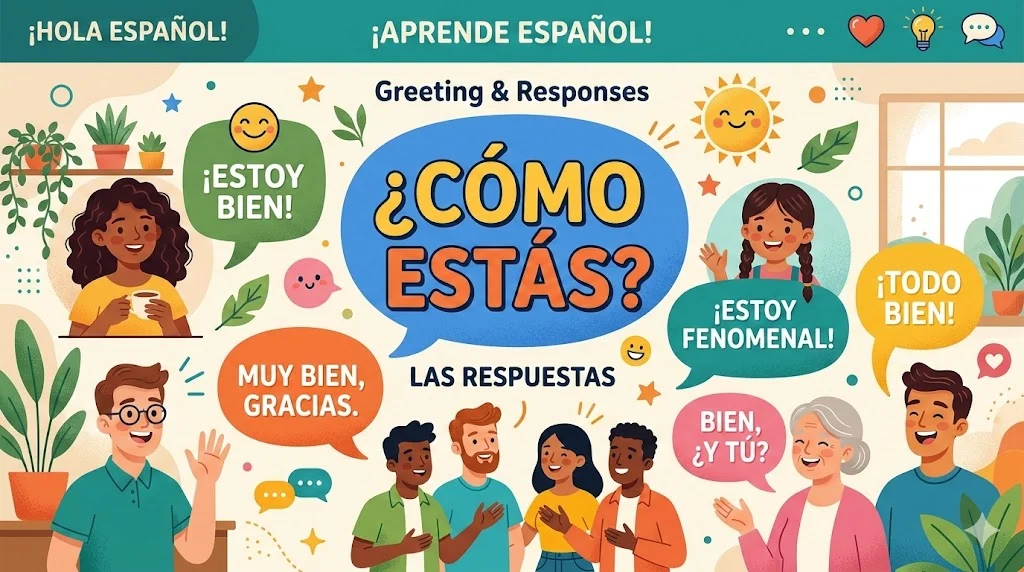

“¿Cómo estás?” is a Spanish phrase that means “How are you?” It is an informal greeting used to ask someone about their current well being or feelings. The phrase is directed toward one person in a casual setting.
If you have heard someone say como estas in a song, movie, classroom, or conversation, you might have guessed it means something friendly. You would be right. It is one of the most common Spanish greetings and one of the first phrases students learn.
However, there is more to this phrase than a simple translation. Tone, formality, grammar, and context all matter. In this complete guide, you will learn exactly what como estas means in Spanish, how to pronounce it, when to use it, how to respond, and how it compares to similar Spanish greetings.
What Does Como Estas Mean in Spanish?
¿Cómo estás? means “How are you?” in English.
It is used to ask someone how they are feeling or doing at the moment. Because it uses the informal “you” form, it is typically said to friends, family members, classmates, or peers.
The correct spelling includes accent marks:
¿Cómo estás?
Without the accents, the meaning can technically change in written Spanish. However, in casual texting, many people omit them.
Breaking Down the Phrase
To fully understand the meaning, let us look at each word.
| Spanish Word | Meaning | Function |
|---|---|---|
| Cómo | How | Question word |
| Estás | You are | Verb form of estar |
Cómo
“Cómo” means “how.” The accent mark is important because it shows that it is a question word.
Estás
“Estás” comes from the verb estar, which means “to be.” In this case, it is conjugated for “tú,” the informal singular form of “you.”
Together, the phrase literally means:
“How are you?”
Why Estar Is Used Instead of Ser
Spanish has two verbs that mean “to be”:
- Ser
- Estar
In greetings like ¿Cómo estás?, Spanish uses estar because the question refers to a temporary state or condition. Feelings and moods can change, so estar is the correct choice.
For example:
Estás feliz
You are happy
Estás cansado
You are tired
Both describe temporary states.
When to Use ¿Cómo Estás?
This phrase is used in informal situations. It works best when speaking to:
- Friends
- Family members
- Classmates
- Coworkers in casual environments
- People your age
For example, you might say:
“Hola, ¿cómo estás?”
Hi, how are you?
It is warm, friendly, and common in daily conversation.
Formal Version: ¿Cómo Está?
If you are speaking to someone older, in a professional setting, or someone you do not know well, you should use the formal version:
¿Cómo está?
This version uses “usted” instead of “tú.”
For example:
Buenos días, ¿cómo está?
Good morning, how are you?
This sounds more respectful and appropriate in formal situations.
Informal vs Formal Comparison Table
| Phrase | Meaning | Level of Formality | Used With |
|---|---|---|---|
| ¿Cómo estás? | How are you | Informal | Friends, peers |
| ¿Cómo está? | How are you | Formal | Strangers, elders |
| ¿Cómo están? | How are you all | Plural | Groups |
Common Responses to ¿Cómo Estás?
Knowing how to respond is just as important as knowing how to ask.
Here are some common replies.
Positive Responses 😊
Estoy bien
I am good
Muy bien gracias
Very good thanks
Todo bien
Everything is good
Neutral Responses
Más o menos
So so
Ahí voy
I am getting by
Negative Responses 😐
Estoy cansado
I am tired
No muy bien
Not very good
Regular
Not great
In most casual interactions, people respond briefly and politely.
Tone and Context in Real Conversations
Although the phrase itself is simple, tone can change the feeling behind it.
Friendly and Warm
“¡Hola! ¿Cómo estás?”
Sounds cheerful and welcoming.
Genuine Concern
“¿Cómo estás? Te noté preocupado.”
How are you? I noticed you seemed worried.
Quick Greeting
“Hola, ¿cómo estás?”
Sometimes this is more of a polite greeting than a deep question.
Just like in English, many people ask “How are you?” without expecting a detailed answer.
How to Pronounce ¿Cómo Estás?
Phonetic pronunciation:
KOH moh es TAHS
Stress falls on:
- The first syllable of “cómo”
- The second syllable of “estás”
Proper pronunciation helps you sound natural and confident.
Common Mistakes with Como Estas
Learners often make small but important mistakes.
Forgetting Accent Marks
Correct:
¿Cómo estás?
Without accents, written Spanish is technically incorrect. While texting may ignore them, formal writing should include them.
Mixing Up Formal and Informal Forms
Saying “¿Cómo estás?” to a boss or person may sound too casual. In professional environments, use “¿Cómo está?”
Confusing with “Como”
Without an accent, “como” can mean:
- I eat
- Like
- As
For example:
Como pizza
I eat pizza
This is completely different from “cómo,” which means “how.”
Similar Spanish Greetings
Spanish has several ways to ask how someone is doing.
Here are some alternatives.
¿Qué tal?
Means “How is it going?”
Very common and casual.
¿Cómo te va?
Means “How is it going for you?”
Slightly more conversational.
¿Qué pasa?
Means “What is happening?”
More informal.
Each variation carries slightly different tone and context.
Cultural Context of ¿Cómo Estás?
In many Spanish speaking cultures, greetings are important. People often greet others before starting a conversation or asking for something.
For example, it would be polite to say:
“Buenos días, ¿cómo está?”
Before asking a question in a store or office.
Skipping greetings can sometimes sound abrupt.
Alternate Meanings
The phrase itself does not have alternate meanings. However, tone can change its intention.
In rare cases, it may be used sarcastically depending on voice and facial expression. For example:
“¿Cómo estás?”
If said with raised eyebrows after something embarrassing happens, it may imply surprise or concern.
Still, its primary meaning remains “How are you?”
Frequently Asked Questions
1. What does como estas mean literally?
Literally, it means “How are you?” when speaking informally to one person.
2. Is como estas formal or informal?
It is informal. The formal version is “¿Cómo está?”
3. Why does it use estar instead of ser?
Because it refers to temporary states such as feelings or well being.
4. Can I use it with strangers?
It is better to use the formal version with strangers unless the setting is very casual.
5. How do you respond to como estas?
Common responses include “Estoy bien,” “Muy bien,” or “Más o menos.”
6. Is it okay to drop the accent marks?
In casual texting, people sometimes omit them. However, correct spelling includes accents.
7. What is the plural form?
The plural version is “¿Cómo están?” when speaking to multiple people.
8. Is it used in all Spanish speaking countries?
Yes. It is widely understood and used across Spanish speaking regions.
Conclusion
So, what does como estas mean in Spanish? It means “How are you?” when speaking informally to one person. It is one of the most common and essential Spanish greetings.
Key points to remember:
It uses the verb estar
It refers to temporary states or feelings
It is informal
The formal version is ¿Cómo está?
Accent marks matter in proper writing
Learning this phrase not only improves your vocabulary but also helps you connect naturally with Spanish speakers. With correct pronunciation and context, you will sound confident and culturally aware in everyday conversations.
Discover More Post
What Does Proximal Mean in Anatomy? Clear Definition and …
What Does Opa Mean in Greek? Meaning, Origin, and Usage …