
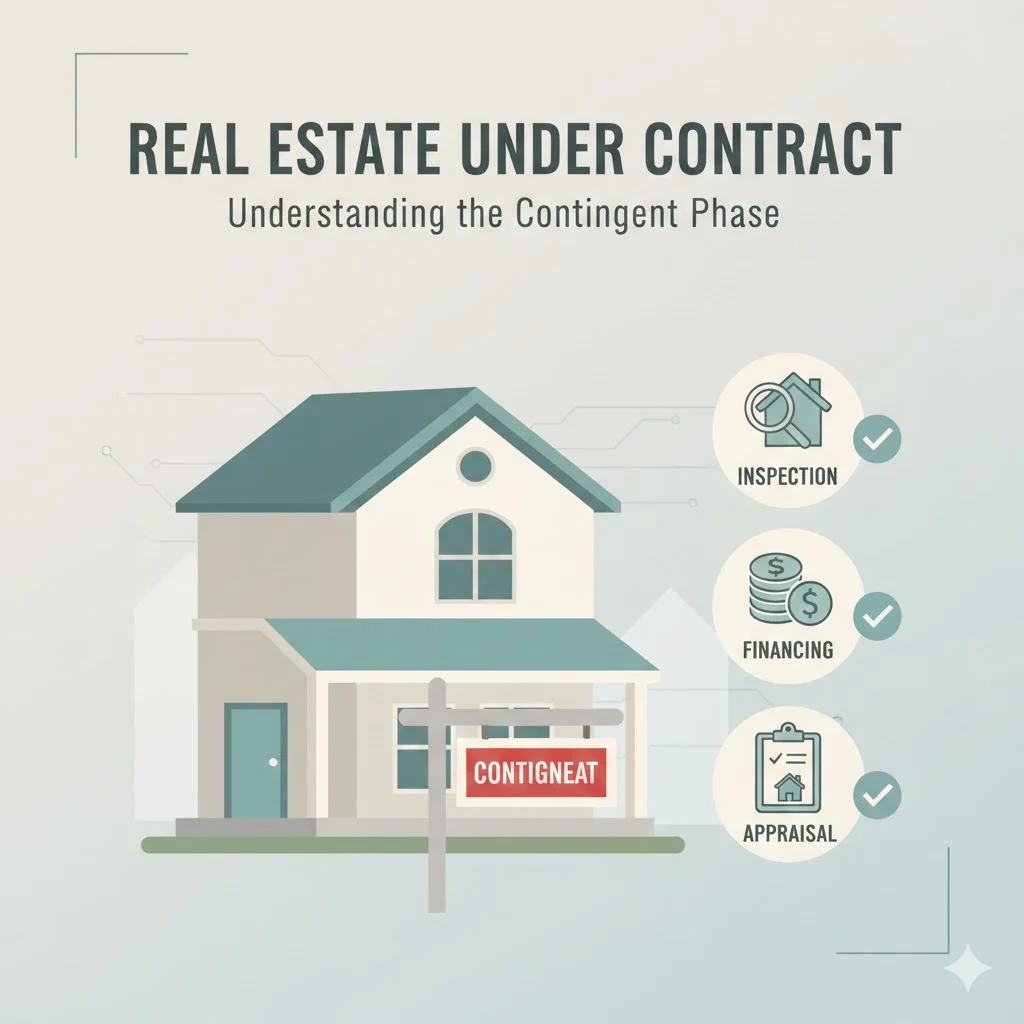

In real estate, contingent means a seller has accepted a buyer’s offer, but specific conditions must be met before the sale can move forward. These conditions must be completed within a set time frame for the deal to continue toward closing.
If you browse real estate listings regularly, you have likely noticed homes marked as contingent. This label often raises questions, especially for buyers who wonder whether they still have a chance or sellers who want to understand what happens next.
Fortunately, the meaning of contingent in realty is straightforward once you understand how real estate transactions work. This guide explains what contingent means, how contingencies function, why they matter, and how they affect buyers and sellers at each stage of the process.
What Does Contingent Mean in Realty?
In real estate, contingent means the seller accepted an offer, but the transaction depends on one or more conditions being completed first.
These conditions appear in the purchase contract and usually include inspections, financing approval, or an appraisal. Until both parties meet or waive these requirements, the sale cannot proceed to closing.
As a result, a contingent home sits between active and pending status.
Why Contingent Status Matters in Real Estate
Contingent status plays a critical role in setting expectations.
For buyers, it explains why a home remains visible online even after someone makes an offer. For sellers, it signals progress while still providing protection. For agents, it clearly shows where a transaction stands.
Most importantly, contingencies reduce risk by addressing potential problems early in the process.
How Contingencies Work During a Home Purchase
Once the seller accepts an offer, the deal enters the contingent phase.
During this stage:
- The buyer completes inspections, financing steps, or other requirements
- The seller waits for confirmation that conditions are satisfied
- Both parties follow deadlines outlined in the contract
After the buyer meets all contingencies, the listing typically changes to pending. From there, the transaction moves toward closing.
Common Types of Real Estate Contingencies
Buyers and sellers rely on several standard contingencies to protect their interests. Each one serves a specific purpose.
1. Inspection Contingency
An inspection contingency gives the buyer time to inspect the property.
If inspectors uncover major issues, the buyer can:
- Request repairs
- Renegotiate the price
- Walk away from the deal
This contingency helps buyers avoid unexpected repair costs.
2. Financing or Mortgage Contingency
A financing contingency requires the buyer to secure a mortgage.
When a lender denies loan approval, the buyer can cancel the contract without losing their earnest money. This condition protects buyers from financial risk.
3. Appraisal Contingency
An appraisal contingency ensures the property’s value supports the purchase price.
If the appraisal comes in low, the buyer may renegotiate, pay the difference, or exit the deal. Lenders also rely on this contingency to limit overvaluation.
4. Home Sale Contingency
Some buyers need to sell their current home before purchasing a new one.
A home sale contingency allows that process to happen first. Although this helps buyers, sellers may view it as less attractive in competitive markets.
5. Title Contingency
A title contingency confirms that the seller can transfer clear ownership.
If title issues such as liens or disputes appear, the seller must resolve them before closing. Otherwise, the buyer can cancel the agreement.
Example Contingency Table
| Type of Contingency | Purpose | Who It Protects |
|---|---|---|
| Inspection | Identifies property issues | Buyer |
| Financing | Confirms loan approval | Buyer |
| Appraisal | Verifies market value | Buyer and lender |
| Home sale | Allows buyer to sell first | Buyer |
| Title | Confirms legal ownership | Buyer |
What Contingent Means for Buyers
For buyers, a contingent listing can still present an opportunity.
Although another buyer has secured the accepted offer, deals sometimes fall apart when contingencies fail. Because of this, buyers can:
- Submit a backup offer
- Stay in contact with the listing agent
- Prepare financing in case the deal collapses
By staying alert, buyers can move quickly if the property returns to active status.
What Contingent Means for Sellers
For sellers, contingent status usually reflects positive momentum.
It shows that:
- A buyer has committed to the purchase
- The transaction continues to progress
- Legal and financial protections remain in place
However, sellers still face some uncertainty until all contingencies clear. For that reason, many sellers accept backup offers as insurance.
Contingent vs Pending in Real Estate
Many people confuse contingent and pending statuses, but they represent different stages.
Comparison Table
| Status | Meaning |
|---|---|
| Contingent | Offer accepted, conditions remain |
| Pending | All contingencies cleared |
| Sold | Transaction completed |
Simply put, contingent means the deal still has conditions, while pending means the transaction is close to closing.
Can Sellers Show a Contingent Home?
In many markets, sellers still allow showings during the contingent phase.
Some sellers continue marketing the home until contingencies clear, while others stop showings altogether. Because rules vary, buyers should ask their agent about local practices.
Real World Examples of Contingent Status
Neutral Example
The seller accepted the offer contingent on inspection and appraisal.
Buyer Focused Example
The agent is accepting backup offers while the home remains contingent.
Seller Focused Example
We accepted a contingent offer while the buyer finalizes financing.
Each example shows how contingencies guide the next steps.
Common Misunderstandings About Contingent
Many buyers assume a contingent home is essentially sold. In reality, contingencies can still derail a deal.
Another misconception involves risk. Contingencies do not signal problems. Instead, they create safeguards that protect both sides.
Professional Ways to Explain Contingent Status
Real estate professionals often explain contingent status clearly to avoid confusion.
Examples include:
- The offer includes an inspection contingency
- The sale depends on financing approval
- The buyer is working through contract contingencies
Clear explanations help all parties stay aligned.
Frequently Asked Questions
1. What does contingent mean in realty listings?
It means the seller accepted an offer, but conditions must still be completed.
2. Can a buyer cancel a contingent contract?
Yes. Buyers can cancel if contingencies are not met within the agreed time.
3. Is a contingent home still available?
It remains under contract, but buyers may submit backup offers.
4. Can sellers accept other offers while contingent?
Yes. Many sellers allow backup offers.
5. How long does contingent status last?
The length depends on contract deadlines for inspections, financing, and appraisals.
6. Is contingent better than pending?
Contingent comes earlier. Pending means the deal has fewer obstacles.
7. Do most real estate deals include contingencies?
Yes. Most financed purchases include several contingencies.
8. Should buyers avoid contingent properties?
No. Prepared buyers can find opportunities if a deal falls through.
Conclusion
So, what does contingent mean in realty? It means a seller accepted an offer, but the sale cannot close until specific conditions are completed.
To summarize:
- Contingent shows progress without finality
- Contingencies protect buyers and sellers
- Inspections, financing, and appraisals are common conditions
- Deals can still fall apart during this stage
- Understanding contingent status helps you make informed decisions
With this knowledge, you can approach real estate listings with confidence and clarity.
Discover More Post
What Does Mahalo Mean in Hawaiian? Real Meaning, Usage …
What Does Establish Justice Mean in the Preamble? Clear …


