
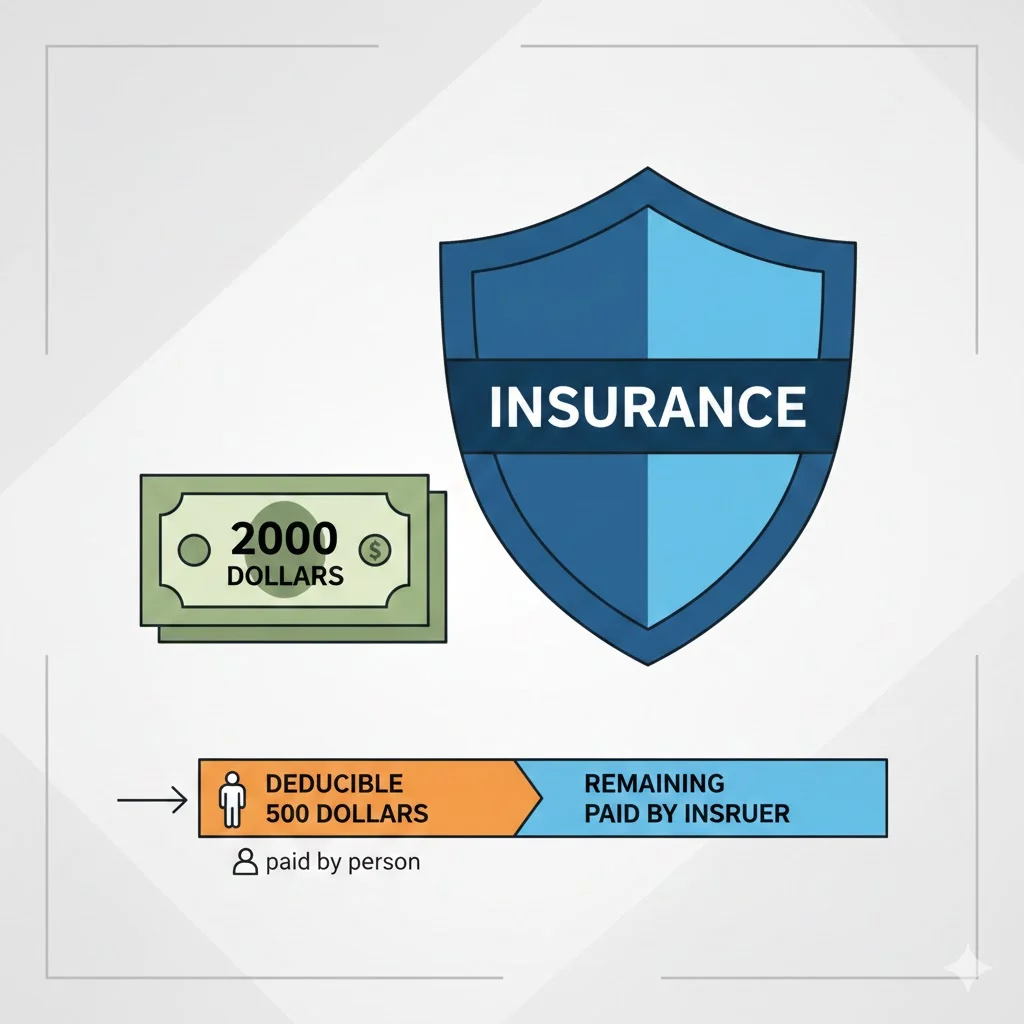

A deductible in insurance is the amount of money you must pay out of pocket for a covered claim before your insurance company starts paying the remaining costs. Once you meet your deductible, your insurer typically covers the rest according to your policy terms.
Insurance policies can feel full of complicated terms, and one of the most commonly misunderstood is deductible. You may have seen it listed in your health, car, or home insurance policy and wondered exactly what it means and how it affects you financially.
Understanding what a deductible means in insurance is crucial because it directly impacts how much you pay when something goes wrong. In this guide, you will learn what a deductible is, how it works, why it exists, how it differs across insurance types, and how to choose the right deductible for your situation.
What Does Deductible Mean in Insurance?
In simple terms, a deductible is the portion of a claim that you are responsible for paying before your insurance coverage kicks in.
For example, if you have a 500 dollar deductible and your covered claim costs 2000 dollars, you pay the first 500 dollars. After that, your insurance company pays the remaining 1500 dollars, subject to policy limits.
Therefore, the deductible acts as a cost sharing feature between you and the insurer.
Why Do Insurance Policies Have Deductibles?
Insurance companies include deductibles for several important reasons.
First, deductibles help prevent small or unnecessary claims. If there were no deductible, people might file claims for minor issues.
Second, they reduce overall risk for the insurance company.
Third, they help keep premiums lower. Generally speaking, higher deductibles mean lower monthly premiums.
As a result, deductibles balance affordability with responsibility.
How Does a Deductible Work?
To fully understand what deductible means in insurance, it helps to see the process step by step.
Step by Step Example
Let us say you have car insurance with a 1000 dollar deductible.
You get into an accident and repairs cost 4000 dollars.
Here is how it works:
- You pay 1000 dollars out of pocket
- Your insurance company pays the remaining 3000 dollars
However, if the damage only costs 800 dollars, you pay the full amount because it does not exceed your deductible.
Types of Insurance Deductibles
Different types of insurance policies handle deductibles in slightly different ways.
1. Health Insurance Deductible
A health insurance deductible is the amount you pay for covered healthcare services before your insurance begins to share costs.
For example:
If your deductible is 1500 dollars, you must pay 1500 dollars in medical bills before insurance starts contributing.
After that, you may still pay coinsurance or copays, depending on your plan.
Importantly, preventive services are often covered before you meet your deductible.
2. Auto Insurance Deductible
An auto insurance deductible usually applies to collision or comprehensive coverage.
For instance:
If you have a 500 dollar collision deductible and your car repair costs 3000 dollars, you pay 500 dollars and the insurer covers the rest.
Liability coverage typically does not have a deductible.
3. Homeowners Insurance Deductible
With homeowners insurance, the deductible applies to property damage claims.
For example:
If storm damage costs 10000 dollars and your deductible is 2000 dollars, you pay 2000 dollars first.
Some home insurance policies use percentage based deductibles, especially in areas prone to natural disasters.
4. Travel or Other Insurance Policies
Travel insurance, pet insurance, and other specialty policies may also include deductibles.
Although the structure varies, the core principle remains the same. You pay first, then the insurer contributes.
Fixed vs Percentage Deductibles
Deductibles are generally structured in two ways.
| Type | Description | Example |
|---|---|---|
| Fixed Deductible | Set dollar amount | 500 dollars |
| Percentage Deductible | Based on a percentage of insured value | 2 percent of home value |
For example, if your home is insured for 300000 dollars and you have a 2 percent deductible, you would pay 6000 dollars before coverage begins.
High Deductible vs Low Deductible
Choosing the right deductible is an important financial decision.
High Deductible
- Lower monthly premium
- Higher out of pocket cost during claims
- Suitable for people with emergency savings
Low Deductible
- Higher monthly premium
- Lower out of pocket cost during claims
- Suitable for those who prefer predictable expenses
Consequently, the right choice depends on your financial comfort and risk tolerance.
Real Life Examples of Deductibles
Here are practical examples across different insurance types.
Health Insurance Example
Your deductible is 2000 dollars.
You have surgery costing 10000 dollars.
You pay 2000 dollars first.
Afterward, insurance pays according to your coverage rules.
Car Insurance Example
Your collision deductible is 750 dollars.
Accident repair cost is 3500 dollars.
You pay 750 dollars.
Insurance covers 2750 dollars.
Home Insurance Example
Your deductible is 1000 dollars.
Water damage costs 5000 dollars.
You pay 1000 dollars.
Insurance pays 4000 dollars.
Common Misunderstandings About Deductibles
Many people confuse deductibles with other insurance terms.
Deductible vs Copay
A deductible is what you pay before insurance starts paying.
A copay is a fixed amount you pay per service, often after meeting your deductible.
Deductible vs Premium
A premium is your monthly payment to keep insurance active.
A deductible is what you pay when you file a claim.
They are separate costs.
Deductible vs Out of Pocket Maximum
The out of pocket maximum is the most you will pay in a policy period.
Once you reach that amount, insurance covers 100 percent of covered services.
Why Choosing the Right Deductible Matters
Selecting a deductible is not just about saving money on premiums.
Instead, it is about balancing monthly affordability with financial preparedness.
Before choosing, consider:
- How much emergency savings you have
- How often you expect to use the insurance
- Your comfort with financial risk
- Your monthly budget flexibility
For example, if you rarely visit doctors and have savings, a higher deductible health plan may make sense.
On the other hand, if you anticipate frequent claims, a lower deductible might provide peace of mind.
Professional and Polite Ways to Ask About Deductibles
When speaking with an insurance agent, you might say:
Can you explain how my deductible applies to this claim
What deductible options are available
How would increasing my deductible affect my premium
These questions help you understand your coverage clearly.
Frequently Asked Questions
1. What does deductible mean in simple terms?
A deductible is the amount you pay before insurance starts paying for a covered claim.
2. Do you always have to pay your deductible?
Yes, if you file a claim that exceeds the deductible amount.
3. Is a higher deductible better?
It can lower your premium, but it means paying more during a claim.
4. What happens if my claim is less than my deductible?
You pay the full amount yourself.
5. Does every insurance policy have a deductible?
Many do, but liability coverage often does not.
6. Do I pay the deductible every year?
In health insurance, it usually resets annually. In auto or home insurance, you pay it per claim.
7. Can I change my deductible?
Yes, typically during policy renewal.
8. Does a deductible apply to all claims?
It applies to covered claims under applicable coverage types.
Conclusion
So, what does deductible mean in insurance?
It is the amount you must pay out of pocket before your insurance company begins covering a claim.
Understanding your deductible helps you:
- Predict your financial responsibility
- Compare insurance policies effectively
- Choose the right balance between premium and risk
- Avoid surprises during claims
Ultimately, knowing how deductibles work allows you to make smarter insurance decisions and manage risk with confidence.
discover more post
What Does Show Mean in Horse Racing? Betting Explained …
What Does PASS Mean in a Fire? Fire Safety Explained …
What Does PSA Mean in Text Talk? Definition and Examples …