
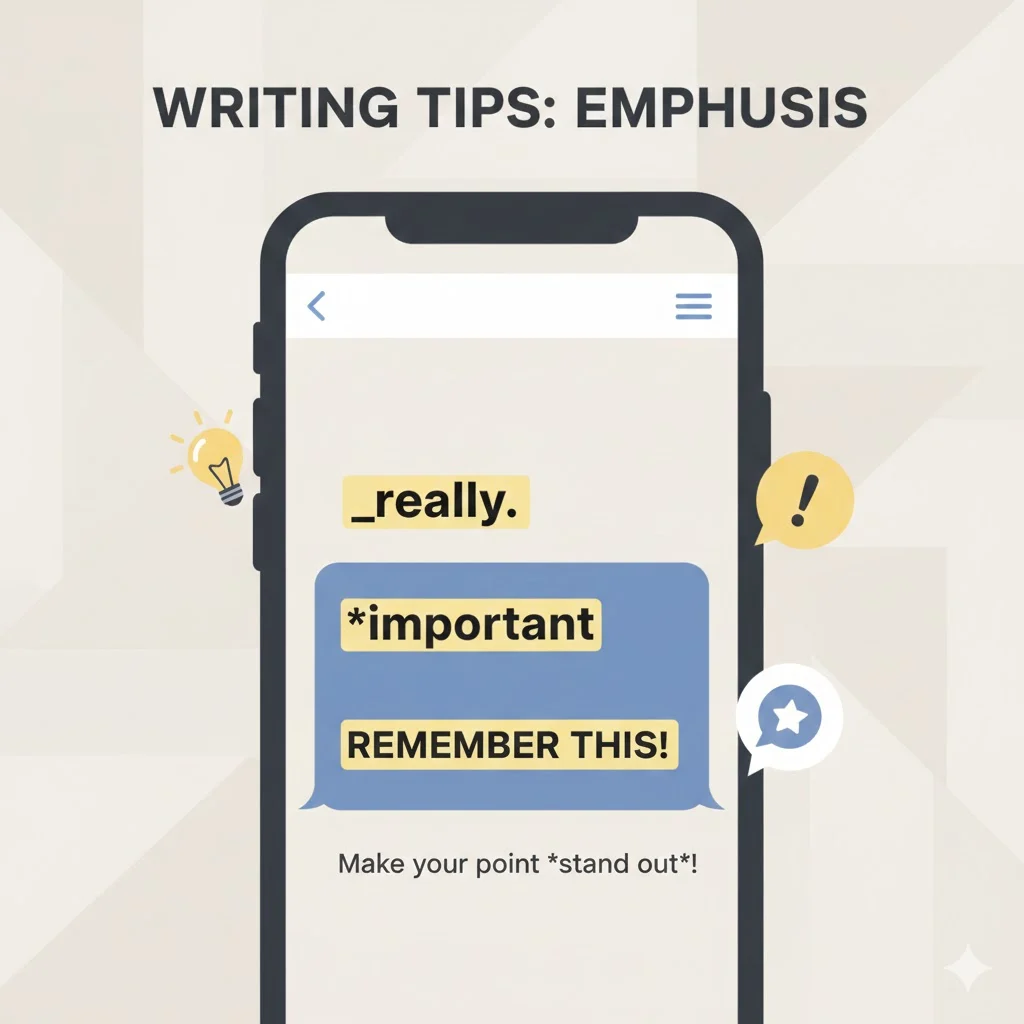

Emphasize in text means to give special importance to a word, phrase, idea, or message so it stands out clearly to the reader. Writers emphasize text to draw attention, clarify meaning, express emotion, or make sure a key point is noticed.
When you read a message, an article, or even a simple text, some words naturally stand out more than others. That effect is rarely accidental. Writers and speakers use emphasis to guide attention, shape meaning, and influence how a message is understood.
If you have ever wondered what emphasize means in text, this guide will walk you through everything you need to know. You will learn what emphasis is, why it matters, how it is used in digital communication, and how different forms of emphasis can change tone and intent. By the end, you will also know how to emphasize text clearly without sounding aggressive or confusing.
What Does Emphasize Mean in Text?
In text, emphasize means to highlight or stress something so it feels more important than the surrounding information.
In other words, when a writer emphasizes something, they are telling the reader, “This part matters. Pay attention to this.”
Emphasis can be created through:
- Word choice
- Formatting
- Punctuation
- Repetition
- Sentence structure
- Context
Each method affects how the message is received and interpreted.
The Purpose of Emphasis in Writing
Emphasis is not just decorative. It serves several important communication goals.
First, emphasis helps readers quickly identify the main idea. Instead of guessing what matters most, the reader is guided directly to it.
Second, it adds clarity. When key points are emphasized, misunderstandings become less likely.
Third, emphasis adds emotional weight. A message can feel calm, urgent, excited, serious, or firm depending on how emphasis is used.
Finally, emphasis helps structure information. In longer texts, it keeps readers engaged and oriented.
Origin and Meaning of the Word Emphasize
The word emphasize comes from the Greek word emphainein, which means “to show clearly” or “to make visible.”
Over time, the meaning evolved into stressing or highlighting something so it stands out in speech or writing.
In modern English, emphasize is commonly used in:
- Writing
- Public speaking
- Education
- Digital communication
- Marketing and media
Although the core meaning remains the same, the methods of emphasis have expanded with technology.
How Emphasis Works in Text Communication
Unlike spoken language, text lacks tone of voice, facial expressions, and body language. Because of this, writers rely heavily on emphasis to convey meaning.
In digital communication, emphasis replaces vocal stress.
For example:
- In speech, you might raise your voice.
- In text, you might bold a word or repeat it.
As a result, emphasis becomes a powerful tool in messaging, emails, articles, and social media posts.
Common Ways to Emphasize Text
There are several widely used methods for emphasis in writing. Each one carries its own tone and effect.
1. Emphasis Through Word Choice
One of the simplest ways to emphasize something is by choosing strong or specific words.
Example:
- This is important.
- This is crucial.
The second sentence places more emphasis without any formatting changes.
Additionally, adverbs and adjectives often add emphasis when used carefully.
Example:
- I am disappointed.
- I am extremely disappointed.
2. Emphasis Through Repetition
Repetition reinforces importance by making an idea hard to ignore.
Example:
- This matters. It really matters.
While repetition is effective, it should be used sparingly to avoid sounding dramatic or repetitive.
3. Emphasis Through Formatting
In written text, formatting is one of the most obvious emphasis tools.
Common formatting methods include:
- Bold text
- Italics
- Capital letters
- Underlining
Examples:
- This is important
- This is important
- This is IMPORTANT
Each option sends a slightly different message, which we will explore later.
4. Emphasis Through Punctuation
Punctuation can dramatically change how a sentence feels.
Examples:
- This matters.
- This matters!
- This matters!!!
An exclamation mark adds emotional emphasis, while multiple exclamation points increase intensity, sometimes too much.
Similarly, ellipses and question marks can signal hesitation or stress.
5. Emphasis Through Sentence Structure
Writers often emphasize ideas by placing them at the beginning or end of a sentence.
Example:
- What matters most is trust.
- Trust is what matters most.
Both sentences emphasize trust, but the structure shifts the focus slightly.
Examples of Emphasize in Text with Different Tones
Understanding tone is essential when using emphasis. Below are examples that show how emphasis changes meaning.
Friendly Tone 😊
- I am really happy you came.
- That was so kind of you.
Here, emphasis adds warmth and enthusiasm.
Neutral or Informational Tone
- It is important to submit the form by Friday.
- Please review the highlighted section.
The emphasis here is subtle and professional.
Urgent or Serious Tone
- You must respond today.
- This is NOT optional.
In these cases, emphasis signals urgency or authority.
Negative or Aggressive Tone 😐
- I already told you this.
- I ALREADY told you this.
Capitalization turns a neutral sentence into a frustrated one.
Emphasize vs Highlight vs Stress
Although these words are related, they are not identical.
Comparison Table
| Term | Meaning | Common Usage |
|---|---|---|
| Emphasize | Give importance or focus | Writing and speech |
| Highlight | Make something stand out visually | Text and design |
| Stress | Apply force or urgency | Speech and emotion |
In text, emphasize is the broadest term and includes both visual and linguistic methods.
Emphasis in Text Messages and Online Chats
Emphasis is especially noticeable in texting because messages are short and informal.
Common emphasis techniques in texting include:
- Repeating letters
Example: sooooo good - Capitalizing words
Example: I NEED this - Emojis
Example: This matters ❤️ - Punctuation
Example: Really?!
Each of these methods adds emotional context that would otherwise be missing.
When Emphasis Can Be Misunderstood
Although emphasis is useful, it can also create confusion if used carelessly.
For example:
- ALL CAPS often feel like shouting.
- Excessive exclamation points may seem immature.
- Overusing bold or italics can reduce impact.
Therefore, effective emphasis is about balance rather than intensity.
Polite and Professional Ways to Emphasize Text
In professional or formal writing, emphasis should feel calm and respectful.
Better options include:
- Clear wording
- Strategic sentence placement
- Limited bolding
- Polite phrasing
Examples:
- Please note the deadline is Friday.
- I would like to emphasize the importance of accuracy.
These approaches convey importance without sounding aggressive.
Emphasis in Academic and Informational Writing
In essays and articles, emphasis is often created through structure rather than formatting.
Common techniques include:
- Topic sentences
- Headings and subheadings
- Transitions
- Repetition of key terms
Because formatting like bold is often limited in academic writing, emphasis relies heavily on clarity and logic.
Common Mistakes When Emphasizing Text
Even experienced writers make mistakes with emphasis.
Over Emphasizing Everything
When everything is emphasized, nothing stands out.
Example:
- This is VERY IMPORTANT and REALLY URGENT and MUST be done NOW!!!
This approach overwhelms the reader.
Using Emphasis to Replace Clarity
Emphasis should enhance meaning, not replace it.
Weak:
- This is important!!!
Stronger:
- This step prevents data loss.
Clear explanation is always more effective than excessive emphasis.
Alternate Meanings of Emphasize
In most contexts, emphasize has the same meaning.
However, in spoken language, it can also mean:
- To stress a syllable
- To apply vocal force
In text, the meaning almost always refers to importance or focus rather than sound.
How to Know When to Emphasize Something
A helpful question to ask is:
“What do I want the reader to remember?”
If the answer is specific, that part likely needs emphasis.
Additionally, emphasis is useful when:
- Giving instructions
- Explaining risks
- Making requests
- Stating conclusions
- Clarifying boundaries
Frequently Asked Questions
1. What does emphasize mean in text?
It means to highlight or stress a word or idea so it feels more important to the reader.
2. Why do people emphasize words in messages?
They emphasize words to show emotion, urgency, or importance.
3. Is using capital letters a form of emphasis?
Yes, but it can feel aggressive if overused.
4. How can I emphasize politely?
Use clear wording, strategic placement, or light formatting instead of excessive punctuation.
5. Can emphasis change the tone of a message?
Yes. Emphasis strongly affects how a message feels emotionally.
6. Is emphasis the same as exaggeration?
No. Emphasis highlights importance, while exaggeration overstates it.
7. Should emphasis be used in professional writing?
Yes, but sparingly and carefully.
8. What is the safest way to emphasize text?
Clear language and sentence structure are the safest methods.
Conclusion
So, what does emphasize mean in text? It means drawing attention to what matters most so the reader understands its importance.
To summarize:
- Emphasis guides attention and meaning
- It can be created through words, formatting, or structure
- Tone changes depending on how emphasis is used
- Overuse can confuse or irritate readers
- Balanced emphasis improves clarity and communication
When used thoughtfully, emphasis turns ordinary text into clear, engaging, and effective communication.
Discover More Post
What Does KMSL Mean in Text? Full Meaning, Usage …
What Does Splitting Mean in BPD? Signs, Examples, Causes …
What Does a Red Card Mean in Soccer? Rules, Punishments …


