
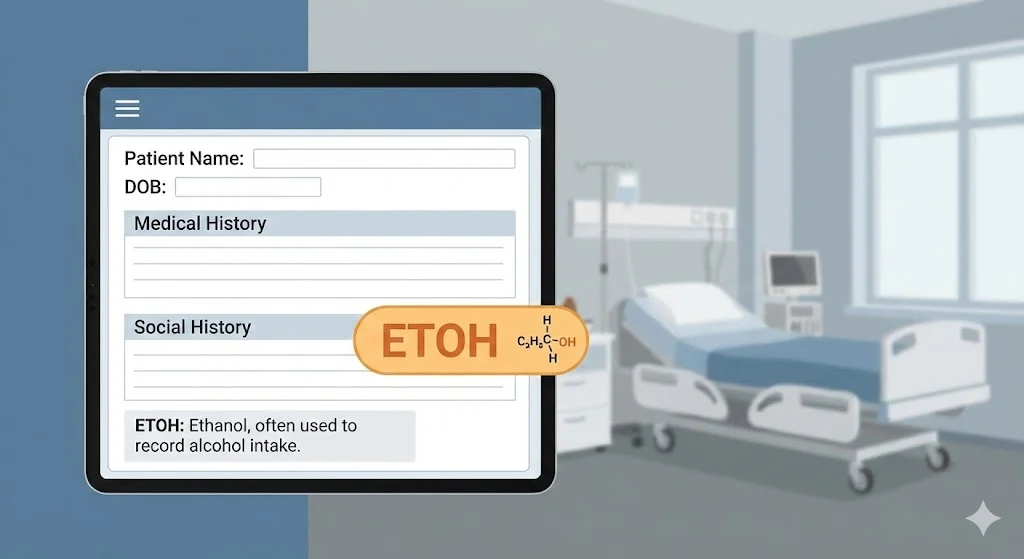

ETOH is a medical abbreviation that refers to ethanol, commonly known as alcohol. In medical settings, ETOH is used to document alcohol use, intoxication, withdrawal, or alcohol related conditions in patient records and clinical notes.
If you have ever read a medical chart, discharge summary, or emergency room note, you may have seen the term ETOH and wondered what it actually means. While it looks technical, the meaning is surprisingly straightforward once you understand the context.
Because healthcare professionals rely on abbreviations to save time and space, ETOH appears frequently in hospitals, clinics, and emergency departments. Understanding this term can help patients, students, and caregivers better interpret medical information and communicate more effectively with healthcare providers.
In this article, you will learn exactly what ETOH means in medical terms, why it is used, where it appears, how it sounds in real clinical contexts, and how it compares to related medical terminology.
What Does ETOH Mean in Medical Terms?
In medical terminology, ETOH stands for ethanol, the chemical name for alcohol.
Doctors and nurses use ETOH as shorthand to refer to:
- Alcohol consumption
- Alcohol intoxication
- Alcohol dependence or misuse
- Alcohol withdrawal
- Alcohol related medical conditions
Simply put, when you see ETOH in a medical context, it almost always means alcohol.
Why Alcohol Is Called ETOH in Medicine
At first, it may seem strange that alcohol is called ETOH. The reason lies in chemistry.
Ethanol has the chemical formula C2H5OH. The “OH” refers to the hydroxyl group, which is a defining feature of alcohols in chemistry. Over time, healthcare professionals shortened this to EtOH, combining “Et” for ethyl and “OH” for the alcohol group.
As a result, ETOH became a quick and widely understood abbreviation in medical documentation.
Where ETOH Is Commonly Used
ETOH is not used in casual conversation. Instead, it appears almost exclusively in healthcare settings.
You are most likely to see ETOH in:
- Emergency room notes
- Hospital admission records
- Nursing documentation
- Lab reports
- Discharge summaries
- Substance use assessments
Because medical staff need to communicate quickly and precisely, abbreviations like ETOH are extremely common.
Common Medical Uses of ETOH
ETOH can describe several different situations depending on context. Understanding the surrounding words is essential.
1. Alcohol Use History
One of the most common uses of ETOH is in patient history.
Examples:
- ETOH use reported
- History of ETOH consumption
- Chronic ETOH use
In these cases, ETOH refers to how much and how often a patient drinks alcohol.
2. Alcohol Intoxication
In emergency medicine, ETOH often describes acute intoxication.
Examples:
- Patient positive for ETOH
- ETOH intoxication suspected
- Elevated ETOH level
Here, ETOH indicates that alcohol is currently affecting the patient.
3. Blood Alcohol Levels
ETOH is also used when discussing lab results.
Examples:
- ETOH level 0.18
- Serum ETOH elevated
This refers to the measured amount of alcohol in the blood.
4. Alcohol Withdrawal
Another important use of ETOH involves withdrawal symptoms.
Examples:
- ETOH withdrawal precautions
- History of ETOH withdrawal seizures
In this context, ETOH signals a risk that requires monitoring and treatment.
5. Alcohol Related Conditions
ETOH may also appear in diagnoses or assessments.
Examples:
- ETOH related liver disease
- ETOH induced gastritis
These phrases link alcohol use to specific medical problems.
Examples of ETOH in Medical Context
To make this clearer, here are realistic examples showing how ETOH appears in medical language.
Neutral Clinical Tone
Patient admits to daily ETOH use
ETOH level pending labs
This tone is factual and objective.
Concerned or Cautious Tone
History significant for heavy ETOH use
Monitor for signs of ETOH withdrawal
Here, ETOH signals potential medical risk.
Emergency Setting Tone
Patient arrived intoxicated, ETOH positive
Altered mental status likely due to ETOH
This usage is common in emergency rooms.
ETOH vs Alcohol in Medical Writing
You might wonder why medical professionals do not simply write “alcohol.”
The answer is efficiency and convention.
Comparison Table
| Term | Meaning | Where Used |
|---|---|---|
| ETOH | Ethanol alcohol | Medical charts and notes |
| Alcohol | Common name | Patient conversations |
| Ethanol | Chemical term | Labs and research |
In practice, doctors may say “alcohol” when speaking to patients but write ETOH in documentation.
Is ETOH a Diagnosis?
ETOH by itself is not a diagnosis.
Instead, it is a descriptive term used within a diagnosis or clinical note.
For example:
- ETOH abuse
- ETOH dependence
- Acute ETOH intoxication
The diagnosis comes from the full phrase, not the abbreviation alone.
Is ETOH Considered Negative or Judgmental?
ETOH is meant to be neutral and clinical.
However, some patients feel uncomfortable when they see it in their records because it often appears alongside serious conditions. It is important to understand that ETOH is not slang or judgmental language. It is simply standardized medical shorthand.
In modern healthcare, providers are encouraged to discuss alcohol use respectfully and without stigma.
Alternate Meanings of ETOH
Outside of medicine and chemistry, ETOH has no widely accepted alternate meanings.
In nearly all professional contexts, ETOH refers to ethanol or alcohol. If you see it in a medical document, there is little ambiguity about its meaning.
Professional and Patient Friendly Alternatives
While ETOH is appropriate for medical records, healthcare providers often use clearer language when speaking directly with patients.
Common alternatives include:
- Alcohol use
- Drinking history
- Alcohol consumption
- Use of alcoholic beverages
These terms are easier for patients to understand and feel more conversational.
Why Understanding ETOH Matters
Understanding ETOH can be helpful for several reasons.
First, it allows patients to better read their own medical records. Second, it reduces confusion during hospital visits or emergency care. Finally, it helps students and caregivers communicate more effectively with healthcare professionals.
Medical language can feel intimidating, but learning key abbreviations like ETOH makes it much more approachable.
Frequently Asked Questions
1. What does ETOH stand for in medical terms?
ETOH stands for ethanol, which means alcohol.
2. Is ETOH the same as alcohol?
Yes. In medical usage, ETOH refers specifically to alcohol.
3. Why do doctors write ETOH instead of alcohol?
They use ETOH as a standard abbreviation to save time and space in medical records.
4. Does ETOH mean alcohol abuse?
Not always. ETOH can refer to any alcohol use, from occasional drinking to heavy use, depending on context.
5. What does ETOH level mean?
ETOH level refers to the amount of alcohol measured in the blood.
6. Is ETOH used in emergency rooms?
Yes. It is very common in emergency and trauma settings.
7. Can patients ask doctors about ETOH in their chart?
Absolutely. Patients have the right to ask for clarification about any medical term.
8. Is ETOH a medical diagnosis?
No. It is an abbreviation used within diagnoses, not a diagnosis by itself.
Conclusion
So, what does ETOH mean in medical terms? It is a clinical abbreviation for ethanol, which means alcohol.
To summarize the key points:
- ETOH refers to alcohol in medical documentation
- It comes from the chemical structure of ethanol
- It is widely used in hospitals and emergency care
- It describes alcohol use, intoxication, withdrawal, and related conditions
- It is neutral and professional medical shorthand
By understanding ETOH, you gain clearer insight into medical language and feel more confident reading or discussing healthcare information.
Discover More Post
What Does KMSL Mean in Text? Full Meaning, Usage …
What Does a Red Card Mean in Soccer? Rules, Punishments …