
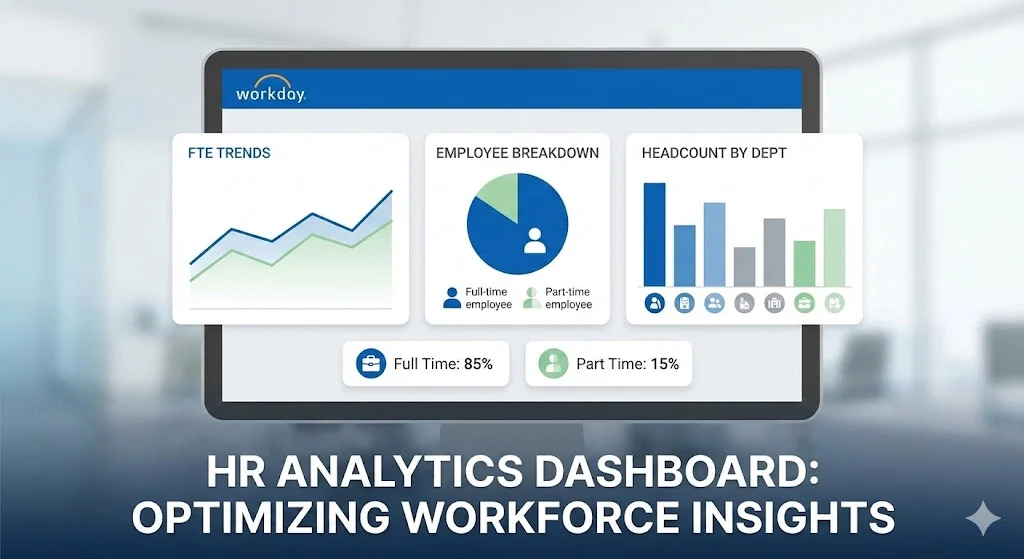

FTE in Workday stands for Full Time Equivalent. It is a standardized measurement used to represent an employee’s workload compared to a full time schedule, helping organizations track staffing levels, labor costs, and workforce planning accurately.
If you work with HR systems, payroll tools, or workforce management software, chances are you have seen FTE inside Workday reports or employee profiles. At first, the term can feel technical or confusing, especially if you are not in HR or finance. However, once you understand what FTE means and how Workday uses it, the concept becomes straightforward and extremely useful.
In this article, you will learn what FTE means in Workday, why it matters, how it is calculated, where you see it in the system, and how it affects employees, managers, and organizations. Whether you are an employee reviewing your profile or a manager planning headcount, this guide will give you clear answers.
What Does FTE Mean in Workday?
In Workday, FTE means Full Time Equivalent.
More specifically, FTE is a numerical value that represents how much time an employee works compared to a full time schedule defined by the organization.
A standard full time employee usually equals:
- 1.0 FTE
Employees who work fewer hours are represented as fractions of 1.0.
As a result, FTE allows Workday to compare part time, full time, and contract roles using a single consistent metric.
What Is Workday and Why FTE Matters
Before diving deeper into FTE, it helps to understand how Workday functions.
Workday is a cloud based human capital management system used by organizations to manage:
- Employee records
- Payroll and compensation
- Benefits
- Time tracking
- Reporting and analytics
Because Workday handles large amounts of workforce data, it needs a reliable way to measure labor consistently. That is where FTE becomes essential.
FTE helps organizations:
- Track total workforce capacity
- Compare staffing across departments
- Control labor costs
- Support budgeting and forecasting
How FTE Is Calculated in Workday
The calculation of FTE in Workday is based on scheduled working hours.
Most organizations define full time work as 40 hours per week, although this can vary by country or company policy.
Basic FTE Formula
FTE is calculated using this simple logic:
Employee weekly hours ÷ Standard full time hours = FTE value
Examples
If full time equals 40 hours per week:
| Weekly Hours Worked | FTE Value |
|---|---|
| 40 hours | 1.0 FTE |
| 30 hours | 0.75 FTE |
| 20 hours | 0.5 FTE |
| 10 hours | 0.25 FTE |
Because of this formula, FTE provides a consistent way to measure workload regardless of job title or contract type.
Where You See FTE in Workday
In Workday, FTE appears in several places depending on your role and permissions.
For Employees
Employees may see FTE in:
- Job profile details
- Employment summary
- Compensation or role information
For example, a part time employee might see an FTE value of 0.6 listed in their job details.
For Managers
Managers often use FTE data when:
- Reviewing team capacity
- Requesting new hires
- Managing departmental headcount
Since FTE reflects workload rather than headcount alone, it gives managers a clearer picture of available resources.
For HR and Finance Teams
HR and finance teams rely heavily on FTE for:
- Workforce planning
- Budget forecasting
- Compliance reporting
- Labor cost analysis
As a result, FTE plays a central role in strategic decision making.
Why FTE Is Important in Workday
Understanding FTE is important because it affects how work, costs, and staffing are measured.
Key Benefits of Using FTE
First, FTE standardizes workforce measurement across roles.
Second, it allows fair comparison between part time and full time staff.
Third, it supports accurate payroll and budgeting calculations.
Finally, it helps leadership make data driven staffing decisions.
Without FTE, comparing labor contributions would be far more complex.
FTE vs Headcount in Workday
Many people confuse FTE with headcount, but they are not the same.
Comparison Table
| Metric | What It Measures |
|---|---|
| Headcount | Number of employees |
| FTE | Total workload capacity |
Example
A team has:
- 2 full time employees at 1.0 FTE each
- 2 part time employees at 0.5 FTE each
Headcount equals 4 employees.
FTE equals 3.0.
This distinction is why organizations rely on FTE rather than headcount alone.
FTE and Employment Types in Workday
Workday uses FTE across different employment types.
Full Time Employees
Most full time employees are set to 1.0 FTE.
Part Time Employees
Part time employees usually have FTE values below 1.0, based on their scheduled hours.
Temporary or Contract Workers
Depending on configuration, contractors may also have FTE values assigned for reporting and planning purposes.
Does FTE Affect Pay or Benefits?
A common question is whether FTE directly impacts compensation.
Pay
FTE does not change hourly rates.
However, salaries for part time employees are often prorated based on FTE.
For example, if a full time salary is based on 1.0 FTE, an employee at 0.5 FTE may earn approximately half that amount.
Benefits
In many organizations, benefit eligibility depends on FTE thresholds.
For instance:
- Employees above 0.75 FTE may qualify for full benefits
- Employees below that level may receive limited benefits
Workday tracks this information automatically.
Common Misunderstandings About FTE in Workday
Despite its usefulness, FTE is often misunderstood.
FTE Does Not Mean Hours Worked Exactly
reflects scheduled workload, not actual hours worked each week.
FTE Does Not Equal Job Importance
A lower FTE does not mean a role is less important. It simply reflects fewer scheduled hours.
FTE Is Not Always Universal
Different organizations define full time differently. Therefore, FTE calculations may vary slightly between companies.
Alternate Meanings of FTE
Outside of Workday and HR systems, FTE can have other meanings depending on context.
Common alternate meanings include:
- Full Time Employee
- Fixed Term Employment
However, within Workday, FTE almost always refers to Full Time Equivalent.
Professional Language Alternatives to FTE
In formal communication, some organizations avoid abbreviations.
Professional alternatives include:
- Full Time Equivalent allocation
- Workforce capacity percentage
- Employment workload ratio
Even so, FTE remains the most widely accepted term in HR systems.
Frequently Asked Questions
1. What does FTE mean in Workday exactly?
It means Full Time Equivalent, representing an employee’s workload compared to a full time schedule.
2. Is 1.0 FTE always full time?
Yes, in most organizations, 1.0 FTE represents a standard full time position.
3. Can part time employees have FTE in Workday?
Yes. Part time employees usually have FTE values below 1.0.
4. Where can I find my FTE in Workday?
You can usually find it in your job profile or employment details section.
5. Does FTE affect my salary?
Indirectly, yes. Salaries are often prorated based on FTE.
6. Is FTE used for contractors in Workday?
Sometimes. It depends on how the organization configures Workday.
7. Can FTE change over time?
Yes. If your scheduled hours change, your FTE value may also change.
8. Why do companies prefer FTE over headcount?
Because FTE reflects actual workforce capacity more accurately than headcount alone.
Conclusion
So, what does FTE mean in Workday? It means Full Time Equivalent, a standardized way to measure employee workload compared to full time hours.
To recap:
- FTE shows how much someone works relative to full time
- 1.0 FTE usually equals full time employment
- Lower FTE values represent part time or reduced schedules
- Workday uses FTE for planning, payroll, and reporting
- interpretUnderstanding FTE helps employees and managers interpret workforce data correctly
Once you understand FTE, Workday reports and profiles become much easier to read and far more meaningful
Discover More Post
What Does AOE Mean in Games? Full Meaning, Examples …
What Does Excluded Mean in PowerSchool – DefineHubs.com –