
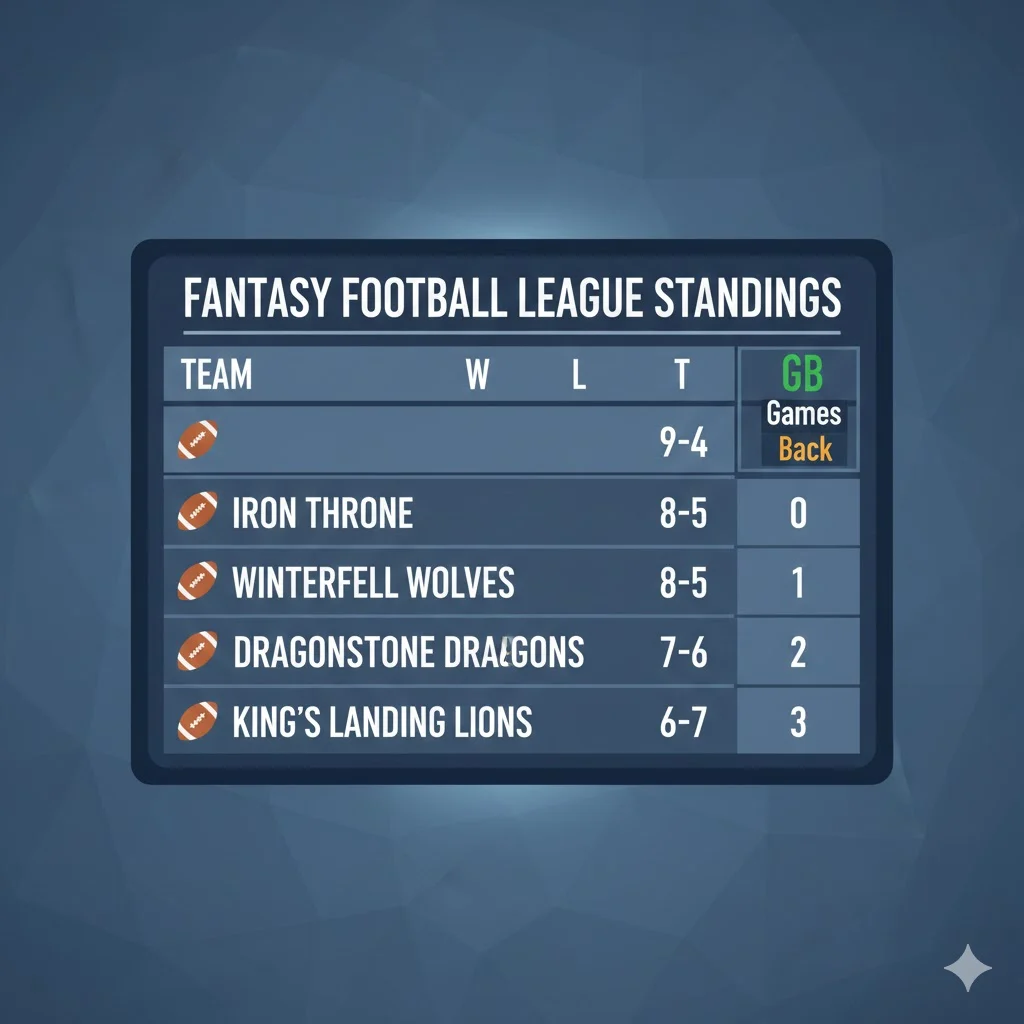

GB in fantasy football stands for Games Back. It shows how many games a fantasy team is behind the first place team in the league standings and helps managers understand their position in the playoff race.
Fantasy football is packed with stats, abbreviations, and shorthand that can feel confusing, especially for newer players. While some terms focus on player performance, others relate to league structure and standings. One abbreviation that often raises questions is GB.
If you have ever looked at your league standings and wondered, “What does GB mean in fantasy football?”, this guide will clear it up. More importantly, it will explain how GB works, why it matters, and how you can use it to make smarter decisions during the season.
What Does GB Mean in Fantasy Football?
In fantasy football, GB means Games Back.
In simple terms, it tells you how far behind you are from the team currently in first place based on wins and losses.
For example, if your team has two fewer wins than the league leader, you are listed as 2 GB.
Because fantasy leagues often mirror real sports standings, GB helps visualize competition and momentum throughout the season.
Where GB Comes From and Why It Is Used
Origin of the Term GB
The term Games Back originated in professional sports leagues such as baseball and basketball. Over time, fantasy sports adopted it as a familiar and easy way to measure standings.
Since fantasy football leagues track wins and losses just like real teams, GB became a natural fit.
Why Fantasy Football Uses GB
Fantasy football uses GB because:
- It quickly shows competitive distance between teams
- It is easier to understand than raw win loss records
- It highlights playoff contention clearly
- It helps managers track progress week to week
As a result, GB has become a standard column in fantasy league standings.
How GB Is Calculated in Fantasy Football
Understanding the math behind GB makes it much easier to read standings.
Basic Formula
GB is calculated using this idea:
- Compare your wins and losses to the first place team
- Each difference of one win equals one game back
Simple Example
First place team record:
8 wins and 2 losses
Your team record:
6 wins and 4 losses
Difference in wins:
2 fewer wins
Result:
You are 2 GB
Even if leagues calculate GB automatically, knowing how it works helps you interpret standings correctly.
GB Explained with a Standings Example Table
| Team | Wins | Losses | GB |
|---|---|---|---|
| Team Alpha | 8 | 2 | 0 |
| Team Bravo | 7 | 3 | 1 |
| Team Charlie | 6 | 4 | 2 |
| Team Delta | 5 | 5 | 3 |
In this example:
- Team Alpha leads the league
- Team Bravo is one game back
- Team Charlie is two games back
- Team Delta is three games back
This table makes it easy to see who is competitive and who needs a strong turnaround.
Why GB Matters in Fantasy Football
GB is more than just a number. It plays an important role in how you manage your team.
Tracking Playoff Chances
As the season progresses, GB helps you understand:
- Whether you are still in playoff contention
- How many wins you need to catch up
- How close your competition really is
For instance, being one game back late in the season is very different from being five games back.
Influencing Trade Decisions
GB can affect how aggressive you should be with trades.
If you are close to first place:
- You may trade for consistency and depth
If you are several games back:
- You may take risks on high upside players
In both cases, GB provides context for strategy.
Managing Weekly Lineups
When you are chasing the top spot, every matchup matters.
Because of that, teams with higher GB often:
- Stream players more aggressively
- Focus on favorable matchups
- Take calculated risks
Meanwhile, teams with low GB may prioritize stability.
GB vs Other Fantasy Football Standings Terms
Fantasy football standings often include multiple abbreviations. Understanding how GB compares helps avoid confusion.
Comparison Table
| Term | Meaning | Purpose |
|---|---|---|
| GB | Games Back | Measures distance from first place |
| W L | Wins and Losses | Shows team record |
| PF | Points For | Total points scored |
| PA | Points Against | Total points allowed |
| PCT | Win Percentage | Performance ratio |
Unlike PF or PA, GB focuses only on standings position, not scoring.
Common Situations Where You Will See GB
GB appears in several common fantasy football contexts.
League Standings Page
Most platforms show GB next to each team. This is the most common place to see it.
Playoff Race Discussions
Managers often say things like:
- “I am only one GB from first”
- “We are still two GB with three weeks left”
This language helps describe urgency and opportunity.
Trade Talks and Group Chats
GB is frequently mentioned in league chats.
Example:
“I am three GB right now, so I need wins fast.”
Here, GB helps explain motivation behind roster moves.
Does GB Affect Tie Breakers?
GB itself does not decide tie breakers.
Instead, tie breakers usually depend on:
- Head to head record
- Points for
- Divisional record
However, GB still reflects overall standing position and competitive distance.
Can GB Be Misleading?
In some cases, yes.
For example:
- A team may be two GB but have far more points scored
- Another team may lead the league but have weak weekly totals
Because of this, GB should be viewed alongside other stats rather than alone.
Alternate Meanings of GB in Fantasy Football
In fantasy football contexts, GB almost always means Games Back.
However, outside of fantasy football, GB can mean:
- Gigabyte in technology
- Great Britain in geography
Context is key. In league standings, GB refers to Games Back nearly every time.
Polite and Professional Ways to Talk About GB
GB is neutral and professional by nature. It works well in casual chats and league discussions.
Examples:
- “I am two games back from first place.”
- “We are still within one GB of the playoff cutoff.”
- “Being three GB makes the next matchup critical.”
These phrases sound natural and respectful in any league environment.
Common Misunderstandings About GB
Some fantasy managers misunderstand what GB actually represents.
GB Is Not Points Behind
GB does not measure points scored or points allowed. It only reflects win loss difference.
GB Does Not Predict Final Results
Being close in GB does not guarantee future success. It simply shows current position.
GB Does Not Equal Skill Level
A team with higher GB may still be strong but unlucky with matchups.
Frequently Asked Questions
1. What does GB mean in fantasy football standings?
GB means Games Back. It shows how many games a team is behind the first place team.
2. How is GB calculated?
GB is calculated by comparing your win loss record to the league leader.
3. Is a lower GB better in fantasy football?
Yes. A lower GB means you are closer to first place.
4. Does GB affect playoff seeding?
Indirectly. GB reflects standings position, which often determines playoff spots.
5. Can two teams have the same GB?
Yes. Multiple teams can be the same number of games back.
6. Is GB more important than points scored?
Both matter. GB shows standings, while points scored show team strength.
7. Does GB reset during playoffs?
No. GB is mainly a regular season standings tool.
8. Why do some leagues not show GB?
Some platforms prefer win percentage instead, but the concept remains the same.
Conclusion
So, what does GB mean in fantasy football? It stands for Games Back, a simple but powerful way to show how far a team is from first place in the standings.
To recap:
- GB measures distance from the league leader
- It is based on wins and losses
- It helps track playoff chances
- It influences strategy and trades
- It adds context to league competition
Once you understand GB, reading fantasy football standings becomes much easier and more meaningful.
Discover More Post
What Does Bingo Mean in Spelling Bee? Simple Explanation
What Does Excluded Mean in PowerSchool – DefineHubs.com –