
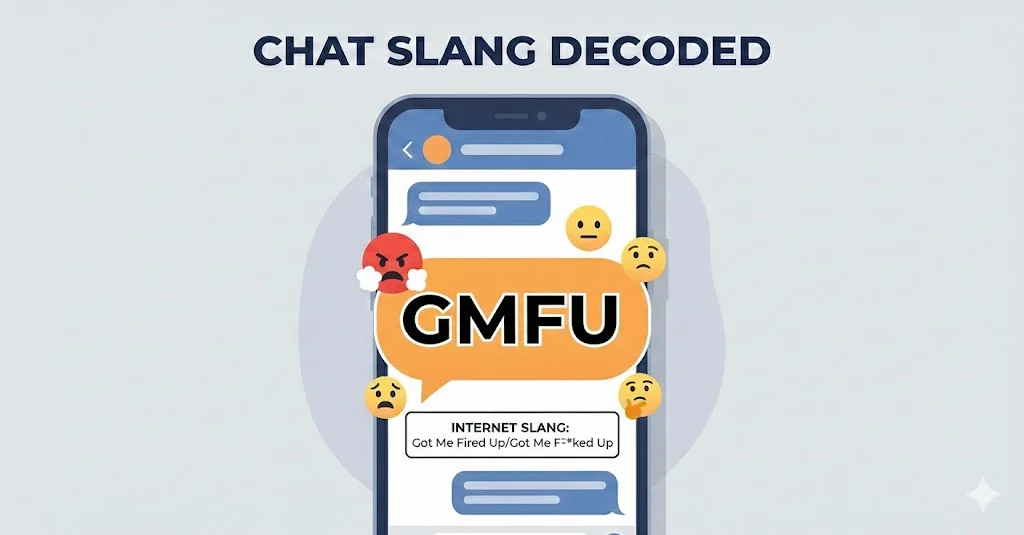

GMFU means “Got Me Fucked Up.” People use this slang phrase in casual conversations, texts, and social media to express disbelief, frustration, irritation, or feeling disrespected.
Internet slang moves fast, and GMFU shows up everywhere from tweets to group chats. When someone drops these four letters, they are usually reacting strongly to something that caught them off guard or crossed a line.
This article explains what GMFU means in slang, where it comes from, how people actually use it, and what kind of tone it carries. You will also learn when it fits a situation, when it does not, and what alternatives work better in polite or professional settings.
What Does GMFU Mean in Slang?
In slang, GMFU stands for “Got Me Fucked Up.”
People use it to express:
- Frustration or annoyance
- Disbelief or shock
- Feeling disrespected
- Strong disagreement
Rather than describing something literally, GMFU delivers an emotional reaction. The phrase signals that someone said or did something unacceptable, confusing, or insulting.
Origin and Popularity of GMFU
GMFU comes from African American Vernacular English and hip hop culture, where expressive language often emphasizes emotion and attitude. Speakers shortened the full phrase over time, making it easier to use in fast conversations.
Social media platforms helped GMFU spread quickly. Twitter, TikTok, and Instagram encouraged short, punchy reactions, which made abbreviations like GMFU especially popular. Today, people commonly use it online to communicate strong feelings without typing long explanations.
How People Use GMFU in Everyday Language
Most people use GMFU in casual and informal settings. It appears most often in texts, comments, and online posts.
Because the phrase includes profanity, it does not belong in professional or formal conversations. Instead, it works best among friends or audiences who understand slang and tone.
Emotional Tone of GMFU
GMFU almost always carries strong emotion. Context determines exactly how it sounds, but the intensity remains clear.
Frustrated or Annoyed Tone 😒
People often use GMFU when they feel disrespected or pushed too far.
Example:
They really expect me to stay late again with no notice. GMFU.
Disbelief or Shock 😐
Sometimes, GMFU expresses surprise when something makes no sense.
Example:
He said that was my fault. GMFU.
Defensive or Assertive Tone 😤
In other situations, GMFU shows that someone refuses to accept what happened.
Example:
They think I am going to apologize first. GMFU.
Examples of GMFU in Real Conversations
Casual Texting
Friend A: They changed the rules again
Friend B: Nah that GMFU
Social Media Post
You want me to fix the problem you caused. GMFU.
Humor Mixed with Irritation
They really thought that excuse would work. GMFU.
In each example, GMFU delivers emotion quickly and clearly.
GMFU Meaning Without Profanity
Although GMFU contains a swear word, most people focus on the emotion behind it rather than the literal wording.
In softer terms, GMFU can mean:
- You confused me
- That annoyed me
- That disrespected me
- That makes no sense
Understanding this helps non native speakers grasp the intent without taking the phrase literally.
Comparison with Similar Slang Terms
Several slang expressions serve a similar purpose. However, GMFU stands out because of its intensity.
Slang Comparison Table
| Slang Term | Meaning | Emotional Strength |
|---|---|---|
| GMFU | Got Me Fucked Up | Very strong |
| WTF | What The Fuck | Strong |
| SMH | Shaking My Head | Mild to moderate |
| You tripping | You are wrong | Moderate |
| Nah | Disagreement | Mild |
Compared to these phrases, GMFU communicates stronger frustration and disbelief.
When GMFU Fits the Situation
GMFU works well in:
- Casual conversations with friends
- Text messages
- Social media posts
- Informal online discussions
In these settings, people expect expressive language and emotional reactions.
When You Should Avoid GMFU
Certain situations call for a different tone. You should avoid GMFU in:
- Work emails
- Professional meetings
- Academic writing
- Conversations with people who dislike profanity
Using GMFU in these contexts can sound disrespectful or inappropriate.
Polite and Professional Alternatives to GMFU
When you want to express similar feelings without slang or profanity, clearer alternatives work better.
Polite Alternatives
- I strongly disagree with that
- That does not seem reasonable
- I am surprised by this decision
Casual but Clean Alternatives
- That makes no sense
- That is wild
- You must be joking
These options keep the message clear while respecting the audience.
Is GMFU Rude or Offensive?
GMFU can sound rude to some people because of the profanity it includes. Reactions depend on context, tone, and relationship.
Among friends or in informal online spaces, people often see it as expressive rather than insulting. In formal environments, however, it usually feels inappropriate.
Alternate Meanings of GMFU
GMFU does not have commonly accepted alternate meanings. In slang usage, it almost always stands for “Got Me Fucked Up.”
If someone uses it differently, the phrase still usually communicates disbelief or frustration rather than a new definition.
Frequently Asked Questions
1. What does GMFU stand for in slang?
GMFU stands for “Got Me Fucked Up.”
2. Does GMFU always sound angry?
Not always, but it usually expresses strong emotion such as frustration or disbelief.
3. Can people use GMFU jokingly?
Yes. Friends sometimes use it playfully when the situation feels lighthearted.
4. Do people use GMFU on social media?
Yes. Many users post it on platforms like Twitter, TikTok, and Instagram.
5. Is GMFU appropriate at work?
No. Professional settings usually require cleaner language.
6. Can GMFU show confusion?
Yes. It often combines confusion with disbelief.
7. Is GMFU offensive?
Some people may find it offensive because of the profanity.
8. What is a clean replacement for GMFU?
Phrases like “That makes no sense” or “I strongly disagree” work well.
Conclusion
So, what does GMFU mean in slang? It means “Got Me Fucked Up,” a strong reaction phrase that communicates frustration, disbelief, or feeling disrespected.
To recap:
- GMFU is informal slang
- It delivers strong emotional reactions
- People use it mostly in texts and social media
- Profanity makes it unsuitable for professional settings
- Polite alternatives exist when tone matters
Understanding GMFU helps you interpret modern slang clearly, even if you decide not to use it yourself.
Discover More Post
What Does PIM Mean in Hockey? Simple Explanation for New …
What Does Delta H Mean in Chemistry? Simple Explanation …
What Does MF Mean in Text? Meaning, Usage, and Examples