
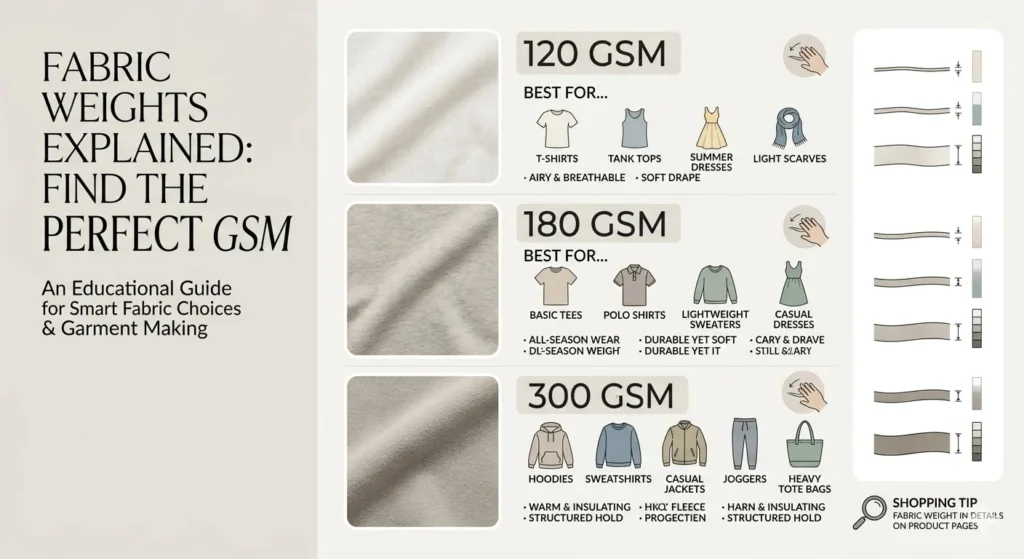

GSM in clothing stands for “grams per square meter.” It measures the weight and density of fabric. A higher GSM means thicker and heavier material, while a lower GSM indicates lighter and thinner fabric.
If you have ever shopped for T shirts, hoodies, or bedsheets, you may have noticed the term GSM in product descriptions. At first, it can seem technical or confusing. However, once you understand it, GSM becomes one of the most useful indicators of fabric quality, comfort, and durability.
Whether you are buying everyday clothing, comparing fabric quality, or starting a clothing brand, knowing what GSM means in clothing helps you make smarter decisions. In this complete guide, you will learn what GSM is, how it works, why it matters, and how to choose the right GSM for different types of clothing.
What Does GSM Mean in Clothing?
In the clothing and textile industry, GSM means grams per square meter. It refers to the weight of fabric measured over one square meter of material.
Simply put, GSM tells you how heavy or light a fabric is.
- Low GSM means lightweight fabric
- Medium GSM means balanced weight
- High GSM means thick and heavy fabric
As a result, GSM directly affects how a garment feels, drapes, and performs.
Why GSM Matters in Fabric and Clothing
Understanding GSM is important because it influences several key aspects of clothing.
Comfort
Lighter fabrics with lower GSM feel more breathable and airy. On the other hand, heavier fabrics provide warmth and structure.
Durability
Higher GSM fabrics are usually stronger and more durable. Therefore, they tend to last longer and resist wear better.
Seasonality
GSM helps determine whether a garment is suitable for summer or winter.
- Low GSM is ideal for hot weather
- High GSM is better for cold conditions
Appearance and Fit
Fabric weight also affects how clothing looks and fits. Heavier fabrics often hold their shape, while lighter fabrics flow more naturally.
GSM Ranges Explained
To make things clearer, here is a general breakdown of GSM categories.
Fabric Weight Table
| GSM Range | Fabric Type | Typical Use |
|---|---|---|
| 80 to 150 GSM | Lightweight | Summer shirts, activewear |
| 150 to 250 GSM | Medium weight | T shirts, casual wear |
| 250 to 350 GSM | Heavyweight | Hoodies, sweatshirts |
| 350 plus GSM | Very heavy | Jackets, winter wear |
Although these ranges are not strict rules, they provide a helpful guideline when shopping.
Examples of GSM in Everyday Clothing
To better understand GSM, let’s look at real clothing examples.
Lightweight Example
A 120 GSM cotton T shirt feels soft, thin, and breathable. It is ideal for hot climates and layering.
Medium Weight Example
A 180 GSM T shirt is one of the most common options. It offers a balance between comfort and durability.
Heavyweight Example
A 300 GSM hoodie feels thick and warm. It provides insulation and structure, making it perfect for cooler weather.
How GSM Affects Fabric Feel
GSM does more than just measure weight. It also changes how fabric feels on your skin.
Low GSM Fabrics
These fabrics feel:
- Light
- Soft
- Breathable
However, they may be less durable and slightly see through.
High GSM Fabrics
These fabrics feel:
- Thick
- Structured
- Durable
At the same time, they can feel warmer and less breathable.
GSM vs Fabric Thickness: Are They the Same?
Although GSM and thickness are related, they are not exactly the same.
GSM measures weight, not thickness. However, in most cases:
- Higher GSM fabrics are thicker
- Lower GSM fabrics are thinner
Still, fabric type and weave can affect thickness even at the same GSM.
GSM vs Thread Count
People often confuse GSM with thread count, especially when shopping for bedding.
Key Differences
| GSM | Thread Count |
|---|---|
| Measures fabric weight | Measures number of threads |
| Used for clothing and textiles | Common in bedsheets |
| Indicates density and durability | Indicates smoothness |
Both are useful, but they measure different aspects of fabric quality.
How to Choose the Right GSM for Clothing
Choosing the right GSM depends on your needs and preferences.
For Hot Weather
Choose lower GSM fabrics.
Recommended range:
- 100 to 160 GSM
These fabrics keep you cool and comfortable.
For Everyday Wear
Go for medium GSM.
Recommended range:
- 160 to 220 GSM
This range offers a good balance between comfort and durability.
For Cold Weather
Pick higher GSM fabrics.
Recommended range:
- 250 GSM and above
These fabrics provide warmth and insulation.
For Premium Feel
Higher GSM often feels more premium and structured. However, balance is important because extremely heavy fabric may feel uncomfortable in warm conditions.
Common Uses of GSM in the Clothing Industry
GSM is widely used across the fashion and textile industry.
Manufacturers
They use GSM to maintain consistent fabric quality and production standards.
Designers
Designers choose GSM based on the style, fit, and purpose of a garment.
Consumers
Shoppers use GSM to compare products and understand value.
Because of this, GSM has become a standard measurement worldwide.
Common Misconceptions About GSM
Even though GSM is useful, there are some misunderstandings.
Higher GSM Always Means Better Quality
Not always. While higher GSM can mean durability, quality also depends on fabric type and construction.
Low GSM Means Poor Fabric
This is not true. Lightweight fabrics are perfect for summer and activewear.
GSM Is the Only Thing That Matters
In reality, other factors also matter, such as:
- Fabric material
- Weave
- Finishing
GSM is important, but it is not the only indicator of quality.
Polite and Professional Alternatives to GSM
If you are writing product descriptions or communicating with customers, you may want to explain GSM in simpler terms.
Examples include:
- Fabric weight
- Material density
- Lightweight or heavyweight fabric
- Thick or breathable material
These alternatives help make technical information easier to understand.
Frequently Asked Questions
1. What does GSM mean in clothing?
GSM means grams per square meter, which measures the weight of fabric.
2. Is higher GSM better?
Not always. Higher GSM is heavier and more durable, but lower GSM is better for warm weather.
3. What GSM is best for T shirts?
Most T shirts fall between 160 and 200 GSM for comfort and durability.
4. Is 180 GSM good quality?
Yes. 180 GSM is considered a balanced and widely preferred weight for T shirts.
5. What GSM is good for hoodies?
Hoodies typically range from 250 to 350 GSM for warmth and thickness.
6. Does GSM affect breathability?
Yes. Lower GSM fabrics are usually more breathable.
7. Can two fabrics have the same GSM but feel different?
Yes. Fabric type and weave can change how the material feels.
8. Is GSM used only in clothing?
No. GSM is also used for paper, towels, and other textiles.
Conclusion
So, what does GSM mean in clothing? It stands for grams per square meter, a measurement that tells you how heavy or light a fabric is.
To sum up:
- Low GSM fabrics are lightweight and breathable
- Medium GSM fabrics offer balance
- High GSM fabrics are thick and durable
- GSM affects comfort, durability, and seasonal use
- Choosing the right GSM depends on your needs
Understanding GSM makes shopping easier and helps you choose clothing that feels right, lasts longer, and suits your lifestyle.
Discover More Post
What Does TS Mean in Snapchat? Full … – DefineHubs.com –
What Does Volume Mean in Science? Definition, Formula …
What Does “…” Mean in Text? Ellipsis Meaning Explained in …