
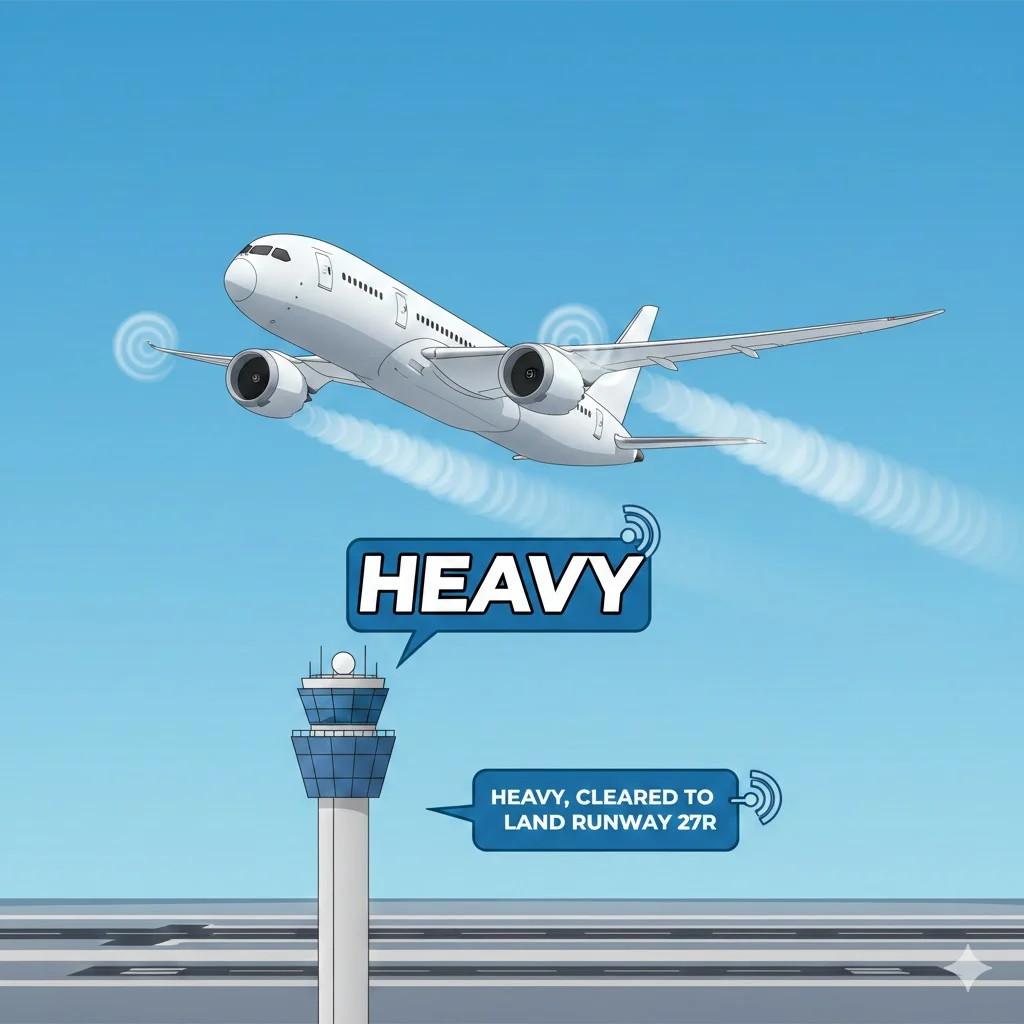

In aviation, heavy is a radio call sign designation for aircraft with a maximum certificated takeoff weight of 300,000 pounds or more. Pilots add the word to their call sign to warn air traffic control and nearby aircraft about significant wake turbulence and the need for extra spacing.
If you have ever listened to real air traffic control recordings, you may have heard something like, “Delta 302 Heavy, cleared to land.” At first, it might sound like the aircraft carries extra weight or faces a problem. However, that assumption misses the true meaning.
In aviation, the word heavy serves a precise safety function. Pilots use it intentionally, and controllers respond to it immediately. The term does not describe cargo or passenger load. Instead, it signals the aircraft’s weight category and the wake turbulence it produces.
In this guide, you will learn exactly what heavy means in aviation, why pilots use it, how it affects separation between aircraft, and how it compares to other weight classifications.
What Does Heavy Mean in Aviation?
In aviation terminology, heavy refers to an aircraft with a maximum certificated takeoff weight of 300,000 pounds or more.
Pilots attach the word “heavy” to their radio call sign when communicating with air traffic control. That addition tells controllers and other pilots that the aircraft generates strong wake turbulence.
For example:
American 145 Heavy
United 88 Heavy
The designation depends on the aircraft’s certified maximum takeoff weight, not on how much it weighs during that specific flight.
Why Do Pilots Use the Term Heavy?
Pilots use the term for one main reason: safety.
Large aircraft create powerful wingtip vortices when they generate lift. These swirling air currents can disrupt smaller aircraft that fly too closely behind them. As a result, controllers must increase spacing between aircraft.
When a pilot says “Heavy,” the word immediately communicates:
- The aircraft is large
- It produces strong wake turbulence
- It requires additional separation
Instead of giving a long explanation, one word conveys all that critical information.
Understanding Wake Turbulence
Every aircraft creates wake turbulence, but larger and heavier aircraft produce stronger vortices.
As an aircraft’s wings generate lift, air flows around the wingtips and forms rotating currents. The heavier the aircraft, the stronger those currents become.
Strong wake turbulence can:
- Cause sudden rolling motion in smaller aircraft
- Disrupt flight paths
- Create hazardous conditions during takeoff and landing
Because wake turbulence lingers in the air, controllers must carefully manage aircraft spacing, especially near busy airports.
Aircraft Weight Categories in Aviation
Aviation authorities group aircraft into weight categories. These categories guide controllers when they sequence departures and arrivals.
Standard Weight Categories
| Category | Maximum Takeoff Weight | Typical Aircraft |
|---|---|---|
| Light | Up to 15,500 pounds | Small private aircraft |
| Medium | 15,500 to 300,000 pounds | Narrow body commercial jets |
| Heavy | 300,000 pounds or more | Wide body long haul aircraft |
| Super | Special classification above heavy | Largest passenger aircraft |
Controllers adjust separation distances based on these categories.
Examples of Heavy Aircraft
Several well known long haul aircraft fall into the heavy category because of their size and certified weight.
Examples include:
- Boeing 747
- Boeing 777
- Airbus A330
- Airbus A350
Each of these aircraft exceeds the 300,000 pound threshold. Therefore, pilots operating them include “Heavy” in their call signs during radio communication.
What Is the Super Category?
In addition to heavy, aviation recognizes a separate category called Super.
The Airbus A380 falls into this classification due to its extreme size and wake turbulence characteristics.
For example:
Emirates 215 Super
Controllers apply even greater separation standards to Super aircraft than they do to Heavy aircraft.
How Pilots Use Heavy in Radio Communication
Pilots include the word “heavy” during initial contact with air traffic control and during certain phases of flight.
Example Radio Exchange
Pilot:
“Miami Tower, American 210 Heavy, ready for departure.”
Controller:
“American 210 Heavy, cleared for takeoff runway 09.”
Notice how the pilot places the word directly after the flight number. Controllers repeat the full call sign to confirm clear communication.
Pilots never modify the term. They do not say “extra heavy” or “very heavy.” The designation stays standardized and fixed.
Does Heavy Mean the Aircraft Is Fully Loaded?
No. Many people assume that heavy means the plane carries maximum passengers or cargo. That is not correct.
The classification depends entirely on the aircraft’s certified maximum takeoff weight. Even if the plane carries fewer passengers or less fuel, it still qualifies as heavy if its design weight meets the threshold.
In other words, the term reflects engineering certification, not current loading conditions.
Heavy vs Medium vs Light Aircraft
Comparing heavy to other categories makes its role clearer.
Comparison Table
| Feature | Light | Medium | Heavy |
|---|---|---|---|
| Aircraft Size | Small | Moderate | Very large |
| Wake Turbulence Strength | Minimal | Moderate | Strong |
| Required Separation | Standard | Increased | Significantly increased |
| Typical Operations | Private aviation | Domestic routes | Long haul international |
As aircraft size increases, controllers increase separation to maintain safety.
Why Separation Distance Matters
Controllers carefully space aircraft to prevent wake turbulence encounters.
For example:
- A small aircraft landing behind a heavy jet must maintain extra distance.
- A departing aircraft may wait before taking off after a heavy aircraft departs.
These precautions protect smaller aircraft from sudden turbulence that could affect control.
By using clear weight categories, pilots and controllers maintain predictable and safe operations.
Tone and Meaning in Aviation Context
In everyday English, heavy can describe weight, seriousness, or emotional intensity. In aviation, however, the term carries a strictly technical meaning.
It does not suggest:
- Mechanical problems
- Performance issues
- Emergencies
- Overloading
Instead, it identifies the aircraft’s certified weight category and wake turbulence potential.
Regulatory Oversight
Major aviation authorities define and regulate weight categories. Organizations such as the Federal Aviation Administration and the International Civil Aviation Organization establish the standards pilots follow worldwide.
Because aviation involves international coordination, standardized terminology ensures that pilots and controllers understand one another clearly across countries and languages.
Frequently Asked Questions
1. What does heavy mean in aviation communication?
It identifies an aircraft with a maximum certificated takeoff weight of 300,000 pounds or more and signals strong wake turbulence.
2. Does heavy mean the plane is overloaded?
No. The term refers to certification category, not current weight.
3. Why do pilots say heavy after the flight number?
They say it to warn controllers and other pilots about wake turbulence and separation needs.
4. What is the difference between heavy and super?
Super applies to the largest aircraft and requires even greater spacing.
5. Do all wide body aircraft use heavy?
Only those that meet or exceed the 300,000 pound threshold.
6. Is heavy used worldwide?
Yes. Pilots and controllers use it internationally.
7. When do pilots include heavy in communication?
They include it during initial contact and in controlled airspace operations.
8. Can an aircraft change from medium to heavy?
No. The classification depends on certified maximum takeoff weight and remains fixed.
Conclusion
So, what does heavy mean in aviation?
It is a formal radio designation used by aircraft with a maximum takeoff weight of 300,000 pounds or more. More importantly, it alerts air traffic control and other pilots to the potential for significant wake turbulence.
Key points to remember:
- Heavy refers to certified weight category
- It is used in radio communication
- It helps maintain safe spacing
- It is not related to cargo load
- It plays a critical role in aviation safety
Although it may sound simple, the word heavy carries serious operational importance in the world of aviation.
discover more post
What Does Per Diem Mean in Healthcare? Pay, Jobs, and …
What Does Range Mean in a Car? Simple Explanation for …
What Does OFC Mean in a Text Message? Full Meaning …


