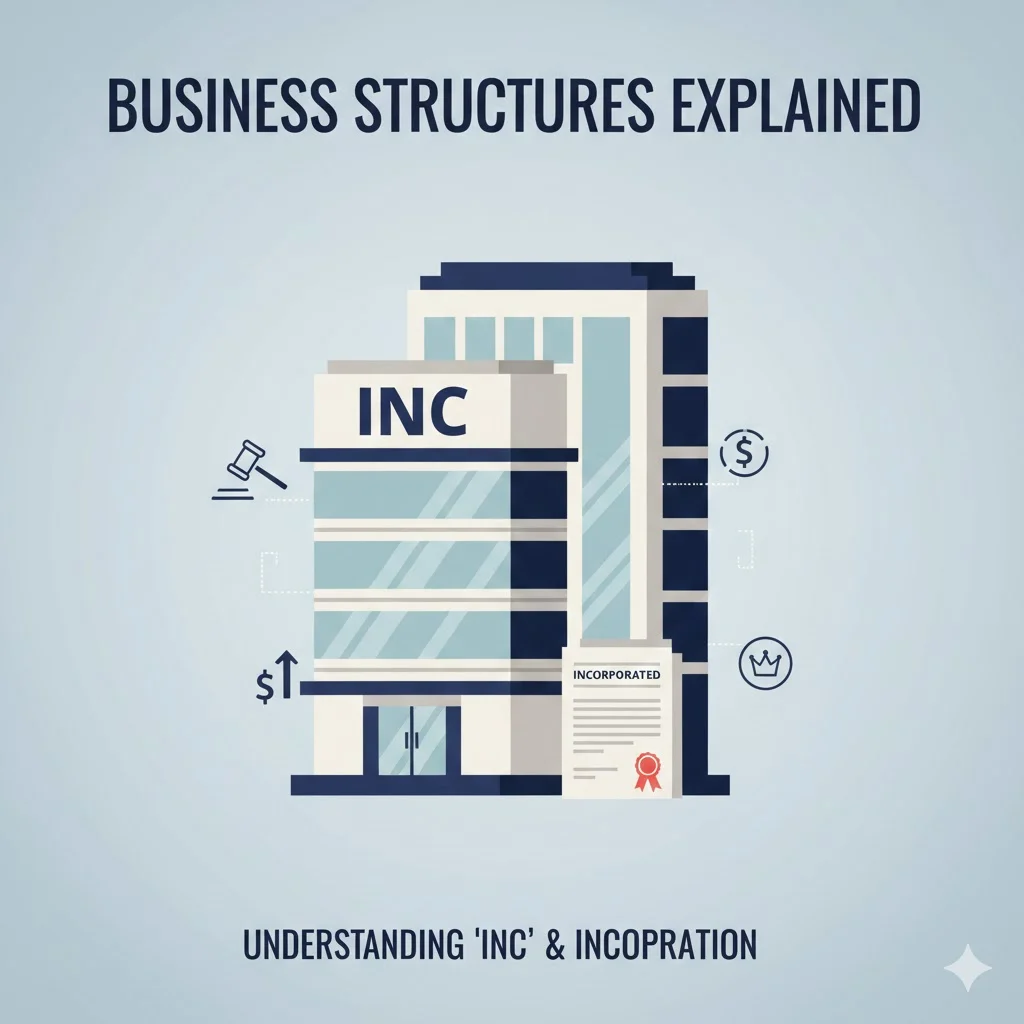

Inc in business stands for Incorporated. It shows that a company has registered as a corporation and operates as a separate legal entity from its owners, offering limited liability protection.
When you see company names like Apple Inc or Amazon Inc, that small word at the end carries major significance. Although it looks simple, Inc communicates how a business is structured, how it operates legally, and how responsibility is divided between the company and its owners.
For entrepreneurs, students, investors, and professionals, understanding what Inc means in business helps clarify ownership, risk, and credibility. In this guide, you will learn the meaning of Inc, why companies use it, how it works, and how it compares to other business designations.
What Does Inc Mean in Business?
In business, Inc means Incorporated.
A company that uses Inc has completed the legal process of incorporation under government law. Once incorporated, the business becomes its own legal entity rather than an extension of its owners.
Because of this structure, the company can:
- Sign contracts
- Own property and assets
- Open bank accounts
- Continue operating even if ownership changes
Most importantly, incorporation limits personal financial risk for the owners.
What Incorporated Really Means
Incorporation creates a clear boundary between the business and the people who own it.
When a company incorporates:
- Owners become shareholders
- The company gains legal personhood
- Corporate laws and reporting rules apply
As a result, shareholders usually risk only the money they invest. Personal assets such as homes or savings remain protected in most situations.
Why Businesses Choose Inc
Many companies decide to incorporate because the structure offers practical advantages.
Limited Liability Protection
First, Inc protects owners from personal responsibility for most business debts and legal claims. This protection encourages growth and risk taking.
Increased Credibility
In addition, Inc adds legitimacy. Customers, partners, and investors often trust incorporated businesses more because they meet formal legal standards.
Easier Fundraising
Corporations can issue shares, which makes it easier to attract investors and raise capital. For growing companies, this advantage matters greatly.
Long Term Stability
Finally, incorporation supports continuity. The business continues operating even if shareholders leave or sell their shares.
Legal Requirements to Use Inc
A company must meet specific legal steps before using Inc.
Typically, a business must:
- File articles of incorporation
- Register with the appropriate authority
- Appoint directors and officers
- Follow corporate governance rules
After completing these steps, the business may legally include Inc in its name.
Where Inc Commonly Appears
Inc appears most often in formal and legal settings.
You will see it:
- In official company names
- On contracts and invoices
- In annual reports
- In stock market listings
- In court and legal documents
However, many companies omit Inc in branding or casual communication to keep names short and friendly.
Examples of Inc in Real Business Names
Well known corporations regularly use Inc to reflect their legal status.
Examples include:
- Apple Inc
- Microsoft Inc
- Amazon Inc
- Netflix Inc
In each case, Inc signals corporate registration and shareholder ownership.
Using Inc in Sentences
Inc appears naturally in business writing and conversation.
Informational Tone
Apple Inc announced its quarterly earnings.
The agreement names XYZ Holdings Inc as the supplier.
Professional Tone
Our firm signed the contract with ABC Solutions Inc.
The board at Global Tech Inc approved the expansion plan.
Casual Reference
They plan to become Inc next year.
The startup is not Inc yet, but growth looks strong.
In casual speech, people often treat Inc as a milestone rather than a formal label.
Inc Compared to Other Business Structures
Inc represents only one type of business structure. Comparing it to others provides useful clarity.
Business Designation Comparison Table
| Term | Meaning | Liability Protection | Typical Use |
|---|---|---|---|
| Inc | Incorporated | Yes | Large or growth focused companies |
| LLC | Limited Liability Company | Yes | Small to medium businesses |
| Ltd | Limited | Yes | International companies |
| Corp | Corporation | Yes | Formal corporate entities |
| Sole Proprietorship | Individually owned business | No | Freelancers and local shops |
Each structure serves different goals depending on size, risk tolerance, and growth plans.
Inc vs LLC Explained Simply
Many new business owners compare Inc and LLC.
Key Differences
Inc:
- Uses shareholders
- Requires a board of directors
- Allows stock issuance
- Follows strict governance rules
LLC:
- Uses members
- Offers flexible management
- Simplifies taxation
- Fits smaller operations well
Although both protect personal assets, Inc suits companies that plan to scale or seek investors.
Tax Considerations for Inc
Incorporation affects how a business pays taxes.
Most Inc companies:
- Pay corporate income tax
- Distribute profits to shareholders as dividends
- Trigger taxes again on dividends
This structure creates what people often call double taxation. However, some corporations choose special tax classifications to reduce this burden, depending on local laws.
Other Meanings of Inc
Outside business, Inc sometimes appears as an abbreviation for:
- Including
- Inclusive
Still, in company names and legal contexts, Inc almost always means Incorporated.
Is Inc Required for Every Business?
No, businesses do not need Inc to operate legally.
Many operate as:
- Sole proprietorships
- Partnerships
- Limited liability companies
Once a company incorporates, however, the law requires it to include Inc or a similar designation in its official name.
Professional Alternatives to Using Inc
In legal documents, companies should use their full registered name.
In marketing or conversation, businesses often substitute:
- The company
- The organization
- The firm
- The corporation
These alternatives maintain professionalism while improving readability.
Common Misunderstandings About Inc
Some people assume Inc means a company is large.
In reality, even small businesses can incorporate.
Others believe Inc guarantees success.
In truth, Inc only defines legal structure, not profitability or performance.
Frequently Asked Questions
1. What does Inc stand for in business?
Inc stands for Incorporated and identifies a registered corporation.
2. Is Inc the same as Corp?
Yes. Both indicate a corporation, though Inc appears more often in company names.
3. Does Inc mean a company trades publicly?
No. Many private companies use Inc.
4. Can any business use Inc?
No. Only legally incorporated businesses may use it.
5. Is Inc used outside the United States?
Yes, but many countries prefer alternatives such as Ltd or PLC.
6. Does Inc protect personal assets?
Yes. Incorporation usually shields owners from personal liability.
7. Must an incorporated company use Inc?
Yes. The law requires a corporate designation in the legal name.
8. Can a company remove Inc later?
Yes, but only after changing its legal structure and updating registrations.
Conclusion
So, what does Inc mean in business? It stands for Incorporated and shows that a company operates as a corporation with its own legal identity.
In summary:
- Inc limits personal liability
- It improves credibility and trust
- It supports fundraising through shares
- It follows formal governance rules
- It appears widely in professional and legal settings
Understanding Inc helps you evaluate businesses more accurately and make smarter decisions as an owner, employee, or investor.