
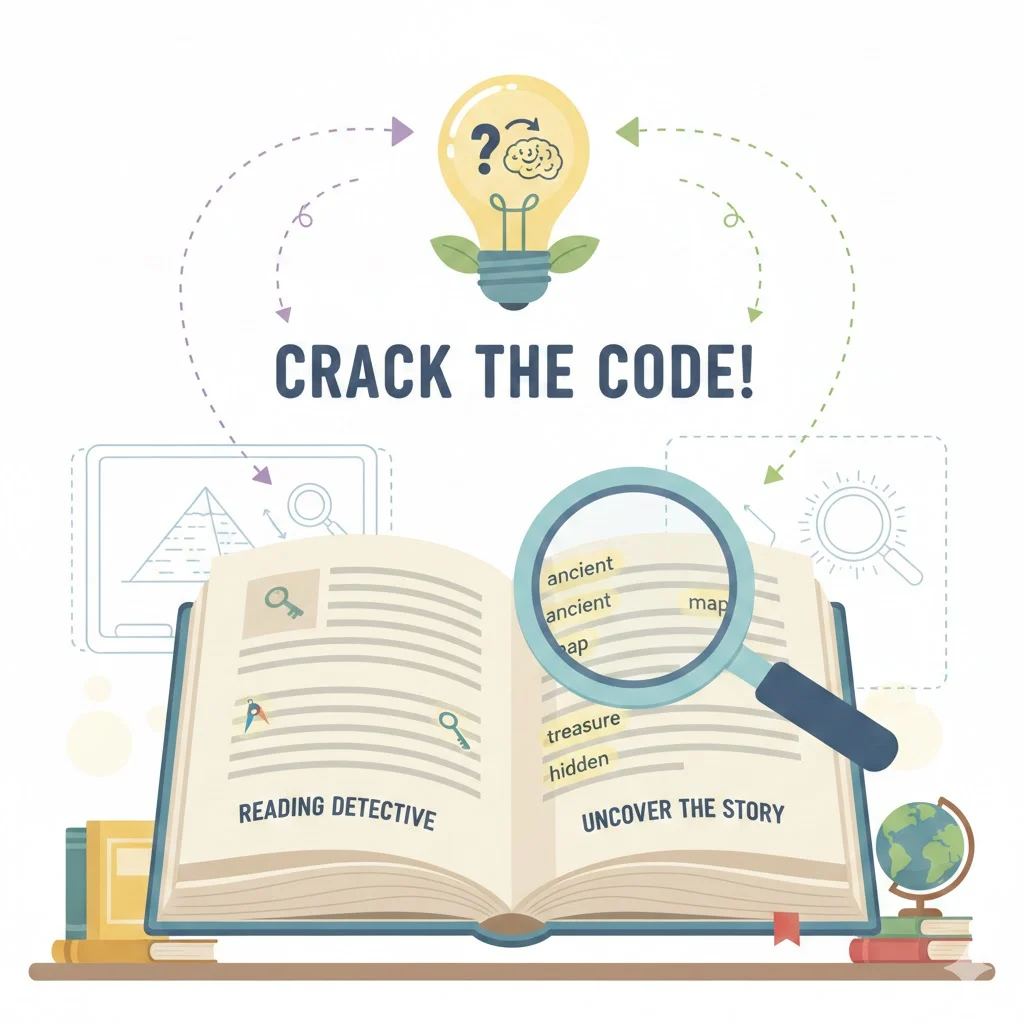

Infer in reading means to use clues from the text along with your own background knowledge to figure out information that the author does not directly state. In other words, when you infer, you read between the lines to understand deeper meaning.
Have you ever read a story where the author never actually says a character is sad, but you just know they are? Maybe the character avoids eye contact, speaks in short sentences, and walks away quietly. Even though the word sad never appears, you understand the emotion. That is inference in action.
Understanding what infer means in reading is one of the most important skills for strong comprehension. In fact, teachers, standardized tests, and reading programs often focus on inference because it shows deeper understanding rather than surface level reading.
In this guide, you will learn what infer means, how it works in reading, examples across different contexts, how it differs from similar terms, and practical strategies to strengthen your inference skills.
What Does Infer Mean in Reading?
In reading, to infer means to draw a conclusion based on evidence in the text plus your own knowledge and experience.
Instead of being told something directly, readers gather clues and make logical conclusions.
Simply put:
Text Clues + What You Already Know = Inference
For example:
Text says:
Maria grabbed her coat and umbrella before stepping outside.
You infer:
It is probably raining.
The author never mentions rain. However, you combine clues with real world knowledge to reach a logical conclusion.
Why Inference Is Important in Reading
Inference is essential because authors do not always explain everything directly. Instead, they expect readers to think critically and connect ideas.
Strong inference skills help you:
- Understand character emotions
- Recognize themes
- Predict what might happen next
- Interpret symbolism
- Answer comprehension questions accurately
Without inference, reading becomes literal and limited. With it, stories and articles become richer and more meaningful.
How Inference Works in Practice
Let us break down how inference works step by step.
Step 1: Notice Clues in the Text
Clues can include:
- Word choice
- Character actions
- Dialogue
- Setting details
- Tone
Step 2: Connect to Prior Knowledge
Think about what you already know from life experience or earlier parts of the text.
Step 3: Draw a Logical Conclusion
Combine both elements to reach a reasonable interpretation.
For example:
Text says:
The classroom was silent as the teacher handed back the exams.
You might infer:
The students are nervous about their grades.
The text does not directly state nervous, but the context suggests it.
Examples of Inference in Reading
Here are several examples across different tones and genres.
Example 1: Emotional Inference
Text:
Liam stared at the floor and avoided answering the question.
Inference:
Liam might feel embarrassed or guilty.
Example 2: Predictive Inference
Text:
Dark clouds gathered as the wind began to howl.
Inference:
A storm is likely coming.
Example 3: Character Trait Inference
Text:
She stayed late every night to help her classmates finish their projects.
Inference:
She is probably kind or responsible.
Example 4: Tone Inference
Text:
Oh great, another meeting.
Inference:
The speaker is likely being sarcastic or annoyed.
In each case, readers rely on subtle cues rather than direct statements.
Types of Inference in Reading
There are different types of inference that readers make.
1. Emotional Inference
Understanding how a character feels based on actions or dialogue.
2. Situational Inference
Figuring out what is happening based on context clues.
3. Predictive Inference
Guessing what might happen next.
4. Thematic Inference
Identifying the message or moral behind the text.
Each type strengthens overall reading comprehension.
Infer vs Imply: Understanding the Difference
Many people confuse infer with imply. However, they are not the same.
Here is a simple comparison.
| Infer | Imply |
|---|---|
| Done by the reader | Done by the writer or speaker |
| Draw a conclusion | Suggest something indirectly |
| Based on evidence | Leaves clues |
Example:
The author implies that the character is lonely by describing empty rooms and quiet nights.
The reader infers that the character is lonely based on those details.
In short, writers imply and readers infer.
Infer vs Predict
Although inference and prediction are related, they are slightly different.
Inference focuses on understanding something that is already happening but not stated directly.
Prediction focuses on guessing what will happen next.
For example:
Inference:
The character is upset because she slammed the door.
Prediction:
She might apologize later.
Both skills rely on evidence, but they serve different purposes.
Common Mistakes When Making Inferences
Even strong readers sometimes make incorrect inferences.
Here are common pitfalls.
1. Guessing Without Evidence
An inference must be supported by text clues.
2. Relying Only on Personal Opinion
Your interpretation must connect to the text.
3. Ignoring Context
Context provides important guidance for accurate conclusions.
Therefore, always ask yourself:
What evidence supports my conclusion?
How to Improve Inference Skills
If you want to become better at inferring while reading, try these strategies.
Ask Questions While Reading
Pause and ask:
What is the author not directly saying?
Highlight Clues
Underline or note important words that suggest meaning.
Make Connections
Think about similar real life experiences.
Practice with Short Passages
Short stories and articles are excellent for building inference skills.
Over time, inference becomes more natural and automatic.
Real World Uses of Inference
Inference is not limited to books or school assignments.
In daily life, people constantly make inferences.
For example:
- Interpreting someone’s tone in a conversation
- Understanding body language
- Reading news articles critically
- Analyzing advertisements
Because of this, inference is a life skill, not just a reading skill.
Alternate Meanings of Infer
Outside of reading, infer still means to draw a conclusion from evidence.
In science, someone might infer results from data.
In everyday speech, a person might say:
I inferred from his silence that he disagreed.
Although the context changes, the core meaning remains the same.
Polite and Professional Uses of Infer
In academic or professional writing, infer is commonly used.
Examples:
Based on the data, we can infer a correlation between the two variables.
From the survey responses, it can be inferred that customer satisfaction improved.
These uses sound formal and analytical.
Frequently Asked Questions
1. What does infer mean in simple terms?
It means to figure something out using clues and prior knowledge.
2. Is infer the same as guess?
No. Guessing lacks evidence. Inference requires proof from the text.
3. What is an example of inference in reading?
If a character is shivering and wearing a heavy coat, you infer that it is cold.
4. Why is inference important in reading comprehension?
It helps readers understand deeper meaning beyond literal words.
5. What is the difference between infer and imply?
Writers imply. Readers infer.
6. How can students practice inference?
By identifying clues in short passages and explaining their reasoning.
7. Can inference be wrong?
Yes. If it lacks evidence or ignores context, it may be inaccurate.
8. Is inference used outside of reading?
Yes. People use inference in conversations, research, and daily decision making.
Conclusion
So, what does infer mean in reading?
It means drawing logical conclusions using text evidence and your own knowledge. Rather than relying only on explicit statements, strong readers look for clues and think critically about what the author suggests indirectly.
To summarize:
Infer means to read between the lines
It combines evidence with background knowledge
It strengthens comprehension and critical thinking
It differs from imply and predict
It is useful in school and everyday life
Once you master inference, reading becomes more engaging, insightful, and meaningful.
discover more post
What Does Low CO2 Mean in a Blood Test? Causes and …
What Does Per Diem Mean in Jobs? Simple Explanation and …
What Does Submissive Mean in a Relationship? Clear and …


