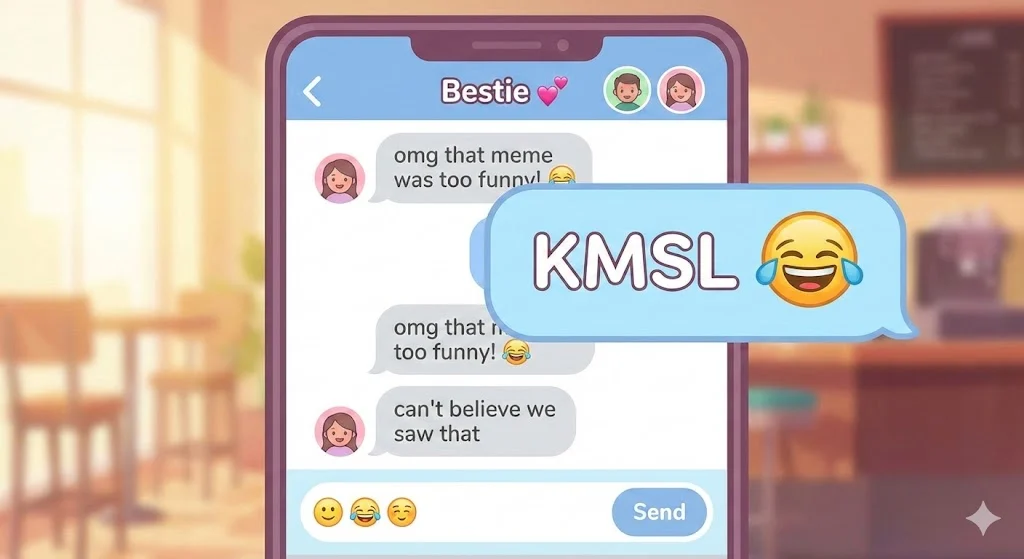

You’re texting a friend. Everything seems normal. Then suddenly, they reply with “KMSL 😂”.
Now you pause.
Is it funny?
Is it serious?
Or is it something you should be worried about?
You’re not alone.
Many people—especially teens, young adults, and even professionals—get confused when they first see KMSL in a message. The acronym looks intense, but in most cases, it’s actually used in a playful and humorous way.
In this detailed guide, we’ll break down what does KMSL mean in text, where it came from, how people use it on social media, gaming platforms, and dating apps, and when it’s okay—or not okay—to use it. By the end, you’ll understand the meaning clearly and respond with confidence.
Definition & Meaning of KMSL
KMSL stands for “Killing Myself Laughing.”
Despite how extreme it sounds, KMSL is usually NOT literal. It’s a slang expression used to show extreme laughter, similar to:
- LOL (Laugh Out Loud)
- ROFL (Rolling On the Floor Laughing)
- LMAO (Laughing My A** Off)
What KMSL Really Means
In texting and online chats, KMSL means:
- “That’s extremely funny”
- “I’m laughing really hard”
- “This made my day”
Example Text Conversations
Friend chat:
Alex: “I tripped in front of everyone today 😭”
Sam: “KMSL 😂😂”
Social media comment:
“This video has me KMSL”
Key Things to Remember
- It’s slang, not literal.
- Tone depends on context.
- Often paired with laughing emojis to show humor.
- Can be misunderstood if used with the wrong audience.
Background & History of KMSL
KMSL comes from the evolution of internet slang and exaggerated humor.
Where It Started
- Early online forums and chat rooms
- Popularized through Black Twitter, meme culture, and youth slang
- Spread rapidly on Instagram, TikTok, Snapchat, and Discord
Why It Became Popular
Internet humor thrives on exaggeration. Saying “I’m laughing” wasn’t enough anymore. People wanted stronger expressions to show how funny something was.
That’s how phrases like:
- “I’m dead”
- “I’m screaming”
- “KMSL”
became part of everyday digital language.
Cultural Influence
- More common among younger users
- Often used in casual, expressive communities
- Less common in formal or mixed-age spaces
Usage in Different Contexts
KMSL can mean different things depending on where and how it’s used.
Texting & Private Messages
Most common and safest place to use KMSL.
Example:
“That voice note had me KMSL 😂”
Social Media
Used in:
- Comments
- Captions
- Meme reactions
Example:
“This skit got me KMSL”
Gaming Chats
Gamers often use KMSL to react to:
- Fails
- Funny glitches
- Unexpected moments
Example:
“You really fell off the map? KMSL 💀”
Casual vs Professional Use
| Context | Is KMSL Appropriate? | Reason |
|---|---|---|
| Friends | ✅ Yes | Casual humor |
| Social media | ✅ Usually | Depends on audience |
| Gaming | ✅ Yes | Informal |
| Workplace | ❌ No | Too intense |
| Emails | ❌ Never | Unprofessional |
Professional Communication
Using KMSL in professional settings is not recommended.
Why You Should Avoid It
- Sounds extreme
- Can be misinterpreted
- May appear insensitive
- Not everyone understands slang
Better Alternatives
Instead of:
“KMSL, that meeting was funny”
Say:
- “That was hilarious”
- “That made me laugh”
- “That was unexpectedly funny”
Professional Tip
If you wouldn’t say it out loud in a meeting, don’t type it.
Hidden or Offensive Meanings
While KMSL is usually harmless, it can raise concerns.
Why It Can Be Risky
- Contains violent language
- Can be triggering for some readers
- Lacks tone without emojis
Safe vs Risky Examples
Safe:
“KMSL 😂😂 that video is wild”
Risky:
“I’m KMSL” (no emoji, no context)
Rule of Thumb
If there’s no clear humor, avoid using KMSL.
Usage in Online Communities & Dating Apps
KMSL is common in:
- Dating apps
- Comment sections
- Group chats
Dating App Example
“Your bio got me KMSL 😂”
Tips for Dating Apps
- Use emojis to soften tone
- Don’t overuse slang
- Match the other person’s energy
Online Community Tip
Every community has its own language. Observe before using strong slang.
Comparison with Similar Terms
| Term | Meaning | Tone | Safety |
|---|---|---|---|
| KMSL | Killing Myself Laughing | Very casual | Medium risk |
| LOL | Laugh Out Loud | Casual | Safe |
| LMAO | Laughing Hard | Casual | Mostly safe |
| ROFL | Extreme laughter | Playful | Safe |
| “I’m dead” | Very funny | Slang | Medium risk |
Key Insight:
KMSL is stronger and riskier than LOL, but common among younger users.
10 Slang Terms & Acronyms Related to KMSL
- KMSL – Killing Myself Laughing
- KMS – Killing Myself (⚠️ risky alone)
- LOL – Laugh Out Loud
- LMAO – Laughing Hard
- ROFL – Rolling On Floor Laughing
- IM DEAD – Extremely funny
- SCREAMING – Laughing uncontrollably
- CRYING 😂 – Laughing too hard
- 💀 Emoji – “I’m dead laughing”
- LMFAO – Strong laughter expression
How to Respond to KMSL
Your response depends on tone and setting.
Casual Responses
- “Same 😂”
- “I know right”
- “That was wild”
Funny Responses
- “I knew you’d laugh”
- “Glad I could do that 😂”
Neutral / Safe Responses
- “That was funny”
- React with 😂 or 💀 emoji
Professional Setting
Avoid responding with slang. Use:
- “That was amusing”
- “That made me laugh”
Regional & Cultural Differences
- USA & UK: Very casual, youth slang
- Canada & Australia: Less common but understood
- Non-native English speakers: Often misunderstood
- Older audiences: May find it alarming
Example
“KMSL”
Teen: 😂
Professional adult: 🤔
Always adjust your language to your audience.
FAQs
Q1: What does KMSL mean in text?
It means “Killing Myself Laughing,” used to express extreme laughter.
Q2: Is KMSL serious?
No, it’s usually not literal and is meant humorously.
Q3: Is KMSL offensive?
It can be sensitive to some people. Use with care.
Q4: Can I use KMSL on social media?
Yes, in casual contexts with friends or followers.
Q5: Should I use KMSL at work?
No. It’s unprofessional and risky.
Q6: What’s a safer alternative to KMSL?
LOL, “that’s hilarious,” or laughing emojis.
Conclusion
Understanding what does KMSL mean in text helps you navigate modern digital conversations with confidence. While the phrase may sound intense, it’s usually just a playful way to show strong laughter. Still, context matters. What’s funny among friends may feel inappropriate in professional or unfamiliar spaces. Always consider your audience, add emojis for clarity, and choose safer alternatives when needed. Slang evolves fast, but clear communication never goes out of style. Now that you know the meaning, you can react wisely and laugh without confusion.