
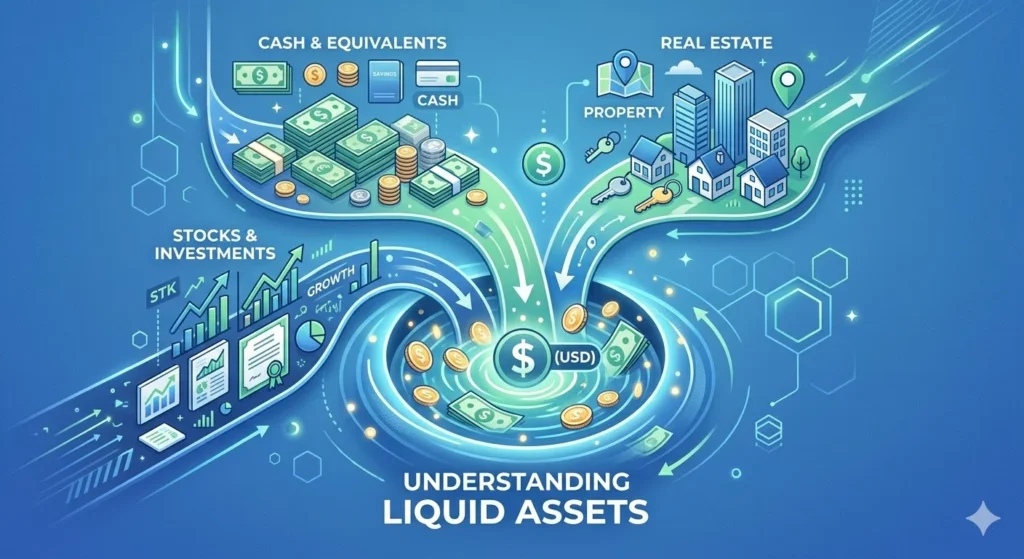

In finance, liquid refers to how quickly and easily an asset can be converted into cash without significantly affecting its price. The more liquid an asset is, the faster it can be sold at a fair market value.
Money moves fast in the financial world, and so does the need to access it. Whether you are investing, running a business, or managing personal finances, understanding the concept of liquidity is essential. You might hear phrases like “liquid assets,” “high liquidity,” or “low liquidity,” especially in discussions about investments or markets.
So, what does liquid mean in finance? Simply put, it is all about speed, ease, and value preservation when turning assets into cash. In this guide, you will learn what liquidity means, why it matters, how it works in real life, and how it compares to related financial concepts.
What Does Liquid Mean in Finance?
In finance, liquid describes an asset that can be quickly sold or converted into cash with minimal loss in value.
Cash itself is considered perfectly liquid because it is already in its most usable form. However, other assets vary in how liquid they are depending on how easily they can be sold.
Key Characteristics of Liquid Assets
- Can be sold quickly
- Have active buyers and sellers
- Maintain stable and predictable pricing
- Involve low transaction costs
Because of these qualities, liquid assets are highly desirable in both personal and business finance.
Why Liquidity Matters
Liquidity plays a crucial role in financial stability and decision making.
First, it ensures that individuals and businesses can meet short term obligations. For example, paying bills, salaries, or emergencies requires access to liquid funds.
In addition, liquidity reduces risk. Assets that are easy to sell provide flexibility during uncertain market conditions.
Moreover, investors often prefer liquid markets because they can enter and exit positions without major price disruptions.
Types of Liquid Assets
Not all assets are equally liquid. Some can be converted to cash almost instantly, while others take time.
Highly Liquid Assets
These assets can be converted into cash very quickly.
- Cash
- Bank account balances
- Money market funds
- Government bonds (in active markets)
Moderately Liquid Assets
These assets can be sold relatively easily but may require some time.
- Stocks
- Exchange traded funds
- Mutual funds
Low Liquidity Assets
These assets take longer to sell and may lose value during the process.
- Real estate
- Collectibles such as art
- Private business ownership
- Specialized equipment
Liquidity Example Table
| Asset Type | Liquidity Level | Time to Convert to Cash | Price Stability |
|---|---|---|---|
| Cash | Very High | Immediate | Stable |
| Savings Account | Very High | Immediate | Stable |
| Stocks | High | Minutes to hours | Slight fluctuations |
| Real Estate | Low | Weeks to months | Variable |
| Art Collectibles | Very Low | Months to years | Unpredictable |
This table shows how different assets compare in terms of liquidity.
Real World Examples of Liquidity
Understanding liquidity becomes easier when you look at real situations.
Example 1: Emergency Expenses
If you suddenly need money for a medical expense, having cash or funds in a bank account is helpful because these are highly liquid.
Example 2: Selling Stocks
If you own shares in a popular company, you can usually sell them quickly during market hours. As a result, stocks are considered relatively liquid.
Example 3: Selling Property
Selling a house takes time. You need to find a buyer, negotiate a price, and complete paperwork. Therefore, real estate is considered illiquid.
Liquid vs Illiquid Assets
To better understand liquidity, it helps to compare liquid and illiquid assets directly.
Comparison Table
| Feature | Liquid Assets | Illiquid Assets |
|---|---|---|
| Ease of sale | Easy | Difficult |
| Time required | Short | Long |
| Price impact | Minimal | Often significant |
| Flexibility | High | Low |
In general, the more liquid an asset is, the more flexible it becomes in financial planning.
Liquidity in Financial Markets
Liquidity is not only about individual assets. It also applies to entire markets.
High Liquidity Markets
Markets with many buyers and sellers are considered highly liquid.
Examples include:
- Stock markets
- Foreign exchange markets
These markets allow trades to happen quickly and at predictable prices.
Low Liquidity Markets
On the other hand, markets with fewer participants are less liquid.
Examples include:
- Real estate markets
- Rare collectibles markets
In these cases, prices can vary widely, and selling may take longer.
Liquidity Ratios in Finance
Businesses use liquidity ratios to measure their ability to meet short term obligations.
Common Liquidity Ratios
- Current Ratio
Current assets divided by current liabilities - Quick Ratio
Similar to the current ratio but excludes inventory - Cash Ratio
Measures how much cash is available to cover liabilities
These ratios help investors and analysts evaluate financial health.
Emotional Tone and Usage of “Liquid” in Finance
Unlike slang terms, “liquid” in finance is neutral and technical. However, it can carry different implications depending on context.
Positive Tone
- “The company has strong liquidity.”
This suggests financial stability.
Neutral Tone
- “The asset is fairly liquid.”
This simply describes ease of conversion.
Negative Tone
- “The investment lacks liquidity.”
This highlights potential difficulty in selling.
Common Misconceptions About Liquidity
There are a few misunderstandings about what liquidity means.
- Liquid does not mean profitable
An asset can be liquid but still lose value - Illiquid does not mean bad
Some illiquid assets, like real estate, can be very valuable - Cash is not always the best investment
While highly liquid, cash may not grow significantly over time
Understanding these points helps create a balanced financial strategy.
Alternate Meanings of Liquid
Although this article focuses on finance, the word “liquid” has other meanings.
- In general language, it refers to a physical state like water
- In business, it can sometimes refer to cash availability
- In slang, it may describe financial flexibility
However, in finance, the meaning is specific to ease of converting assets into cash.
Polite and Professional Alternatives
In professional settings, instead of repeatedly using “liquid,” you can use:
- Easily convertible to cash
- Highly tradable
- Cash equivalent
- Readily available funds
- Strong liquidity position
These alternatives can improve clarity and tone in reports or discussions.
Frequently Asked Questions
1. What does liquid mean in finance?
It means an asset can be quickly converted into cash without losing much value.
2. What is a liquid asset?
A liquid asset is something that can be easily sold or accessed as cash, such as money in a bank account or stocks.
3. Is cash the most liquid asset?
Yes. Cash is the most liquid asset because it does not need to be converted.
4. Are stocks liquid?
Yes, most stocks are considered liquid because they can be sold quickly in active markets.
5. Why is liquidity important?
Liquidity ensures you can meet financial obligations and respond to emergencies.
6. What is an illiquid asset?
An illiquid asset is difficult to sell quickly and may lose value during the sale.
7. Can an asset lose value while being liquid?
Yes. Liquidity does not guarantee price stability.
8. How do businesses measure liquidity?
Businesses use ratios like the current ratio, quick ratio, and cash ratio.
Conclusion
So, what does liquid mean in finance? It refers to how quickly and easily an asset can be turned into cash without affecting its value.
To summarize:
- Liquid assets are easy to sell
- Cash is the most liquid form
- Liquidity provides financial flexibility
- Different assets have different liquidity levels
- Both individuals and businesses rely on liquidity for stability
Ultimately, understanding liquidity helps you make smarter financial decisions, manage risk, and stay prepared for unexpected situations.
Discover More Post
What Does Gordo Mean in Spanish? Meaning, Usage, and …
What Does 504 Mean in School? 504 Plan Explained Clearly …
What Does Acute Mean in Math? Simple Definition and …