
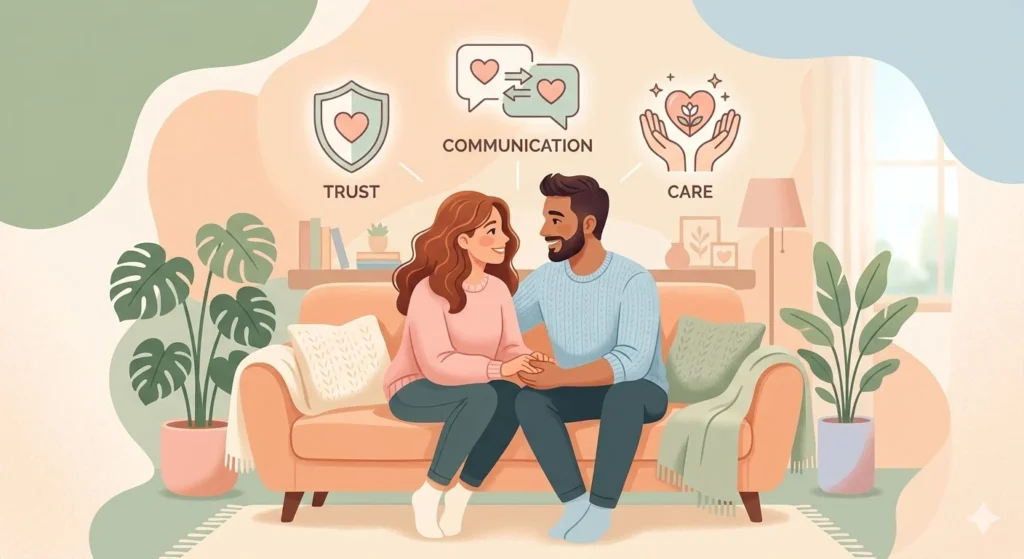

Love in a relationship is a deep emotional connection that combines care, trust, respect, commitment, and affection between two people. It goes beyond attraction and involves supporting each other, growing together, and maintaining a meaningful bond over time.
Love is one of the most talked about and yet most misunderstood aspects of human life. Everyone experiences it differently, yet most people want the same thing at the core: a connection that feels real, safe, and lasting. So when people ask, what does love mean in a relationship, they are often searching for clarity, reassurance, or even validation.
At first, love may feel like excitement, butterflies, and constant thinking about the other person. However, as a relationship grows, love evolves into something deeper and more stable. Understanding this shift is key to building a healthy and lasting partnership.
In this guide, we will explore what love truly means in a relationship, how it shows up in everyday life, how it differs from similar feelings, and what real love looks like beyond the surface.
What Does Love Mean in a Relationship?
In a relationship, love means choosing someone consistently while caring for their emotional, mental, and sometimes physical well being.
More importantly, it includes:
- Emotional support during both good and difficult times
- Respect for boundaries, opinions, and individuality
- Trust that builds over time
- Honest communication
- Commitment to growth as a couple
Because of this, love is not just a feeling. Instead, it is a combination of actions, intentions, and emotional connection.
The Core Elements of Love in a Relationship
Although love can look different for everyone, certain core elements are present in healthy relationships.
1. Emotional Connection
First of all, love involves a strong emotional bond. This means feeling understood, valued, and accepted.
For example:
- You feel comfortable sharing your thoughts and fears
- You listen to each other without judgment
- You feel emotionally safe
As a result, emotional intimacy becomes the foundation of the relationship.
2. Trust and Honesty
In addition, trust is essential for love to grow.
Without trust, even strong feelings can become unstable. On the other hand, when trust is present, both partners feel secure.
Examples include:
- Being honest even when it is difficult
- Keeping promises
- Respecting each other’s privacy
3. Respect
Another important aspect of love is respect.
This means valuing your partner as an individual, even when you disagree.
Examples:
- Respecting opinions and choices
- Avoiding hurtful language
- Supporting personal goals
Respect ensures that love remains healthy rather than controlling.
4. Commitment
Furthermore, love involves commitment.
This does not mean perfection. Instead, it means choosing to stay, work through challenges, and grow together.
Examples:
- Staying loyal
- Putting effort into the relationship
- Working through misunderstandings
5. Care and Support
Finally, love shows up through care and support.
This includes:
- Being there during tough times
- Celebrating each other’s successes
- Offering encouragement
Over time, these small actions build a strong and lasting bond.
How Love Shows Up in Everyday Life
Love is not only expressed through big romantic gestures. In fact, it is often seen in small, consistent actions.
Examples:
- Checking in on your partner during the day
- Remembering important details
- Making time for each other
- Listening when they need to talk
- Showing appreciation regularly
Because of this, everyday actions matter more than occasional grand moments.
Examples of Love in Different Tones
Understanding tone helps you recognize how love is expressed in real conversations.
Warm and Affectionate Tone 😊
- I care about you and I want us to grow together
- I feel safe when I am with you
Calm and Reassuring Tone
- I am here for you no matter what
- We can work through this together
Honest and Serious Tone
- I love you, but we need to communicate better
- I want this relationship to grow stronger
In each case, love is expressed through intention and sincerity.
Love vs Infatuation: Important Differences
One common confusion is between love and infatuation.
Comparison Table
| Love | Infatuation |
|---|---|
| Deep emotional connection | Intense attraction |
| Grows over time | Happens quickly |
| Stable and consistent | Often unpredictable |
| Accepts flaws | Focuses on perfection |
| Based on trust and respect | Based on excitement |
While infatuation can feel powerful, it usually fades. Love, however, becomes stronger with time and effort.
Love vs Attachment
Another important distinction is between love and attachment.
| Love | Attachment |
|---|---|
| Healthy connection | Fear of losing someone |
| Encourages independence | Can feel dependent |
| Based on trust | Often based on insecurity |
| Balanced and mutual | Can be one sided |
Recognizing this difference helps build healthier relationships.
What Love Is Not
Understanding what love is not can be just as important.
Love is not:
- Control or manipulation
- Constant conflict without resolution
- Lack of respect
- Emotional neglect
- Fear based dependency
If these patterns exist, the relationship may need attention or change.
Polite and Healthy Ways to Express Love
Instead of relying only on the words “I love you,” people express love in many meaningful ways.
Examples:
- I appreciate you
- I care about your happiness
- You matter to me
- I value our relationship
- I am grateful for you
These expressions can feel more personal and specific.
Common Misconceptions About Love in Relationships
Many people have unrealistic ideas about love. Let’s clarify a few.
- Love should always feel exciting
In reality, love becomes calmer and more stable over time - Love means never arguing
Healthy relationships include respectful disagreements - Love is enough on its own
Strong relationships also need communication, effort, and understanding
Frequently Asked Questions
1. What does true love mean in a relationship?
True love means a deep, genuine connection built on trust, respect, care, and long term commitment.
2. How do you know if it is love or just attraction?
Love develops over time and includes emotional depth, while attraction is often immediate and physical.
3. Can love exist without trust?
No. Trust is a core part of love. Without it, the relationship becomes unstable.
4. Is love a feeling or a choice?
It is both. Feelings may start it, but choices and actions sustain it.
5. How does love change over time?
It often shifts from excitement to a deeper sense of comfort, stability, and partnership.
6. What are signs of real love?
Support, respect, honesty, effort, and emotional safety are key signs.
7. Can love fade in a relationship?
Yes, if it is not nurtured. However, it can also be rebuilt with effort and communication.
8. Is love the same in every relationship?
No. Each relationship is unique, but healthy love shares common core elements.
Conclusion
So, what does love mean in a relationship? At its core, love is a deep emotional connection supported by trust, respect, care, and consistent effort.
To summarize:
- Love is more than just a feeling
- It is built through actions and choices
- It grows stronger with time and effort
- It includes trust, respect, and communication
- It shows up in everyday moments, not just big gestures
Understanding love in this way helps you build stronger, healthier, and more meaningful relationships.
Discover More Post
EYP Meaning in Text What It Stands For and How to Use It for …
What Does Mutually Exclusive Mean in Probability? Clear …
ISTG Meaning in Text Definition, Usage, Examples for 2026