
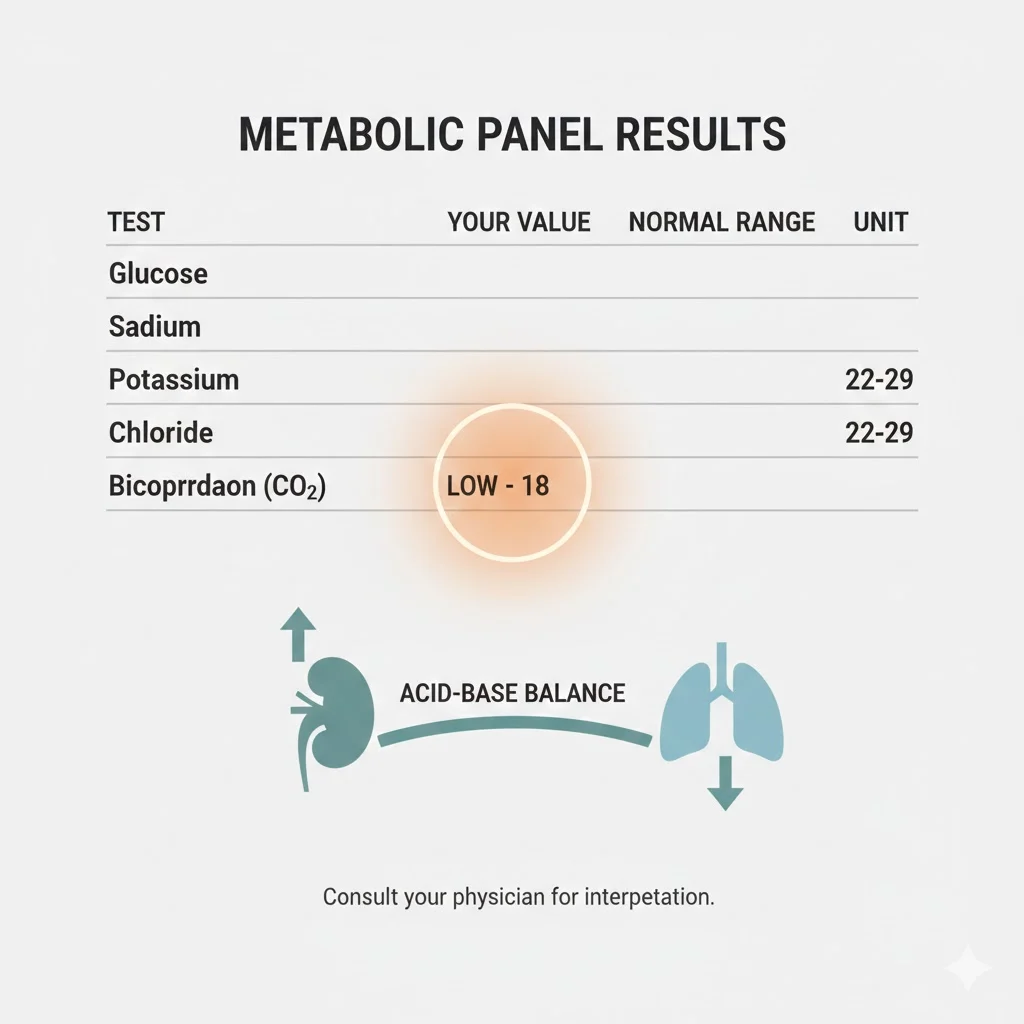

Low CO2 in a blood test means that the level of carbon dioxide, measured as bicarbonate, is below the normal range and may indicate an imbalance in the body’s acid base levels, often linked to breathing issues, kidney function, dehydration, or metabolic conditions.
Seeing abnormal lab results can be confusing and even stressful, especially when they involve unfamiliar terms like CO2. Many people are surprised to learn that a CO2 blood test is not actually measuring the gas you breathe out, but something closely related that plays a major role in keeping your body balanced.
If your report says low CO2, it does not automatically mean something serious. However, it is an important clue that helps doctors understand what may be happening inside your body. In this article, you will learn exactly what low CO2 means in a blood test, why it happens, how it is interpreted, and when it might require medical attention.
What Does Low CO2 Mean in a Blood Test?
In a blood test, CO2 refers to bicarbonate, a form of carbon dioxide found in your blood. It helps regulate your body’s acid base balance, also known as pH balance.
When CO2 levels are low, it usually means your blood is more acidic than normal or that your body is losing bicarbonate faster than it should.
In most lab reports, CO2 is measured as part of a basic metabolic panel or comprehensive metabolic panel.
Normal CO2 Levels in Blood
Understanding what is considered normal helps put low results into context.
Typical Reference Range
| CO2 Level | Meaning |
|---|---|
| 22 to 29 mEq per liter | Normal |
| Below 22 mEq per liter | Low |
| Above 29 mEq per liter | High |
Ranges can vary slightly depending on the laboratory, so your doctor will always interpret results based on your specific report and health history.
Why CO2 Levels Matter in the Body
CO2, in the form of bicarbonate, acts as a buffer. In other words, it helps prevent your blood from becoming too acidic or too alkaline.
To keep this balance:
- Your lungs control how much CO2 you breathe out
- Your kidneys regulate how much bicarbonate you keep or remove
When this system is disrupted, CO2 levels can fall, rise, or fluctuate.
Common Causes of Low CO2 in a Blood Test
Low CO2 does not have a single cause. Instead, it can result from several different conditions or situations.
1. Metabolic Acidosis
One of the most common reasons for low CO2 is metabolic acidosis.
This happens when:
- Your body produces too much acid
- Your kidneys cannot remove acid properly
- You lose too much bicarbonate
Possible triggers include kidney disease, severe infections, or uncontrolled diabetes.
2. Kidney Problems
The kidneys play a major role in maintaining bicarbonate levels.
When kidney function is reduced:
- Acid may build up in the blood
- Bicarbonate levels may drop
As a result, low CO2 can sometimes be an early sign of kidney related issues.
3. Diarrhea or Digestive Losses
Another common cause is prolonged or severe diarrhea.
During diarrhea:
- Bicarbonate is lost through the digestive tract
- CO2 levels in the blood decrease
In this case, low CO2 is often temporary and improves once the underlying issue resolves.
4. Dehydration
Dehydration can concentrate or disrupt electrolytes and acid base balance.
Although dehydration affects multiple lab values, it can sometimes contribute to low CO2, especially if fluid loss is severe.
5. Diabetic Ketoacidosis
In people with diabetes, especially type 1 diabetes, low CO2 can signal diabetic ketoacidosis.
This condition occurs when:
- The body breaks down fat too quickly
- Acidic ketones build up in the blood
- Bicarbonate levels drop as the body tries to buffer the acid
This is a medical emergency that requires immediate treatment.
6. Certain Medications
Some medications can lower CO2 levels as a side effect.
Examples include:
- Diuretics
- Certain seizure medications
- Drugs that affect kidney function
For this reason, doctors often review medications when interpreting low CO2 results.
Symptoms That May Occur with Low CO2
Low CO2 itself does not always cause noticeable symptoms. However, when levels drop significantly, symptoms related to acid imbalance may appear.
These can include:
- Fatigue
- Rapid breathing
- Confusion
- Headache
- Nausea
- Weakness
Symptoms depend heavily on the underlying cause rather than the CO2 level alone.
Low CO2 vs High CO2 in Blood Tests
Understanding the difference helps clarify what low CO2 represents.
Comparison Table
| Low CO2 | High CO2 |
|---|---|
| Suggests acidosis | Suggests alkalosis |
| Often linked to acid buildup | Often linked to CO2 retention |
| Common in kidney or metabolic issues | Common in lung or breathing conditions |
| May involve rapid breathing | May involve slow breathing |
Both results require interpretation alongside other lab values.
How Doctors Interpret Low CO2 Results
Doctors do not diagnose based on CO2 alone. Instead, they look at the full picture.
This often includes:
- Other electrolytes like sodium and potassium
- Blood pH levels
- Kidney function tests
- Medical history
- Current symptoms
Because of this, a mildly low CO2 level may not be concerning if everything else looks normal.
Is Low CO2 Always Serious?
Not necessarily.
In many cases, low CO2 is:
- Mild
- Temporary
- Easily correctable
For example, short term illness, dehydration, or minor digestive issues can cause temporary drops.
However, persistently low CO2 or very low values deserve medical attention, especially if symptoms are present.
What to Do If Your CO2 Is Low
If your blood test shows low CO2, the best next step is not panic, but follow up.
Here is what typically happens next:
- Your doctor reviews other lab results
- Additional tests may be ordered
- Underlying causes are addressed
- Treatment focuses on correcting the root problem
Never try to self diagnose or self treat based on lab numbers alone.
Polite and Professional Ways Doctors May Explain Low CO2
Doctors often use patient friendly language when discussing results.
Examples include:
- Your bicarbonate level is a bit low
- This suggests a mild acid imbalance
- We will monitor this and look for causes
- It may be related to dehydration or recent illness
Clear explanations help reduce anxiety and guide next steps.
Frequently Asked Questions
1. What does low CO2 mean in a blood test?
It usually means your bicarbonate level is low, which may suggest an acid base imbalance in the body.
2. Is low CO2 dangerous?
It depends on the cause and severity. Mild cases are often harmless, while severe cases may need treatment.
3. Can dehydration cause low CO2?
Yes. Dehydration can contribute to electrolyte and acid base imbalances, including low CO2.
4. Does low CO2 mean lung problems?
Not always. Low CO2 is more commonly linked to metabolic or kidney related issues rather than lung disease.
5. Can anxiety cause low CO2?
Anxiety related hyperventilation can affect CO2 balance, although blood test changes are usually mild.
6. How is low CO2 treated?
Treatment focuses on the underlying cause, such as fluids, medication adjustment, or managing chronic conditions.
7. Should I worry about slightly low CO2?
A slightly low value without symptoms is often not serious, but it should still be discussed with your doctor.
8. Can low CO2 levels return to normal?
Yes. Once the underlying issue is resolved, CO2 levels often return to normal.
Conclusion
So, what does low CO2 mean in a blood test? In simple terms, it means your blood has lower than normal bicarbonate levels, which can point to an acid base imbalance.
To recap:
- CO2 in blood tests reflects bicarbonate
- Low levels often suggest increased acidity
- Causes range from dehydration to kidney or metabolic conditions
- Context and other lab results are essential
- Many cases are mild and treatable
Understanding your lab results empowers you to have better conversations with your healthcare provider and take the right next steps with confidence.
Discover More Post
What Does PIM Mean in Hockey? Simple Explanation for New …
What Does Delta H Mean in Chemistry? Simple Explanation …
What Does MF Mean in Text? Meaning, Usage, and Examples