
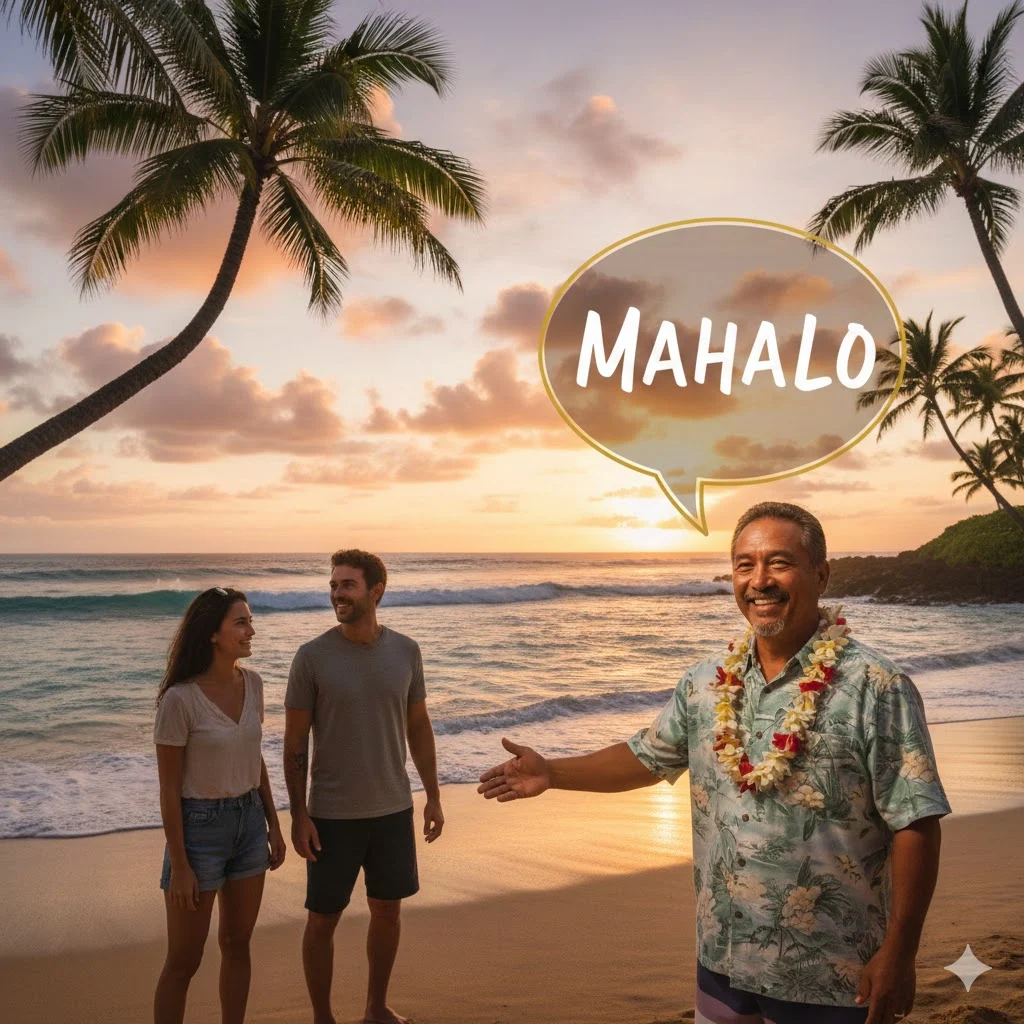

You may have heard the word mahalo while visiting Hawaii, watching a movie, or reading a travel blog. Locals say it with a smile. Shops display it on signs. Tourists use it often, sometimes without fully knowing what it means. So the big question is what does mahalo mean in Hawaiian, and why is it so important?
Mahalo is more than just a word. It carries emotion, respect, and deep cultural value. It reflects the Hawaiian way of life, where kindness and gratitude matter every day. Understanding this word helps you connect better with Hawaiian culture and avoid using it the wrong way.
In this article, you will learn the true meaning of mahalo, its history, how to use it correctly, when not to use it, and how it compares to similar words. By the end, you will understand why mahalo is powerful, simple, and meaningful.
Definition and Meaning of Mahalo
Mahalo is a Hawaiian word that most commonly means thank you. It is used to show gratitude, appreciation, and respect.
But mahalo is not just a direct translation of thank you. In Hawaiian culture, words often carry deeper meaning. Mahalo reflects a feeling of thankfulness that comes from the heart, not just polite speech.
Core meanings of mahalo
- Thank you
- Appreciation
- Gratitude
- Respect
- Acknowledgment
Simple examples
- Someone holds the door for you
You say: Mahalo - A local helps you find directions
You say: Mahalo nui loa
Mahalo nui loa meaning
Mahalo nui loa means thank you very much.
- Nui = big or great
- Loa = very or extremely
Together, they increase the strength of gratitude.
Important note
Mahalo is not slang. It is a real Hawaiian word with cultural value. Using it correctly shows respect. Using it carelessly can feel shallow or tourist-like.
Background and History of the Word Mahalo
To understand what mahalo really means, we need to look at Hawaiian history.
Before Western contact, the Hawaiian language was rich, spiritual, and closely tied to nature and relationships. Words were not used lightly. Gratitude was shown through actions more than speech.
Early meaning
Originally, mahalo did not always mean thank you. Early Hawaiian texts show that mahalo was linked to:
- Admiration
- Praise
- Respect
The modern use of mahalo as thank you became more common after Western influence, especially through missionaries and English language interaction.
Evolution over time
- Pre-contact Hawaii
Mahalo meant respect or admiration - 1800s missionary period
Mahalo began to be used as thank you - Modern Hawaii
Mahalo means thank you, appreciation, and gratitude
Even today, elders remind people that mahalo is not just a word. It should be felt, not forced.
How Mahalo Is Used in Daily Hawaiian Life
Mahalo is used every day in Hawaii. You will hear it in homes, stores, schools, and workplaces.
Common daily situations
- Paying at a store
- Receiving help
- Ending a conversation politely
- Thanking elders or teachers
Example conversations
At a coffee shop
Customer: Can I get a latte, please?
Barista: Here you go.
Customer: Mahalo
At a beach rental
Staff: Be careful with the waves today.
You: Mahalo nui loa
Mahalo fits naturally into daily life. It is warm and respectful.
Usage of Mahalo in Social Media and Online Conversations
Mahalo is also widely used online, especially in Hawaii-related content.
Common online uses
- Instagram captions
- Travel blog posts
- Thank-you posts
- Event announcements
Examples
- Mahalo for all the birthday wishes
- Mahalo Hawaii for the memories
- Mahalo to our amazing customers
Online, mahalo keeps its respectful tone. It feels more personal than a simple thank you.
Professional and Business Use of Mahalo
Mahalo is commonly used in professional settings in Hawaii.
Appropriate professional use
- Emails
- Customer service
- Business signs
- Event speeches
Example email closing
Mahalo,
John
Example sign
Mahalo for supporting local businesses
Important tip
Using mahalo in Hawaiian business culture shows respect and local awareness. Outside Hawaii, it may feel informal or cultural, so context matters.
When Not to Use Mahalo
Even though mahalo is positive, there are times when it should be used carefully.
Avoid using mahalo when
- Mocking Hawaiian culture
- Using it sarcastically
- Pairing it with disrespectful language
- Treating it like a joke or meme
Risky example
Mahalo for nothing
This can sound rude and disrespectful.
Safe alternative
Thank you for your time
Respect is key. Mahalo should always come from sincerity.
Hidden Meanings and Cultural Importance
Mahalo carries cultural weight. It connects to core Hawaiian values like:
- Aloha
- Ohana (family)
- Respect for land and people
When a Hawaiian says mahalo, it often includes:
- Appreciation for effort
- Recognition of kindness
- Emotional warmth
It is not rushed. It is meant.
Tourists who understand this earn respect. Those who treat it casually often do not.
Mahalo in Tourism and Visitor Culture
Tourism has helped spread the word mahalo worldwide.
Common tourist exposure
- Airport signs
- Hotel staff
- Tour guides
- Souvenir items
Popular phrases tourists see
- Mahalo and aloha
- Mahalo for visiting
- Mahalo nui loa
Tourist tip
Using mahalo correctly shows cultural awareness. Pair it with a smile and eye contact. Avoid overusing it just to sound local.
Mahalo in Hawaiian Music, Media, and Pop Culture
Mahalo appears often in Hawaiian music, movies, and storytelling.
Music
- Songs use mahalo to express gratitude to land and people
- Lyrics often combine mahalo and aloha
Media
- Hawaiian shows and films use mahalo naturally
- It reflects authentic dialogue
Mahalo represents kindness, humility, and appreciation in Hawaiian storytelling.
Comparison With Similar Words
| Word | Language | Meaning | Tone |
|---|---|---|---|
| Mahalo | Hawaiian | Thank you | Warm, respectful |
| Aloha | Hawaiian | Hello, love, goodbye | Emotional, spiritual |
| Thanks | English | Thank you | Neutral |
| Gracias | Spanish | Thank you | Polite |
| Arigato | Japanese | Thank you | Respectful |
Mahalo stands out because it feels personal and cultural, not transactional.
Common Phrases Using Mahalo
Here are popular phrases you will hear in Hawaii:
- Mahalo
Basic thank you - Mahalo nui loa
Thank you very much - Mahalo ke Akua
Thank God - Mahalo for your kokua
Thank you for your help - Mahalo for your patience
Often used in customer service - Mahalo for coming
Event related gratitude - Mahalo Hawaii
Love for the islands - Mahalo e
Friendly and informal thanks - Mahalo plenty
Casual local expression - With mahalo
Respectful closing phrase
How to Respond When Someone Says Mahalo
Knowing how to respond is helpful.
Common responses
- You are welcome
- Aloha
- No problem
- Happy to help
Local-style response
- Aloha
- Of course
There is no single Hawaiian word equal to you are welcome that fits all cases, so simple English replies are fine.
Regional and Cultural Differences
Mahalo is primarily Hawaiian, but its usage varies.
In Hawaii
- Deep cultural meaning
- Used daily
- Very respectful
Outside Hawaii
- Often used symbolically
- Travel or beach culture
- Less emotional weight
Cultural reminder
Using mahalo outside Hawaii is fine, but always with respect and correct context.
FAQs About Mahalo
Q1: Does mahalo only mean thank you?
No. It also expresses appreciation, respect, and gratitude.
Q2: Is mahalo formal or casual?
It can be both, depending on tone and setting.
Q3: Can tourists use mahalo?
Yes, if used respectfully and sincerely.
Q4: What is the strongest way to say thank you in Hawaiian?
Mahalo nui loa.
Q5: Is mahalo slang?
No. It is a real Hawaiian word with cultural importance.
Q6: Can mahalo be used in emails?
Yes, especially in Hawaii or Hawaiian-related communication.
Conclusion
So, what does mahalo mean in Hawaiian? It means far more than thank you. Mahalo represents gratitude, respect, and connection. It reflects Hawaiian values and reminds us to appreciate kindness and effort.
When used correctly, mahalo builds bridges between cultures. It shows humility and warmth. Whether you are visiting Hawaii, learning the language, or simply curious, understanding mahalo helps you communicate with respect.
Use it thoughtfully. Say it sincerely. And always remember the culture behind the word. Mahalo.