
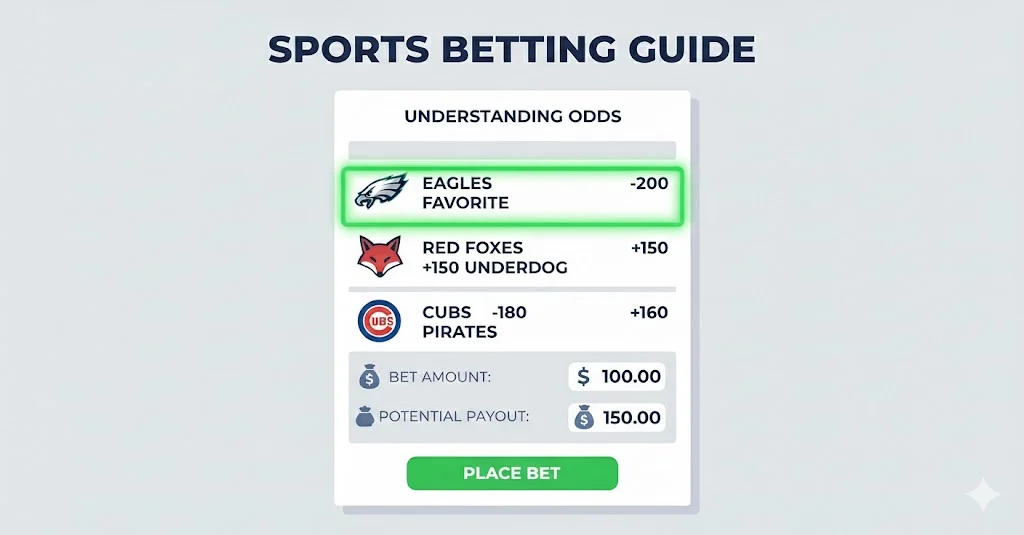

In betting, the symbol “-” means favorite. It shows that a team or player is expected to win and indicates how much you must risk in order to win a standard amount, usually 100 units.
If you are new to sports betting, odds can look confusing at first. One of the most common symbols you will see is the minus sign. It appears in moneyline odds, point spreads, and betting slips across sportsbooks worldwide. Naturally, many beginners ask the same question: what does “-” mean in betting?
In this guide, we will explain the meaning of the minus sign in betting in clear, simple language. You will learn how it works, why it matters, how to calculate payouts, and how it compares to other betting symbols. By the end, you will understand exactly what the minus sign tells you before you place a bet.
What Does “-” Mean in Betting?
In betting, the minus sign indicates the favorite.
When you see a number with a minus sign, it means:
- The sportsbook believes that side has a higher chance of winning
- You must risk more money to win a smaller amount
- The number shows how much you need to bet to win 100 units
For example:
- Odds of -150 mean you must bet 150 to win 100
- Odds of -200 mean you must bet 200 to win 100
Simply put, the minus sign shows lower risk but lower reward.
Why the Minus Sign Is Used in Betting
Sportsbooks use the minus sign to balance risk and reward.
Since favorites are more likely to win, sportsbooks reduce the payout. This protects them from heavy losses if many bettors choose the same strong favorite.
At the same time, the minus sign helps bettors quickly identify:
- Which team is expected to win
- How confident the sportsbook is
- How much risk is involved
Therefore, the minus sign is a key part of understanding betting odds.
Where You Commonly See the Minus Sign
The minus sign appears in several popular betting formats. However, it is most common in American odds.
1. Moneyline Betting
In moneyline betting, the minus sign shows the favorite.
Example:
- Team A at -180
- Team B at +160
Team A is the favorite. To win 100 units, you must bet 180 units.
Team B is the underdog and offers a higher payout because it is less likely to win.
2. Point Spread Betting
In point spread betting, the minus sign indicates how many points the favorite must win by.
Example:
- Team A -6.5
- Team B +6.5
Team A must win by more than 6.5 points for the bet to win.
This type of betting helps balance games where one team is much stronger.
3. Futures and Prop Bets
The minus sign also appears in futures and prop bets.
Examples include:
- A team to win the championship at -120
- A player to score a goal at -110
In each case, the minus sign means the outcome is considered more likely.
How to Read Minus Odds Correctly
Understanding minus odds is easier when you know what the number represents.
The number after the minus sign tells you how much you must risk to win 100 units.
Here is a simple breakdown:
- Lower number means stronger favorite
- Higher number means less dominant favorite
For instance:
- -110 is a slight favorite
- -300 is a heavy favorite
As the number increases, the payout becomes smaller compared to the amount risked.
Betting Examples Using the Minus Sign
Below are clear examples to show how minus odds work in real betting situations.
Example 1: Simple Moneyline Bet
Odds: -150
Bet Amount: 150
If the bet wins:
- You win 100
- You receive 250 total including your stake
If the bet loses:
- You lose 150
Example 2: Smaller Bet Size
Odds: -200
Bet Amount: 50
To calculate winnings:
- 50 divided by 200 equals 0.25
- 0.25 multiplied by 100 equals 25
If the bet wins:
- You win 25
- You receive 75 total
Minus Sign vs Plus Sign in Betting
To fully understand the minus sign, it helps to compare it with the plus sign.
Odds Comparison Table
| Symbol | Meaning | Risk Level | Potential Payout |
|---|---|---|---|
| Minus | Favorite | Lower | Smaller |
| Plus | Underdog | Higher | Larger |
In short:
- Minus means safer but pays less
- Plus means riskier but pays more
Common Misunderstandings About the Minus Sign
Many beginners misinterpret what the minus sign actually means.
Here are a few common mistakes.
The Minus Sign Does Not Mean Guaranteed Win
Even heavy favorites can lose. The minus sign reflects probability, not certainty.
The Minus Sign Does Not Mean You Lose Money Automatically
You only lose money if the bet does not win. The minus sign simply affects the payout ratio.
The Minus Sign Is Not a Negative Outcome
It is a neutral indicator used to show expected performance.
Why Beginners Often Bet on Minus Odds
New bettors are often drawn to minus odds for several reasons.
First, favorites feel safer.
Second, winning more often builds confidence.
Finally, minus odds are easier to understand at the beginning.
However, experienced bettors know that consistently betting heavy favorites can reduce long term profit.
Smart Tips for Betting Minus Odds
If you plan to bet on favorites, these tips can help.
- Compare odds across sportsbooks
- Avoid extremely high minus numbers unless value is clear
- Manage bankroll carefully since risk is higher
- Focus on probability rather than team popularity
By doing this, you avoid overpaying for a perceived advantage.
Alternate Meanings of the Minus Sign in Betting
In betting contexts, the minus sign almost always indicates a favorite.
Outside of betting, it can represent subtraction or negative values. However, within sportsbooks, its meaning is consistent and clear.
Frequently Asked Questions
1. What does the minus sign mean in betting?
It means the team or player is the favorite and you must risk more to win less.
2. Is minus better than plus in betting?
Not necessarily. Minus odds win more often, but plus odds offer higher payouts.
3. What does -110 mean in betting?
It means you must bet 110 units to win 100 units.
4. Why do sportsbooks use minus odds?
They use them to reflect probability and manage risk.
5. Can you make money betting minus odds?
Yes, but only if you find value and manage risk properly.
6. Does minus always mean favorite?
In standard betting formats, yes.
7. Are minus odds safer?
They are more likely to win, but they still carry risk.
8. Should beginners bet minus odds?
Beginners often start with them, but learning value betting is more important.
Conclusion
So, what does “-” mean in betting? It shows the favorite and tells you how much you must risk to win a standard amount. The minus sign reflects higher probability, lower payout, and lower perceived risk.
Key points to remember:
- Minus indicates the favorite
- The number shows how much you must bet to win 100
- It appears in moneylines, spreads, and props
- It does not guarantee a win
Once you understand the minus sign, reading betting odds becomes much easier and more confident.