
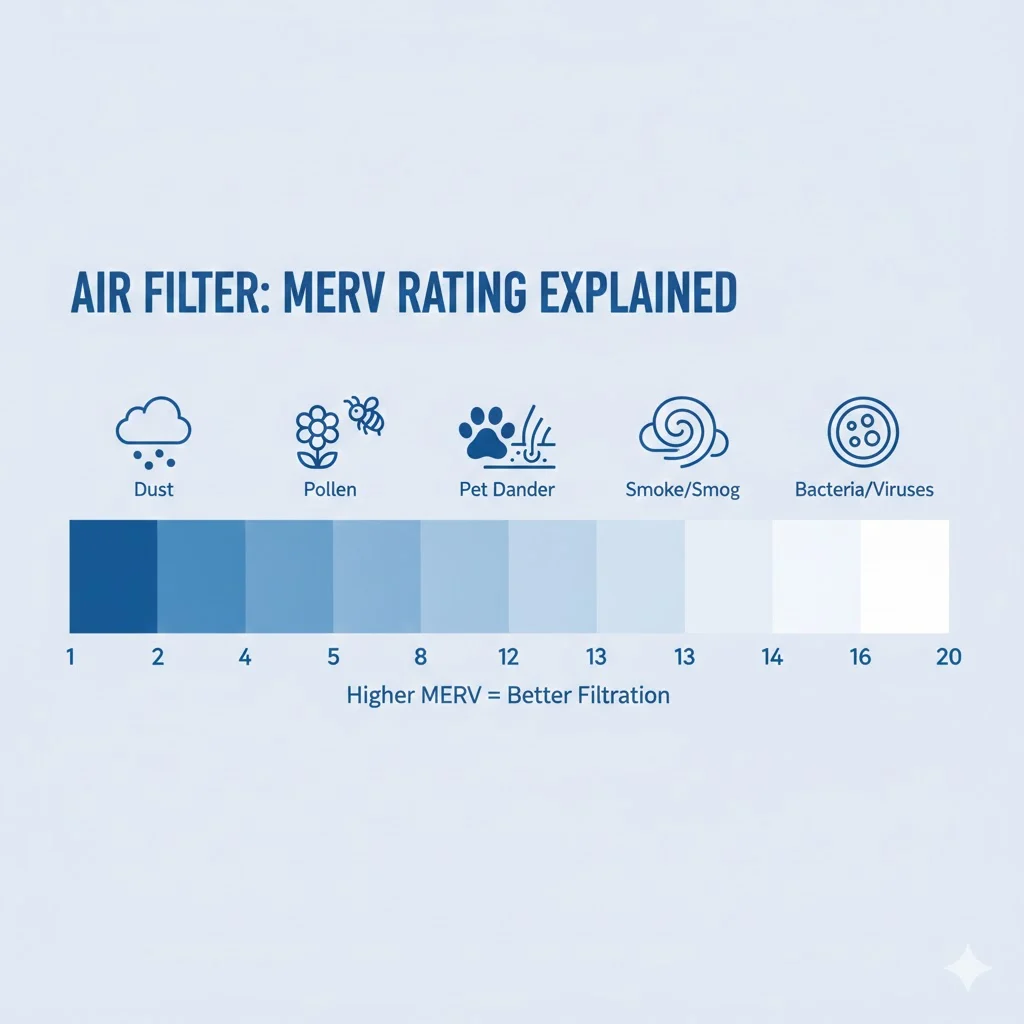

MERV stands for Minimum Efficiency Reporting Value. It is a rating system that measures how effectively an air filter captures particles, such as dust, pollen, and mold spores. The higher the MERV rating, the smaller the particles the filter can trap.
Air filters are one of those home essentials that you rarely think about until you need to change them. Yet, they play a major role in indoor air quality and HVAC system performance. When shopping for filters, you will likely encounter the term MERV. If you have ever wondered what does MERV mean in air filters, you are in the right place.
This article explains everything you need to know about MERV, how the rating system works, and how to choose the best filter for your home. You will also find helpful comparisons, real-life examples, and clear guidance for different situations.
What Does MERV Mean in Air Filters?
MERV stands for Minimum Efficiency Reporting Value.
This rating system was created by the American Society of Heating, Refrigerating and Air-Conditioning Engineers, also known as ASHRAE. It measures how well an air filter removes particles from the air.
A higher MERV rating means the filter captures smaller particles, but it may also reduce airflow if your system is not designed for it.
Why MERV Ratings Matter
MERV ratings are important because they help you understand:
- How clean your indoor air will be
- How well your HVAC system will perform
- Whether a filter is suitable for your home or business
Using the wrong MERV rating can cause problems such as:
- Reduced airflow
- Increased energy consumption
- HVAC system strain
- Shorter system lifespan
Therefore, knowing what MERV means and how to choose the right rating is essential for both comfort and safety.
How MERV Ratings Work
MERV ratings range from 1 to 20, with higher numbers indicating better filtration.
MERV Rating Ranges and What They Mean
| MERV Rating | Particle Size Captured | Typical Use |
|---|---|---|
| 1 to 4 | Large particles like dust and pollen | Basic residential filters |
| 5 to 8 | Mold spores, pet dander, and dust mite debris | Better home filtration |
| 9 to 12 | Fine dust, smoke, and smaller particles | Improved air quality for allergy sufferers |
| 13 to 16 | Bacteria, smoke, and fine particles | Hospital-grade filtration in some systems |
| 17 to 20 | Virus particles and very fine aerosols | Clean rooms and specialized environments |
Most homes do well with a MERV 8 to MERV 13 filter, depending on health needs and HVAC compatibility.
What MERV Means for Your Home
MERV 1 to 4
These are basic filters that catch large particles. They are cheap and common, but not ideal for allergy or asthma sufferers.
MERV 5 to 8
These filters capture smaller particles like pet dander and mold spores. They are a common choice for most households.
MERV 9 to 12
These filters provide better air quality and can help reduce allergies. However, they can also reduce airflow if your HVAC system is not strong enough.
MERV 13 and Higher
These are very efficient filters that capture bacteria and fine particles. They are often used in hospitals and clean environments, but they can strain many home HVAC systems.
Examples of MERV Ratings in Real Life
Here are some real-world scenarios where MERV ratings matter.
Example 1: Allergy Sufferer
If you or someone in your home has allergies, a MERV 11 or 12 filter may help reduce symptoms by capturing smaller particles.
Example 2: Pet Owners
Homes with pets benefit from a MERV 8 or 9 filter, which can capture pet dander and hair more effectively.
Example 3: Standard Home Use
Most homes will do well with a MERV 6 to 8 filter. These provide decent air cleaning without restricting airflow too much.
Example 4: Hospital or Clean Room
High-risk environments may require MERV 13 or higher filters to meet strict air quality standards.
MERV vs HEPA Filters
Many people wonder how MERV compares to HEPA filters.
What is HEPA?
HEPA stands for High Efficiency Particulate Air. HEPA filters capture at least 99.97% of particles that are 0.3 microns in size.
Comparison Table
| Filter Type | Efficiency | Typical Use |
|---|---|---|
| MERV 13-16 | High efficiency, captures small particles | Residential and commercial |
| HEPA | Very high efficiency, captures very fine particles | Medical, clean rooms, air purifiers |
| MERV 17-20 | Similar to HEPA in efficiency | Specialized industrial use |
In many homes, a high MERV filter is sufficient, but HEPA is better for sensitive environments.
Choosing the Right MERV Rating
Choosing the right MERV rating depends on several factors.
Consider These Questions
- Does anyone in your home have allergies or asthma?
- Do you have pets?
- Is your home in a dusty area?
- Does your HVAC system support higher MERV ratings?
- Are you trying to reduce odors or smoke?
Practical Guidelines
| Goal | Recommended MERV Range |
|---|---|
| Basic filtration | MERV 6 to 8 |
| Allergy control | MERV 9 to 12 |
| High filtration needs | MERV 13 to 16 |
| Specialized environments | MERV 17 to 20 |
Remember, the higher the MERV rating, the more airflow resistance the filter creates. If your system is not built for it, you may reduce performance.
Pros and Cons of High MERV Filters
Pros
- Better air quality
- Reduced allergens
- Cleaner HVAC components
- Fewer particles in the home
Cons
- Can restrict airflow
- May increase energy costs
- Not all HVAC systems can handle high MERV filters
- Filters may need to be changed more often
Common Misconceptions About MERV
Myth: Higher MERV is Always Better
Not always. Higher MERV filters can restrict airflow and strain your HVAC system.
Myth: MERV Filters Remove Smells
Filters mainly capture particles. Odors require activated carbon or specialized filters.
Myth: MERV Ratings Are the Same as HEPA
MERV and HEPA are different systems. HEPA is typically more efficient than most residential MERV filters.
Polite Alternatives and Professional Tips
If you want to discuss air filters professionally, you can use terms like:
- “Minimum Efficiency Reporting Value”
- “Filter efficiency rating”
- “Particle filtration level”
When speaking with HVAC professionals, ask:
- What MERV rating is recommended for my system?
- Will a higher MERV rating affect airflow?
- How often should I change the filter?
These questions help you make an informed decision without damaging your system.
Frequently Asked Questions
1. What does MERV mean in air filters?
MERV stands for Minimum Efficiency Reporting Value and measures how well a filter captures particles.
2. Is a higher MERV rating always better?
Not always. Higher MERV can reduce airflow and strain some HVAC systems.
3. What MERV rating is good for allergies?
A MERV 9 to 12 filter is usually best for allergy sufferers.
4. Can I use a MERV 13 filter in my home?
You can if your HVAC system supports it. Some systems may struggle with high MERV ratings.
5. What is the difference between MERV and HEPA?
HEPA filters are more efficient and capture smaller particles than most residential MERV filters.
6. Do MERV filters remove odors?
Not usually. Odors require specialized filters such as activated carbon.
7. How often should I change my MERV filter?
Typically every 1 to 3 months, depending on usage, pets, and air quality.
8. What MERV rating do most homes use?
Most homes use a MERV 6 to 8 filter for basic air cleaning.
Conclusion
In short, MERV stands for Minimum Efficiency Reporting Value, and it measures how well an air filter captures particles. The higher the rating, the more particles it can trap. However, higher ratings can also restrict airflow and strain your HVAC system.
If you want cleaner air without sacrificing system performance, most homes do well with a MERV 8 to MERV 12 filter. Allergy sufferers may benefit from a higher rating, while specialized environments may require even higher MERV levels.
Choosing the right MERV rating ensures better air quality, longer HVAC life, and improved comfort in your home.
Discover More Post
What Does PA Mean in Baseball? Complete Guide for Fans …
7 Mean in Point Spread? Simple Betting Explanation for 2026
What Does Simba Mean in Swahili? Meaning, Origin …