
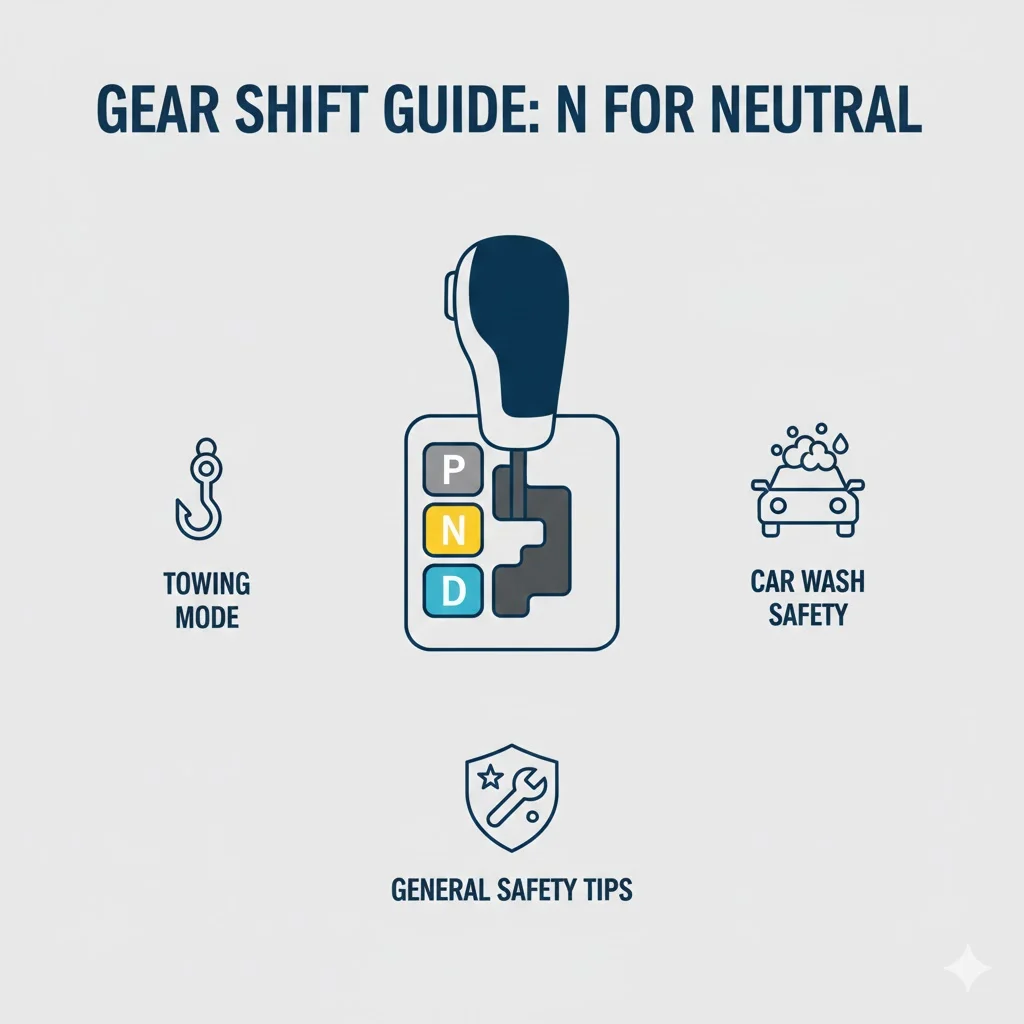

Neutral in a car refers to the gear position where the engine is disengaged from the wheels, meaning the car will not move forward or backward when you press the gas pedal. Neutral allows the engine to run freely without transmitting power to the drivetrain.
When you first learn to drive, you quickly notice the gear shift and all its labels. Most people understand Drive, Reverse, and Park, but Neutral often feels confusing or even mysterious. You may wonder whether it’s safe to use, what it’s for, or when it should be used.
This article answers the question what does neutral mean in a car in a clear, friendly, and practical way. You will learn what neutral does, when to use it, why it exists, and how to use it safely. By the end, you will feel confident understanding this essential part of driving.
What Does Neutral Mean in a Car?
Neutral is a gear position in a car where the engine is not connected to the wheels. In this position, the engine can run, but no power is sent to the transmission. As a result, the vehicle will not move forward or backward from engine power alone.
Neutral is represented by the letter N on the gear shift.
Why Neutral Exists
Neutral exists for several reasons:
- It allows the engine to run without moving the vehicle
- It helps when starting the car in some cases
- It allows the car to roll freely if pushed or towed
- It helps with certain maintenance tasks
In simple terms, neutral provides a way to disconnect the engine from the wheels.
Neutral in Manual vs Automatic Cars
works similarly in both types of transmissions, but there are differences in how you use it.
Neutral in Automatic Cars
In automatic cars, neutral is one of the main gear positions:
- Park (P)
- Reverse (R)
- Neutral (N)
- Drive (D)
In this setup, neutral is mainly used for:
- Idling without moving
- Towing
- Certain maintenance tasks
Neutral in Manual Cars
In manual cars, neutral is located between gears. It is used when:
- Starting the car
- Stopping briefly without turning off the engine
- Changing gears
- When the car is at rest
Manual neutral is important because the driver must control the clutch and gear selection.
When Should You Use Neutral?
Neutral is useful in several situations. However, it is not always necessary, and sometimes it is unsafe.
Common Uses of Neutral
1. At a Car Wash
Many automatic car washes require neutral so the vehicle can move through the system smoothly.
2. When Towing
Neutral allows the car to roll freely without causing damage to the transmission.
3. When the Car Is Stuck
If the car is stuck in mud or snow, neutral allows the wheels to spin freely while you try to free the vehicle.
4. When Idling for Short Periods
In rare situations, neutral can reduce strain on the engine when you are stationary for a long time.
When Not to Use Neutral
Neutral is not always safe or recommended.
Avoid Neutral While Driving
Using neutral while the car is moving is generally not recommended because:
- You lose engine braking
- Steering control may feel less stable
- You can be caught off guard if you need acceleration
- It can be illegal in some regions
Neutral should not be used for long downhill driving or to save fuel.
Does Neutral Save Fuel?
This is a common question, and the answer is often surprising.
Fuel Saving Myths
Many people believe that coasting in neutral saves fuel. In modern cars, this is usually not true.
When you lift your foot off the accelerator in gear, many cars enter fuel cut-off mode, meaning the engine uses little to no fuel. In neutral, the engine still needs fuel to idle, so you may actually use more fuel.
Neutral and Engine Braking
One of the biggest reasons you should not use neutral while moving is engine braking.
What Is Engine Braking?
Engine braking is when the engine helps slow down the car when you release the accelerator. This is especially important:
- Down steep hills
- When driving in heavy traffic
- When you need controlled slowing
In neutral, you lose this braking effect, and your brakes must do all the work. This can cause overheating and brake wear.
Neutral Safety Tips
Neutral can be useful, but only when used correctly. Here are some safety tips:
- Never shift to neutral while driving at high speed
- Avoid neutral on downhill roads
- Use neutral only when necessary
- Keep your foot near the brake when in neutral
- Use neutral during towing only if the vehicle is designed for it
Following these tips will help you avoid dangerous situations.
Neutral vs Park vs Drive: Quick Comparison Table
| Gear | Meaning | Use |
|---|---|---|
| Park (P) | Car is locked | Parking and leaving the vehicle |
| Reverse (R) | Move backward | Backing up |
| Neutral (N) | Engine disconnected | Towing, car wash, idling |
| Drive (D) | Forward motion | Normal driving |
Examples of Neutral Use in Real Life
Here are real situations where neutral is used correctly.
Example 1: At the Car Wash
You enter an automatic car wash. The staff asks you to shift to neutral. This allows the conveyor system to pull your car without engine power.
Example 2: Towing
If your car needs to be towed, neutral helps the wheels move without damaging the transmission.
Example 3: Stuck in Snow
Your car is stuck, and you need the wheels to spin freely. Shifting to neutral helps in some cases, but only if you are careful and know what you are doing.
Common Misconceptions About Neutral
Here are some common myths that confuse drivers:
Myth 1: Neutral Always Saves Fuel
Modern cars often use less fuel in gear with the accelerator released.
Myth 2: Neutral Is Safe While Driving
Neutral can reduce control and safety, especially at high speed or on slopes.
Myth 3: Neutral Makes the Car Stop Faster
It actually removes engine braking, making stopping slower in many situations.
FAQs
1. What does neutral mean in a car?
Neutral means the engine is not connected to the wheels, so the car cannot move from engine power.
2. Can you drive in neutral?
It is not recommended because you lose control, engine braking, and it may be unsafe.
3. When should you use neutral?
Use neutral for towing, car washes, and certain maintenance tasks.
4. Does neutral save fuel?
Not usually. Modern cars often use less fuel while coasting in gear.
5. Is neutral the same in manual and automatic cars?
Yes, but the way you shift into neutral differs.
6. Can neutral damage the car?
Using neutral incorrectly can increase brake wear and reduce control, which can cause accidents.
7. Is it illegal to coast in neutral?
In some places, yes. Laws vary by country and region.
8. Does neutral help when stuck in snow?
It can help, but only in certain situations and with careful control.
Conclusion
So, what does neutral mean in a car? It is a gear position that disconnects the engine from the wheels, allowing the vehicle to roll freely without power. Neutral is useful for car washes, towing, and certain maintenance tasks, but it should not be used while driving at speed or on hills. Understanding neutral helps you drive safely and use your car correctly.
Discover More Post
What Does PIM Mean in Hockey? Simple Explanation for New …
What Does ETOH Mean in Medical Terms? Clear Explanation
What Does IB Mean in School – Complete Guide for Students …