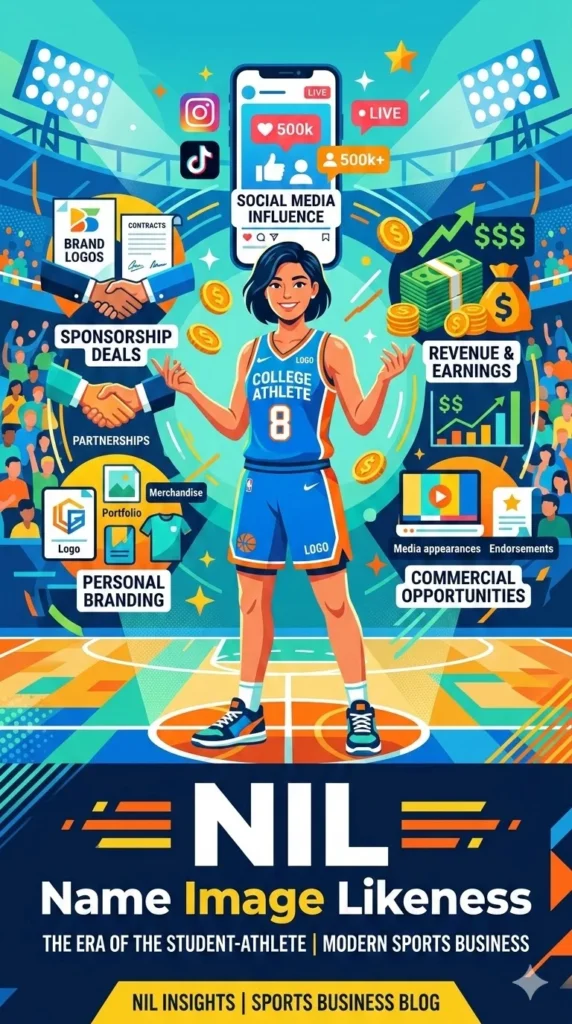

NIL in sports stands for “Name, Image, and Likeness.” It refers to an athlete’s legal right to earn money from their personal brand, including their name, appearance, reputation, or identity through endorsements, sponsorships, social media promotions, and other business opportunities.
Sports fans, college athletes, and even casual viewers have probably heard the term NIL frequently in recent years. It appears in sports news, college recruiting discussions, athlete sponsorships, and social media deals. Despite its growing popularity, many people still ask the same question: what does NIL mean in sports?
The concept of NIL has completely transformed the world of college athletics. For decades, student athletes were not allowed to earn money from their popularity or fame. Today, however, many athletes sign sponsorship deals, promote brands online, and build personal businesses while still competing.
In this detailed guide, you will learn exactly what NIL means in sports, where the term came from, how it works in real life, and why it has become one of the biggest changes in modern athletics.
What Does NIL Mean in Sports?
In sports, NIL stands for Name, Image, and Likeness.
This phrase refers to an athlete’s right to profit from their identity and personal brand. Instead of universities or organizations controlling an athlete’s commercial value, NIL allows athletes to make money through various opportunities connected to their reputation and public image.
For example, athletes can now earn money through:
• Brand endorsements
• Sponsored social media posts
• Personal merchandise
• Autographs and appearances
• Business partnerships
• Advertising campaigns
Because of NIL rights, many college athletes now operate like small businesses, building their brand while continuing their athletic careers.
Breaking Down the Meaning of Name, Image, and Likeness
Understanding the individual parts of NIL helps clarify what the term actually covers.
| Term | Meaning | Example |
|---|---|---|
| Name | The athlete’s personal name used commercially | A jersey with the athlete’s name |
| Image | Photos or visual representation of the athlete | Posters or advertisements |
| Likeness | The athlete’s identity or recognizable traits | Video games or digital avatars |
Together, these elements represent an athlete’s personal identity in the public marketplace.
If a brand uses any of these elements to promote a product, the athlete can legally be paid under NIL rules.
Why NIL Is Important in Sports
For many years, college athletes generated billions of dollars in revenue through television deals, merchandise, and ticket sales. However, those athletes were historically prohibited from earning money themselves.
As a result, NIL became a major topic in sports fairness and athlete rights discussions.
Today, NIL matters for several reasons:
• Athletes can finally earn income from their popularity
• Personal branding has become a major part of sports careers
• Recruiting has changed in college athletics
• Social media influence now carries real financial value
Because of these changes, NIL is often described as one of the biggest shifts in college sports history.
The Origin of NIL in Modern Sports
Although athletes have always had name and likeness rights in professional sports, college athletes faced strict rules for decades.
The turning point came in 2021, when new policies allowed student athletes in the United States to profit from NIL opportunities.
This change happened after legal challenges and public debates about fairness in college athletics.
Once the rule change took effect, athletes across the country began signing sponsorship deals almost immediately.
Examples included:
• Social media partnerships
• Local business advertisements
• Clothing and merchandise collaborations
• Autograph signing events
Within months, NIL deals became a major factor in college recruiting and sports marketing.
How NIL Works in Real Life
NIL opportunities vary widely depending on the athlete’s popularity, sport, and audience reach.
Some athletes earn small payments for local promotions, while others sign deals worth hundreds of thousands of dollars.
Here are some common NIL opportunities.
Brand Sponsorships
Companies partner with athletes to promote products.
Example:
A college basketball player posts a sponsored photo promoting a sports drink.
Social Media Promotions
Athletes with large followings can promote brands online.
Example:
An athlete posts a sponsored Instagram story promoting a clothing brand.
Personal Merchandise
Athletes can sell products connected to their brand.
Examples include:
• Apparel
• Signed memorabilia
• Personal logos
Appearances and Events
Athletes may receive payment for public appearances.
Examples:
• Meet and greet events
• Autograph sessions
• Local business promotions
Examples of NIL Usage in Sports Conversations
Understanding how NIL appears in real discussions can help clarify its meaning.
Informational Tone
NIL deals are changing college recruiting strategies.
This sentence refers to how athlete endorsements affect recruiting decisions.
Sports News Tone
The quarterback signed several NIL agreements with national brands.
Here, NIL describes business partnerships involving the athlete’s brand.
Casual Sports Discussion
That player already has multiple NIL deals.
Fans often use the term when talking about athletes earning money.
NIL vs Similar Sports Terms
Because NIL is a business concept, it sometimes gets confused with other sports related terms.
The following table shows how NIL compares to similar ideas.
| Term | Meaning | Key Difference |
|---|---|---|
| NIL | Name Image and Likeness rights | Allows athletes to earn money from identity |
| Endorsement | Brand promotion deal | Often part of an NIL opportunity |
| Sponsorship | Company support for athlete | Usually a financial agreement |
| Scholarship | Education funding for athletes | Not related to commercial branding |
While endorsements and sponsorships are types of NIL deals, NIL itself refers to the legal right to earn from personal identity.
How NIL Changed College Sports
The introduction of NIL created several major shifts in the sports landscape.
Athlete Branding
Athletes now build personal brands through social media, marketing, and business partnerships.
Recruiting Influence
NIL opportunities sometimes influence where athletes choose to play in college.
Marketing Opportunities
Local businesses, national brands, and startups now collaborate with college athletes.
Entrepreneurial Athletes
Many athletes launch their own clothing lines, training programs, or digital content channels.
Because of these factors, NIL has blended sports with entrepreneurship more than ever before.
Alternate Meanings of NIL
Although NIL usually means Name, Image, and Likeness in sports, the word nil can have other meanings depending on context.
In traditional sports scoring, particularly in soccer, nil means zero.
Example:
The team won three nil.
This means the final score was three to zero.
In sports business discussions, however, NIL almost always refers to Name, Image, and Likeness rights.
Professional or Formal Alternatives to Saying NIL
While NIL is the most common abbreviation, some professional contexts may use more descriptive phrases.
Examples include:
• Athlete name and likeness rights
• Athlete branding rights
• Personal brand monetization
• Athlete endorsement opportunities
However, in sports media and everyday discussions, NIL remains the most widely used term.
Frequently Asked Questions
1. What does NIL mean in sports?
NIL stands for Name, Image, and Likeness, which refers to an athlete’s right to earn money from their personal brand.
2. When did NIL become legal for college athletes?
NIL rules began allowing athletes to earn money in 2021 after major policy changes in college sports.
3. Do NIL deals pay athletes directly?
Yes. Brands or businesses can pay athletes directly for endorsements, promotions, or partnerships.
4. Can high school athletes have NIL deals?
In some regions and states, high school athletes may have limited NIL opportunities depending on local rules.
5. Do all college athletes earn NIL money?
No. Earnings depend on factors such as popularity, sport, marketability, and social media presence.
6. Is NIL only about social media?
No. While social media plays a major role, NIL also includes merchandise, events, advertising, and sponsorships.
7. Does NIL mean athletes are paid by their schools?
Typically, NIL money comes from brands or businesses, not directly from the university.
8. Can NIL deals affect recruiting?
Yes. Many athletes consider NIL opportunities when choosing a college program.
Conclusion
So, what does NIL mean in sports? In simple terms, NIL stands for Name, Image, and Likeness, and it represents an athlete’s right to earn money from their identity and personal brand.
This concept has changed the landscape of modern athletics, especially in college sports. Athletes now have opportunities to build businesses, promote brands, and benefit financially from the attention their talent generates.
Key points to remember include:
NIL stands for Name Image and Likeness
It allows athletes to earn money from endorsements and branding
The policy became widely recognized in 2021
It has transformed recruiting, marketing, and athlete careers
As sports continue to evolve, NIL will likely remain a central topic in conversations about fairness, business, and the future of athletics.
Discover More Post
EYP Meaning in Text What It Stands For and How to Use It for …
SMH Meaning in Text: Examples, and How to Use It in 2026