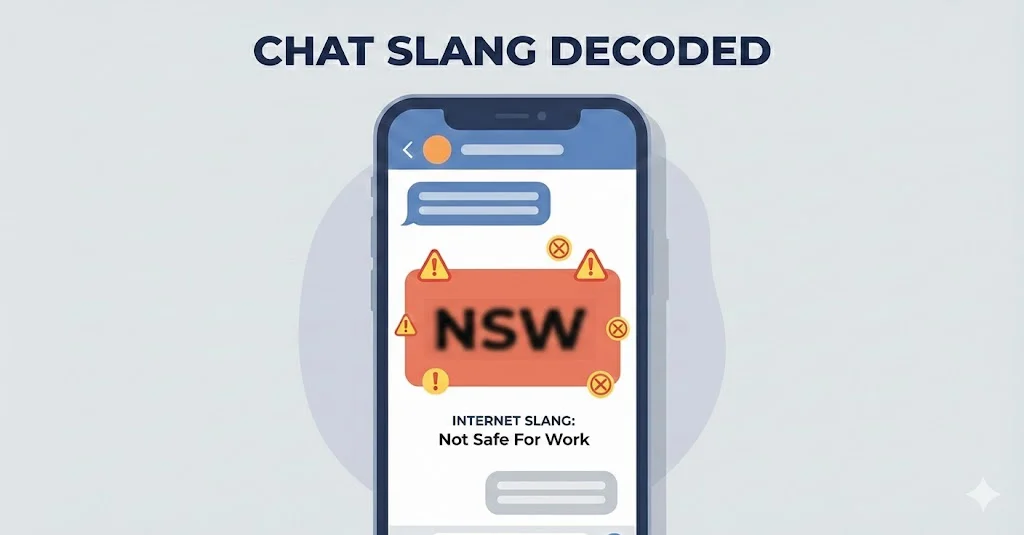

NSFW means “Not Safe For Work.” In text messages, chats, and online conversations, it is used to warn that content may be inappropriate to view in professional, public, or formal settings due to explicit language, images, or topics.
If you spend any time texting, scrolling social media, or chatting online, chances are you have seen the abbreviation NSFW. Sometimes it appears as a warning before a link. Other times it is casually dropped into a message or caption. Even though it is short, its meaning carries an important social signal.
Understanding what NSFW means in text helps you avoid awkward moments, protect your professional image, and communicate more clearly online. In this guide, we will explain what NSFW means, where it comes from, how it is used in real conversations, and how its tone can change depending on context.
What Does NSFW Mean in Text?
In texting and online messaging, NSFW stands for “Not Safe For Work.”
It is used to warn someone that a message, image, video, or link contains content that may be:
- Explicit
- Sexual
- Graphic
- Profane
- Offensive
- Embarrassing in public or professional settings
In simple terms, NSFW means you should not open or view this content at work, school, or around others.
Origin of NSFW
To better understand NSFW, it helps to know where it came from.
The term originated in early internet forums and message boards. Users needed a quick way to warn others before sharing content that could cause problems if seen by coworkers, managers, or people nearby.
As online communication grew, NSFW became widely adopted across:
- Online forums
- Social media
- Messaging apps
- Workplace chat platforms
Today, it is one of the most recognized internet abbreviations worldwide.
Why NSFW Is So Common in Texting
NSFW is popular because it serves several important purposes.
First, it protects the recipient from embarrassment.
Second, it shows courtesy and awareness.
Third, it helps set expectations before content is opened.
In fast moving digital conversations, NSFW acts as a quick warning sign.
How NSFW Is Used in Text Messages
NSFW can appear in different parts of a text conversation. The meaning stays the same, but the tone can change.
1. As a Content Warning
This is the most common and respectful use.
Examples:
- This link is NSFW
- NSFW photo incoming
- Heads up, NSFW content
In these cases, NSFW is used to protect the other person.
2. As a Caption or Label
NSFW is often placed before or after content.
Examples:
- NSFW meme
- Video is NSFW
- NSFW joke ahead
This allows readers to decide whether or not to view it.
3. As a Casual or Playful Comment
In informal texting, NSFW can be used jokingly.
Examples:
- This story is kinda NSFW lol
- Not opening that, sounds NSFW
- Definitely NSFW vibes
Here, the tone is lighter, but the warning still applies.
Types of Content Considered NSFW
NSFW does not refer to just one type of content. Instead, it covers a broad range.
Common NSFW categories include:
- Sexual images or videos
- Explicit language
- Adult humor
- Graphic violence
- Disturbing visuals
- Inappropriate jokes
Because standards vary by workplace and culture, NSFW is intentionally broad.
Examples of NSFW in Text Conversations
To better understand real usage, here are examples with different tones.
Friendly or Helpful Tone 😊
NSFW warning before I send this
That link is NSFW, open later
This tone shows consideration.
Neutral Tone
NSFW content
Marked NSFW for safety
This is informational and direct.
Playful or Casual Tone 😄
This meme is NSFW but funny
Probably NSFW, just saying
Although casual, it still signals caution.
Serious or Firm Tone
This is NSFW. Do not open at work.
This is clear and protective, especially in professional chats.
NSFW vs Similar Internet Terms
NSFW is often confused with other abbreviations. Here is a clear comparison.
Comparison Table
| Term | Meaning | Usage |
|---|---|---|
| NSFW | Not Safe For Work | Warns about inappropriate content |
| SFW | Safe For Work | Content suitable for professional settings |
| Explicit | Clearly sexual or graphic | Describes content type |
| Adult Content | Intended for mature audiences | Category label |
| Trigger Warning | Alerts to sensitive topics | Emotional or mental safety |
NSFW focuses specifically on where content should not be viewed.
What NSFW Does Not Always Mean
Although NSFW often suggests sexual content, that is not always the case.
NSFW does not always mean:
- Pornographic
- Illegal
- Offensive to everyone
Sometimes it simply means:
- Loud language
- Dark humor
- Mildly inappropriate images
Context matters.
Polite and Professional Alternatives to NSFW
In professional environments, some people prefer clearer or softer wording.
Instead of NSFW, you can say:
- Inappropriate for workplace viewing
- Not suitable for work
- Sensitive content
- Contains adult language
- Viewer discretion advised
These alternatives can sound more formal and respectful.
When You Should Use NSFW in Text
Using NSFW appropriately shows good digital etiquette.
You should use NSFW when:
- Sending explicit images or videos
- Sharing adult jokes or memes
- Forwarding links with questionable content
- Posting in mixed or professional groups
Using it unnecessarily, however, can reduce its impact.
Common Mistakes with NSFW
Even though NSFW is simple, mistakes still happen.
Overusing NSFW
Labeling harmless content as NSFW can confuse people and weaken the warning.
Forgetting the Warning
Sending explicit content without warning can cause embarrassment or trouble.
Assuming Everyone Shares the Same Standards
What is NSFW for one person may not be for another. That is why the warning exists.
Alternate Meanings of NSFW
NSFW almost always means Not Safe For Work.
However, in rare cases, it may be used humorously or sarcastically to exaggerate mild content.
Example:
- That spreadsheet is NSFW levels of boring
This usage is informal and joking.
NSFW in Workplace and Group Chats
NSFW is especially important in professional spaces.
Most workplaces have strict policies regarding:
- Explicit content
- Offensive language
- Inappropriate images
Using NSFW warnings helps maintain professionalism and avoid violations.
Frequently Asked Questions
1. What does NSFW mean in text messages?
NSFW means Not Safe For Work and warns that content may be inappropriate in professional or public settings.
2. Is NSFW always sexual?
No. It can also refer to violence, strong language, or disturbing material.
3. Can NSFW be used jokingly?
Yes, but the warning still implies caution.
4. Is NSFW rude to use?
No. It is generally considered polite and responsible.
5. What is the opposite of NSFW?
SFW, which means Safe For Work.
6. Should I use NSFW in professional chats?
Yes, especially if content might be inappropriate.
7. Can text alone be NSFW?
Yes. Explicit language or descriptions can also be NSFW.
8. Why do people say NSFW instead of explaining?
Because it is quick, widely understood, and efficient.
Conclusion
So, what does NSFW mean in text? It means Not Safe For Work, and it serves as a warning that content may be inappropriate to view in professional or public environments.
Key points to remember:
- NSFW is a courtesy warning
- It applies to images, videos, links, and text
- It helps prevent awkward or harmful situations
- It is widely accepted in digital communication
- Tone and context influence how it is perceived
Knowing when and how to use NSFW makes you a more thoughtful and respectful communicator online