
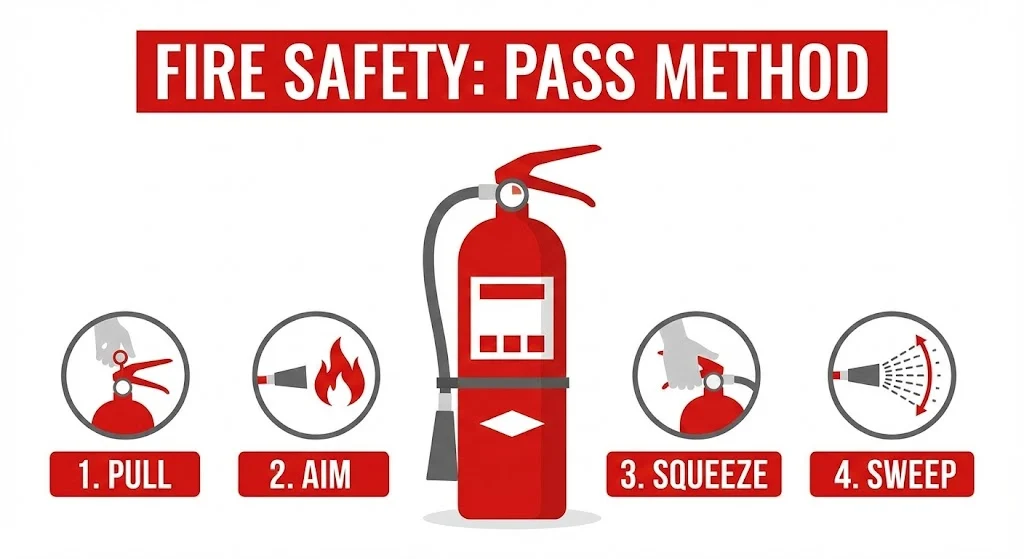

PASS in a fire refers to a simple four step method used to operate a fire extinguisher. It stands for Pull, Aim, Squeeze, Sweep, and it helps people remember how to use an extinguisher safely and effectively during a fire emergency.
Fire safety terms can feel confusing, especially when they appear suddenly during training, drills, or emergencies. One of the most important and commonly taught fire safety terms is PASS. You may have heard it during a workplace safety session, seen it on a fire extinguisher poster, or encountered it in school or public buildings.
Because emergencies leave little time to think, PASS exists to make fire extinguisher use quick, clear, and memorable. In this article, you will learn exactly what PASS means in a fire, where it comes from, how each step works, real world examples, common mistakes, and when you should or should not attempt to use a fire extinguisher.
What Does PASS Mean in a Fire?
In fire safety, PASS is an acronym that explains the correct way to use a fire extinguisher.
Each letter represents one action:
- P Pull the pin
- A Aim at the base of the fire
- S Squeeze the handle
- S Sweep from side to side
Together, these steps provide a clear and effective method for extinguishing small fires safely.
Why PASS Is Important in Fire Safety
Fire emergencies create stress, panic, and confusion. Because of this, safety professionals rely on short memory tools like PASS.
PASS is important because it:
- Reduces hesitation during emergencies
- Helps prevent misuse of fire extinguishers
- Improves effectiveness against small fires
- Increases overall fire safety awareness
As a result, PASS is taught worldwide in schools, offices, factories, and public buildings.
The Origin of PASS in Fire Training
PASS was developed as part of modern fire safety education to simplify emergency response. Over time, fire departments and safety organizations realized that people needed a quick and universal method to remember extinguisher use.
Eventually, PASS became standard in:
- Workplace safety programs
- OSHA and fire code training
- School fire safety education
- Emergency response manuals
Because it is easy to remember and practical, PASS remains the most widely taught fire extinguisher technique today.
Breaking Down the PASS Steps
Understanding each step clearly can make a real difference during an emergency.
Pull the Pin
First, pull the pin at the top of the fire extinguisher.
The pin prevents accidental discharge. Removing it unlocks the handle so the extinguisher can work.
Helpful tips:
- Pull firmly
- Twist slightly if it feels stuck
- Keep the nozzle pointed away from your face
Aim at the Base of the Fire
Next, aim the nozzle at the base of the fire, not the flames.
Fires burn from their fuel source. Therefore, targeting the base cuts off the fire more effectively.
Important reminders:
- Do not aim at the top of the flames
- Stand several feet away
- Adjust distance as needed
Squeeze the Handle
After aiming correctly, squeeze the handle slowly and evenly.
This releases the extinguishing agent. Sudden squeezing can waste pressure, so steady control works best.
Key points:
- Use controlled pressure
- Keep both hands steady
- Be ready for recoil
Sweep from Side to Side
Finally, sweep the nozzle from side to side across the base of the fire.
This motion ensures even coverage and helps fully extinguish the flames.
Best practices:
- Move slowly
- Continue sweeping until flames are gone
- Watch for re ignition
PASS Explained in a Simple Table
| Step | Action | Purpose |
|---|---|---|
| Pull | Remove the safety pin | Unlocks extinguisher |
| Aim | Target base of fire | Attacks fuel source |
| Squeeze | Press handle | Releases agent |
| Sweep | Move side to side | Covers entire fire |
When to Use PASS and When Not To
Although PASS is useful, it is not meant for every fire situation.
When PASS Is Appropriate
- Small contained fires
- Fires that are not spreading
- Fires with a clear exit behind you
- Situations where you have been trained
When You Should Not Use PASS
- Fires larger than a trash can
- Fires producing heavy smoke
- Fires blocking your escape route
- Situations where you feel unsafe
In those cases, evacuate immediately and call emergency services.
Real World Examples of PASS in Action
Workplace Example
A small electrical fire starts in an office printer. An employee trained in fire safety quickly follows PASS. The fire is extinguished before spreading, and everyone remains safe.
School Example
During a lab accident, a small flame appears on a countertop. A teacher uses PASS correctly, stopping the fire within seconds.
Home Example
A grease fire begins on a stovetop. Although an extinguisher is available, the fire grows too quickly. The homeowner evacuates instead of using PASS, which is the correct decision.
Tone and Usage of PASS
PASS is neutral and instructional in tone. It is designed to guide action, not emotion.
You will often see PASS used in:
- Safety posters
- Emergency instructions
- Training manuals
- Fire extinguisher labels
Because of its clarity, PASS is universally understood in fire safety contexts.
Common Mistakes When Using PASS
Even with training, mistakes can happen. Being aware of them improves safety.
Aiming at the Flames
Many people instinctively aim at the flames. However, this reduces effectiveness. Always aim at the base.
Standing Too Close
Standing too close can be dangerous. Maintain a safe distance while following PASS.
Forgetting an Exit Route
Always keep your back to a clear exit. If the fire grows, leave immediately.
Related Fire Safety Terms Compared
Understanding PASS is easier when compared to other safety concepts.
| Term | Meaning | Purpose |
|---|---|---|
| PASS | Fire extinguisher steps | Extinguish small fires |
| RACE | Rescue Alarm Contain Extinguish | Fire response order |
| Fire Triangle | Heat Fuel Oxygen | Explains how fires start |
| Evacuation Plan | Exit strategy | Personal safety |
PASS focuses specifically on extinguisher use, while these terms address broader fire response.
Alternate Meanings of PASS
Outside of fire safety, PASS can mean different things such as:
- Passing an exam
- Skipping a turn
- Granting permission
However, in fire safety and emergency training, PASS always refers to Pull, Aim, Squeeze, Sweep.
Polite and Professional Use of PASS
PASS is commonly used in professional safety communication.
Examples:
- Please remember the PASS method during extinguisher training
- Employees are trained annually on PASS procedures
- PASS instructions are posted near extinguishers
Its tone is instructional and appropriate for formal environments.
Frequently Asked Questions
1. What does PASS mean in a fire?
PASS means Pull, Aim, Squeeze, and Sweep. It explains how to use a fire extinguisher.
2. Is PASS used worldwide?
Yes. PASS is taught internationally in fire safety training.
3. Can anyone use PASS?
Yes, but only if the fire is small and the person feels safe.
4. Does PASS work on all fires?
No. Fire extinguishers must match the fire type.
5. Is PASS taught in workplaces?
Yes. Many workplaces include PASS in safety training.
6. Should I always try PASS before evacuating?
No. Personal safety always comes first.
7. What happens if PASS does not work?
Evacuate immediately and call emergency services.
8. Why is PASS easy to remember?
It uses a simple four step acronym designed for emergencies.
Conclusion
So, what does PASS mean in a fire? It is a simple and effective method for using a fire extinguisher during small fire emergencies.
To recap:
- PASS stands for Pull, Aim, Squeeze, Sweep
- It provides clear extinguisher instructions
- It is used worldwide in fire safety training
- It improves response speed and effectiveness
- It should only be used when conditions are safe
Understanding PASS can save property, prevent injuries, and even save lives. Most importantly, knowing when not to use it is just as critical as knowing how it works.
Discover More Post
What Does Excluded Mean in PowerSchool – DefineHubs.com –
What Does Hood Mean in the 1960s? Slang Meaning …