
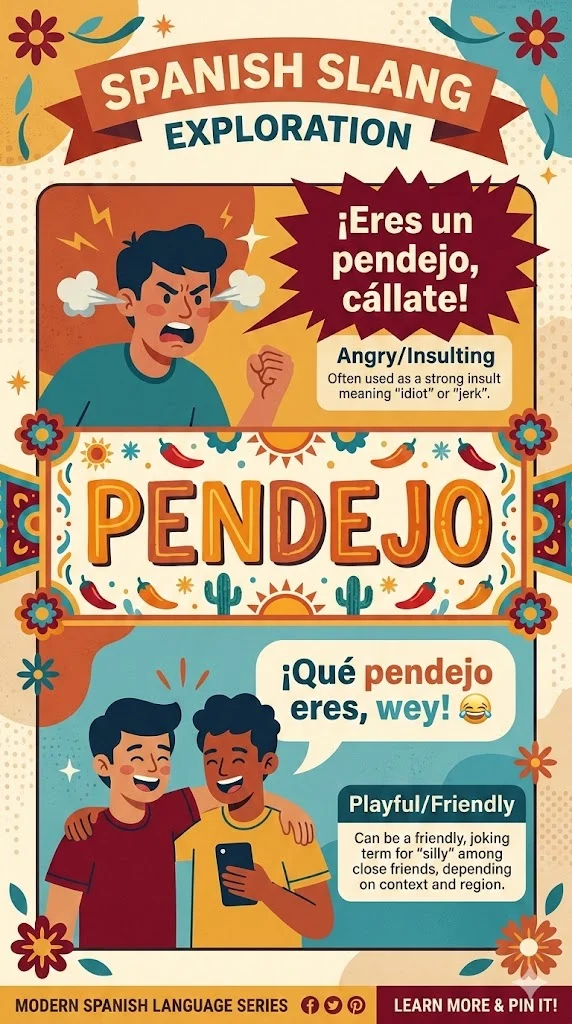

Pendejo is a Spanish slang word that generally means “idiot,” “fool,” or “jerk.” However, its exact meaning depends heavily on tone, country, and context. In some regions, it is mildly teasing, while in others, it can be strongly offensive.
If you have ever watched a Spanish movie, listened to Latin music, or heard someone speaking casually in Spanish, chances are you have come across the word pendejo. It is one of those slang terms that shows up often, yet many learners are unsure what it really means or how strong it is.
Because slang changes from country to country, understanding pendejo requires more than a simple translation. In this complete guide, you will learn what pendejo means in Spanish, how it is used in different regions, whether it is offensive, and when you should avoid saying it.
What Does Pendejo Mean in Spanish?
In most Spanish speaking contexts, pendejo refers to someone who is foolish, naive, annoying, or acting stupid.
Common English translations include:
- Fool
- Idiot
- Dummy
- Jerk
- Naive person
However, the strength of the word can vary significantly depending on tone and location.
As a result, context is everything when interpreting or using this word.
The Literal Meaning of Pendejo
Interestingly, the original dictionary meaning of pendejo refers to pubic hair. Over time, the word evolved into slang and took on insulting meanings.
Today, in everyday speech, most people do not think about the literal definition. Instead, they understand it as a casual insult or teasing remark.
How Pendejo Is Used in Different Spanish Speaking Countries
One of the most important things to understand is that pendejo does not carry the same intensity everywhere. In fact, its meaning shifts depending on region.
Mexico
In Mexico, pendejo is often a strong insult. It usually means “idiot” or “moron,” and it can be quite offensive depending on tone.
Example:
Eres un pendejo
You are an idiot
In heated arguments, it can escalate quickly.
Argentina
In Argentina, the word may lean more toward “fool” or “naive person.” While still insulting, it can sometimes feel slightly lighter depending on delivery.
Caribbean Countries
In some Caribbean regions, pendejo may mean someone who is timid, cowardly, or easily tricked.
United States Latino Slang
Among bilingual speakers in the United States, pendejo is often used casually in a joking or dramatic way.
Example:
No seas pendejo
Do not be stupid
Even then, tone determines whether it sounds playful or rude.
Tone Matters: Friendly, Neutral, or Offensive?
The meaning of pendejo changes dramatically based on tone and relationship.
Playful or Teasing Tone 😅
Among close friends, it can be used jokingly.
Example:
Ay pendejo, se te olvidaron las llaves
Hey dummy, you forgot your keys
In this case, it sounds more like playful teasing than an attack.
Neutral or Mildly Insulting Tone
When said casually but seriously, it suggests someone is acting foolish.
Example:
No seas pendejo
Do not be dumb
This feels more direct but not necessarily explosive.
Angry or Aggressive Tone 😠
During arguments, the word becomes much stronger.
Example:
Eres un pendejo
You are an idiot
In this situation, it can seriously offend someone.
Comparison with Similar Spanish Insults
To better understand pendejo, it helps to compare it with other common Spanish insults.
Comparison Table
| Word | Meaning | Intensity | Common Usage |
|---|---|---|---|
| Pendejo | Fool, idiot | Medium to High | Casual or angry insult |
| Tonto | Silly, dumb | Low | Light insult |
| Idiota | Idiot | Medium | Direct insult |
| Estúpido | Stupid | High | Strong insult |
| Bobo | Silly person | Low | Playful tone |
While tonto and bobo are relatively mild, pendejo often carries more emotional weight.
Common Phrases with Pendejo
Although it is slang, the word appears in many common expressions.
Examples include:
No seas pendejo
Do not be stupid
Pinche pendejo
Very rude way to say “stupid idiot” in Mexican Spanish
Estás pendejo
Each phrase can range from joking to highly offensive depending on delivery.
Should You Use Pendejo?
For Spanish learners, caution is strongly recommended.
Although native speakers may use it casually, it is easy to offend someone if you misunderstand tone or cultural context.
Therefore, unless you are very familiar with regional usage and social dynamics, it is usually better to avoid saying it.
Polite and Professional Alternatives
If you need to express frustration or disagreement politely, consider safer alternatives.
Instead of:
Eres un pendejo
You could say:
Eso no fue muy inteligente
That was not very smart
Or:
Creo que cometiste un error
I think you made a mistake
These options communicate your point without causing unnecessary offense.
Common Misunderstandings About Pendejo
Many learners assume it always means the same thing everywhere. However, regional variation makes a big difference.
Another common misconception is that it always equals a very strong curse word. In reality, intensity depends on context.
Finally, some believe it is harmless slang. While it can be playful, it can also escalate conflict quickly.
Cultural Context and Media Influence
Movies, television, and music have popularized pendejo internationally. Because of this exposure, many non native speakers recognize the word.
Nevertheless, hearing it in entertainment does not automatically mean it is safe to use in real life.
Cultural awareness matters just as much as vocabulary knowledge.
Frequently Asked Questions
1. What does pendejo literally mean?
Originally, it referred to pubic hair. Today, it is slang for fool or idiot.
2. Is pendejo a bad word?
It can be. Depending on tone and country, it ranges from playful teasing to a strong insult.
3. Is pendejo worse than idiota?
In some regions, yes. In others, they are similar in intensity.
4. Can friends say pendejo to each other?
Yes, but only in informal settings and with mutual understanding.
5. Should Spanish learners use pendejo?
Generally, it is safer to avoid using it unless you fully understand the context.
6. Does pendejo mean coward?
In some Caribbean regions, it can imply timidity or weakness.
7. Is pendejo used in formal Spanish?
No. It is considered slang and inappropriate in professional settings.
8. What is a softer alternative to pendejo?
Words like tonto or bobo are much milder.
Conclusion
So, what does pendejo mean in Spanish? In most cases, it means fool, idiot, or jerk, but its intensity depends heavily on tone, country, and relationship between speakers.
Key takeaways:
- It is a slang insult with regional variation
- It can be playful among friends
- It can also be strongly offensive
- Context and tone determine meaning
- Learners should use caution
Understanding words like pendejo helps you better interpret Spanish conversations, movies, and music. However, knowing when not to use a word is just as important as knowing what it means.
Discover More Post
What Does Infer Mean in Reading? Clear Definition and …
What Does Enterprise Mean in Business? Definition and …