
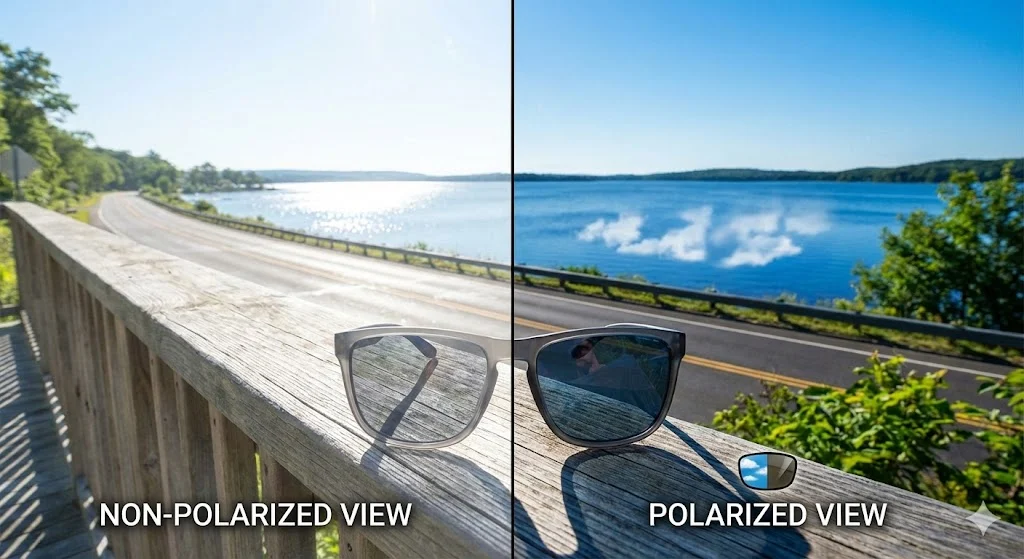

Polarized sunglasses use a special lens filter that reduces harsh glare caused by light reflecting off flat surfaces like water, roads, snow, and glass. By blocking this reflected light, the lenses improve clarity, comfort, and visual sharpness.
If you have ever worn sunglasses that instantly made bright outdoor scenes feel calmer and clearer, those lenses were likely polarized. The word polarized appears frequently on sunglasses labels and product descriptions, yet many people are unsure what it actually refers to or why it matters.
This guide explains the meaning of polarization in eyewear, how the technology works, its advantages and limitations, and how it compares to standard tinted lenses. By the end, you will have a clear understanding of whether this type of lens is right for your needs.
Meaning of Polarization in Sunglasses
In eyewear, polarization refers to a lens treatment designed to reduce glare. Glare occurs when sunlight reflects off smooth, horizontal surfaces and enters the eyes at intense angles.
A polarized lens contains a built in filter that blocks most of this reflected light. Because of this, vision feels more relaxed, sharper, and less tiring, especially in bright outdoor conditions.
How Polarized Lenses Work
To understand polarization, it helps to know how light behaves.
Light normally travels in many directions. However, when it reflects off surfaces such as water, asphalt, or snow, it becomes mostly horizontal. This horizontal light creates glare.
Polarized lenses use a vertical filtering layer that blocks horizontal light waves while allowing useful vertical light to pass through. As a result, your eyes receive clearer and more balanced light.
Why Glare Can Be a Problem
Glare is not just uncomfortable. In certain situations, it can also affect safety and visibility.
For example:
- Reflections on water can hide what lies beneath the surface
- Road glare can make driving more difficult
- Bright snow reflections can cause eye fatigue or headaches
Reducing glare helps your eyes stay relaxed and improves how clearly you see details.
Benefits of Polarized Sunglasses
Sunglasses with polarized lenses offer several noticeable advantages.
Reduced Eye Strain
Because intense reflections are filtered out, your eyes do not need to work as hard in bright light.
Sharper Visual Clarity
Objects often appear more defined, with clearer edges and details.
Improved Contrast
Colors look richer, making it easier to distinguish shapes and textures.
Greater Comfort Outdoors
Bright environments feel less harsh, even during long periods outside.
When Polarized Lenses Are Most Useful
Polarization is especially helpful in settings where glare is common.
Outdoor Activities
They are popular for fishing, boating, hiking, cycling, and beach activities.
Driving
During daytime driving, glare from the road and other vehicles is significantly reduced.
Water and Coastal Areas
Reflections off water surfaces are minimized, improving visibility and comfort.
Snowy Environments
Sunlight reflecting off snow becomes less intense and easier on the eyes.
Polarized vs Regular Sunglasses
Not all sunglasses reduce glare. Many simply darken the view.
Comparison Table
| Feature | Polarized Lenses | Standard Lenses |
|---|---|---|
| Glare reduction | Yes | No |
| Visual clarity | Enhanced | Normal |
| Eye comfort | High | Moderate |
| UV protection | Often included | Often included |
| Best use | Bright outdoor conditions | General sun protection |
Both types can block UV rays, but only polarized lenses actively address glare.
Polarization and UV Protection Explained
It is important to note that polarization and UV protection are different features.
Polarization reduces glare. UV protection blocks harmful ultraviolet radiation.
Many high quality lenses offer both, but one does not automatically guarantee the other. Always check that sunglasses provide full UVA and UVB protection.
How to Check If Sunglasses Are Polarized
If you are unsure whether a pair has polarized lenses, there are easy ways to find out.
Check the Label
Manufacturers usually mark polarized lenses clearly.
Screen Test
Look at a phone or digital screen through the lenses and rotate them. If the screen darkens at certain angles, the lenses are polarized.
Reflection Test
Look at a shiny surface. Polarized lenses noticeably reduce reflected light.
Situations Where Polarized Lenses May Not Be Ideal
Although helpful in many cases, polarization is not perfect for every activity.
Potential drawbacks include:
- Difficulty viewing some LCD screens
- Reduced visibility of certain aircraft or vehicle displays
- Challenges spotting icy patches while skiing
Because of this, some professionals prefer non polarized lenses for specific tasks.
Common Misunderstandings About Polarization
A frequent misconception is that darker lenses automatically reduce glare. In reality, tint darkness does not equal polarization.
Another misunderstanding is that polarized lenses always provide UV protection. While many do, polarization alone does not block ultraviolet rays.
Knowing the difference helps you make better eyewear choices.
Other Meanings of the Word Polarized
Outside of eyewear, the term polarized has different meanings.
In science, it describes the orientation of light waves or electrical charges.
social or political contexts, it refers to strong opposing viewpoints.
In sunglasses, however, the term strictly refers to glare reducing lens technology.
Professional and Retail Descriptions
In professional or retail environments, polarized lenses are often described in practical language.
Examples include:
- Glare reducing lenses for outdoor use
- Lenses designed to minimize reflected light
- Sunglasses that enhance clarity in bright conditions
These descriptions help customers understand the benefit without technical jargon.
Frequently Asked Questions
1. What does polarization mean in sunglasses?
It refers to a lens filter that reduces glare from reflected light.
2. Do polarized lenses block UV rays?
Only if they are labeled as UV protective.
3. Are polarized lenses good for driving?
Yes, they reduce road glare and improve comfort in daylight.
4. Can they be worn daily?
Yes, especially for outdoor activities and commuting.
5. Are polarized lenses more expensive?
They usually cost more due to added lens technology.
6. Do polarized lenses change color appearance?
They typically enhance contrast rather than distort colors.
7. Are these lenses good for fishing?
Yes, they reduce water reflections and improve visibility below the surface.
8. How long does polarization last?
With proper care, it can last for many years.
Conclusion
Polarized sunglasses are designed to reduce glare and improve visual comfort by filtering reflected light. They offer clearer vision, better contrast, and less eye strain, making them ideal for many outdoor situations.
Before buying, remember to confirm UV protection and consider how you plan to use them. For most people, polarized lenses provide a noticeable improvement in everyday outdoor vision.
Discover More Post
What Does Excluded Mean in PowerSchool – DefineHubs.com –
What Does Hood Mean in the 1960s? Slang Meaning …