
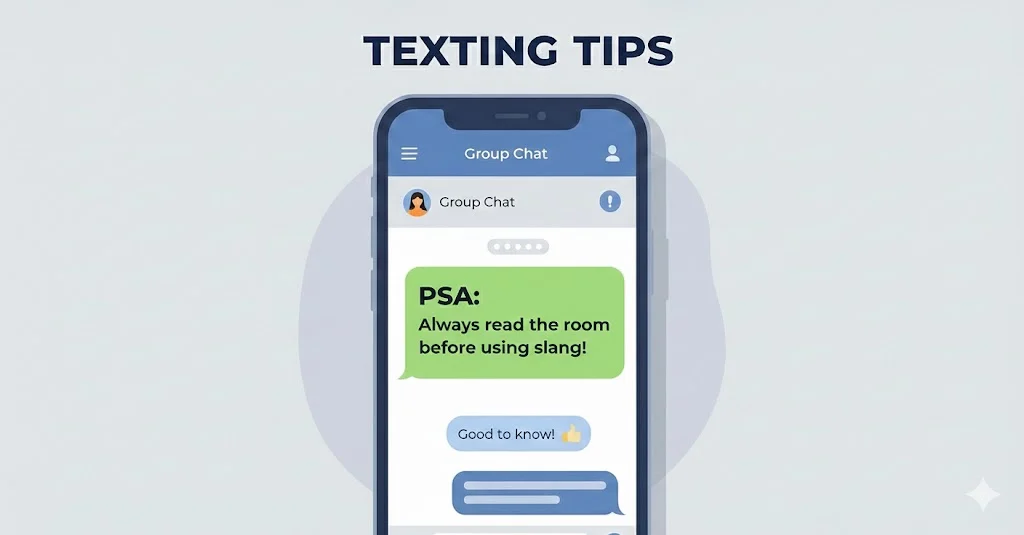

PSA in text talk stands for Public Service Announcement. It is used to introduce information that the sender believes is important, helpful, or worth everyone’s attention, often in a clear and noticeable way.
In today’s fast paced digital conversations, people want their messages to stand out. For that reason, abbreviations like PSA have become extremely popular. Although the term originally sounded formal, it has gradually evolved into something far more casual and flexible.
Because texting and online chats move quickly, users often rely on short cues to signal importance. As a result, PSA has become a simple way to say, “Please read this, it matters.” In this article, you will learn exactly what PSA means in text talk, how it is used, how tone affects its meaning, and when it is best to use or avoid it.
What Does PSA Mean in Text Talk?
In text talk, PSA means Public Service Announcement.
More specifically, it introduces a message that is meant to inform, warn, remind, or help a group of people. While traditional PSAs were formal messages from organizations, modern text PSAs are usually informal and conversational.
Because of this shift, PSA is now commonly used in everyday messaging to:
- Share useful updates
- Offer reminders or warnings
- Highlight common issues
- Add emphasis to a message
Origin of PSA and Its Evolution
Originally, a Public Service Announcement referred to official messages broadcast on radio, television, or public posters. These announcements focused on public safety, health, or awareness campaigns.
Over time, however, internet culture adopted the term. As texting, forums, and social media grew, people started using PSA as a quick label for important messages.
Consequently, the tone changed. What once sounded formal now often feels friendly, direct, or even playful in casual conversations.
How PSA Is Used in Everyday Texting
Typically, PSA appears at the very beginning of a message. This placement immediately signals importance.
In most cases, it is followed by a colon and then the main message.
Example:
PSA: The event starts at 7 instead of 8.
Because group chats can get crowded, starting with PSA helps the message stand out. As a result, readers are more likely to notice and read it.
Common Reasons People Use PSA in Text Talk
People use PSA for different purposes. Below are the most common situations where it appears.
1. Sharing Helpful Information
First of all, PSA is frequently used to pass along useful or practical updates.
Examples:
- PSA: The elevator is working again.
- PSA: Free shipping ends tonight.
In these cases, PSA acts as a friendly heads up rather than a command.
2. Giving Warnings or Reminders
Additionally, PSA works well for warnings or reminders that others should not miss.
Examples:
- PSA: Please save your work before logging out.
- PSA: Traffic is heavy this morning.
Here, PSA adds urgency while still sounding polite.
3. Pointing Out a Common Problem
Sometimes, PSA is used to address a repeated issue.
Examples:
- PSA: Please mute your mic when not speaking.
- PSA: Not everyone has seen the episode yet.
Although this use can feel firm, it is usually meant to improve communication rather than criticize.
4. Lighthearted or Humorous Messages
Interestingly, PSA is also used jokingly to emphasize an opinion.
Examples:
- PSA: Coffee counts as self care.
- PSA: Sleep is underrated.
In these situations, PSA adds dramatic flair rather than seriousness.
Tone of PSA in Text Talk
Although PSA may sound serious at first, its tone depends entirely on context and wording.
Friendly Tone 😊
PSA: There are snacks in the kitchen.
This sounds welcoming and helpful.
Neutral Tone
PSA: The schedule has been updated.
This version is informative and straightforward.
Firm or Slightly Frustrated Tone 😐
PSA: Please do not leave dishes in the sink.
While still polite, this tone signals mild frustration.
Examples of PSA in Real Conversations
To better understand how PSA works, consider these realistic scenarios.
Group Chat:
PSA: We are meeting at the new location today.
Work Chat:
PSA: The system will be offline tonight for maintenance.
Social Media Post:
PSA: Drink water and take breaks.
In each example, PSA helps draw attention to information the sender finds important.
PSA Compared to Similar Text Abbreviations
Although PSA is common, it is not the only way to signal importance in text messages.
Comparison Table
| Term | Meaning | Typical Use |
|---|---|---|
| PSA | Public Service Announcement | Important group information |
| FYI | For Your Information | Casual updates |
| Heads up | Advance notice | Friendly alerts |
| Note | Important detail | Semi formal |
| Reminder | Prompt to remember | Polite follow up |
While FYI often feels casual, PSA usually signals broader relevance or urgency.
Alternate Meanings of PSA
Outside of texting, PSA can mean different things depending on context.
For example:
- Prostate Specific Antigen in medicine
- Professional Squash Association in sports
- Public Service Announcement in media
However, in text talk and social media, PSA almost always refers to Public Service Announcement.
Polite and Professional Alternatives to PSA
Sometimes, PSA may feel too casual or too direct. In those cases, alternatives can work better.
Polite options include:
- Just a reminder
- Quick note
- Friendly reminder
More professional options include:
- Important update
- Please note
- For your awareness
Choosing the right phrase depends on both your audience and the situation.
When to Use PSA and When to Avoid It
In general, PSA works best in casual or semi formal communication. It is especially useful in group chats and online communities.
However, it may be better to avoid PSA in:
- Formal emails
- Sensitive conversations
- Legal or medical communication
In those situations, a more traditional introduction is usually clearer and more respectful.
Frequently Asked Questions
1. What does PSA mean in text messages?
It means Public Service Announcement and introduces important information.
2. Is PSA rude in texting?
No. In most cases, it is helpful or neutral. Tone depends on wording.
3. Can PSA be used humorously?
Yes. Many people use PSA to emphasize jokes or opinions.
4. Is PSA formal or informal?
In text talk, it is usually informal or semi formal.
5. Should PSA be used at work?
It can work in relaxed team chats, although formal emails usually need alternatives.
6. Does PSA always mean something serious?
Not always. It can be serious, helpful, or playful.
7. Is PSA the same as FYI?
No. FYI is more casual, while PSA suggests greater importance.
8. Where should PSA appear in a message?
Usually at the beginning so it is noticed right away.
Conclusion
what does PSA mean in text talk? It stands for Public Service Announcement and is used to highlight information that the sender believes others should know.
To recap:
- PSA introduces important or useful messages
- It is common in texts, group chats, and social media
- Tone can be friendly, neutral, or firm
- It can be serious or humorous depending on context
- It helps messages stand out in busy conversations
Understanding PSA allows you to communicate more clearly and interpret messages more accurately in digital spaces
Discover More Post
What Does Delta H Mean in Chemistry? Simple Explanation …
What Does Holy Mean in the Bible? Biblical Meaning …