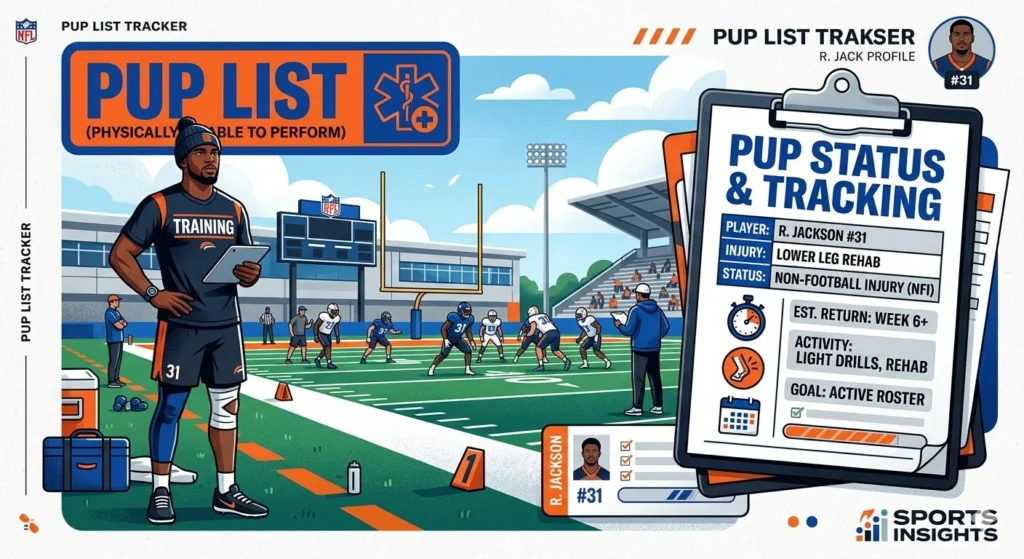

PUP in the NFL stands for “Physically Unable to Perform.” It is a designation used for players who are injured and not yet ready to participate in team practices or games at the start of the season or training camp.
If you follow football news, roster updates, or preseason reports, you have probably seen the term PUP list mentioned frequently. At first, it might sound confusing or even unrelated to football. However, in the NFL, PUP plays a very important role in managing injured players and team rosters.
In this complete guide, you will learn exactly what PUP means in the NFL, how the system works, the different types of PUP lists, and how it affects players and teams throughout the season.
What Does PUP Mean in the NFL?
In the NFL, PUP stands for Physically Unable to Perform.
It is a special roster designation used when a player:
- Has an injury before the season begins
- Is not physically ready to practice
- Needs more recovery time before returning to play
Because of this designation, the player cannot participate in team practices or games until they are cleared.
Why the PUP List Exists
The PUP list exists to protect both players and teams.
On one hand, it allows injured players to recover properly without pressure. On the other hand, it helps teams manage roster spots without permanently losing players to injury lists.
Additionally, it ensures fairness by preventing players from returning too early and risking further injury.
Types of PUP Lists in the NFL
There are two main types of PUP lists, and understanding the difference is essential.
1. Active PUP List
The Active PUP list is used during the preseason or training camp.
Key Features
- Players can be placed on this list before training camp begins
- They are not allowed to practice initially
- They still count against the team’s roster
- Most importantly, they can return at any time once they are healthy
Example
A player recovering from offseason surgery might start training camp on the Active PUP list. Once cleared, he can immediately return to practice.
2. Reserve PUP List
The Reserve PUP list is used after the regular season begins.
Key Features
- Players must first be on the Active PUP list
- Once moved to Reserve PUP, they cannot play immediately
- They must miss at least four games
- After that, they become eligible to return
Example
If a player is still injured when the season starts, the team may move him to the Reserve PUP list. This allows recovery time while keeping the player on the roster.
PUP List Rules at a Glance
| Rule | Active PUP | Reserve PUP |
|---|---|---|
| Used during preseason | Yes | No |
| Used during regular season | No | Yes |
| Can return anytime | Yes | No |
| Minimum games missed | None | At least 4 |
| Counts against roster | Yes | No |
This system gives teams flexibility while protecting player health.
How the PUP List Affects Players
Being placed on the PUP list can have several impacts on a player.
1. Recovery Time
First, it gives players the time they need to fully recover without rushing back.
2. Limited Participation
However, players cannot practice or play while on the list, which may delay their return to full performance.
3. Career Considerations
In some cases, extended time on the PUP list can affect a player’s role on the team or future opportunities.
How the PUP List Affects Teams
Teams also benefit from the PUP designation in several ways.
Roster Flexibility
Teams can temporarily free up roster space when players move to Reserve PUP.
Injury Management
Coaches can make smarter decisions about when players are truly ready to return.
Strategic Planning
Additionally, teams can plan around a player’s absence and adjust lineups accordingly.
Real World Usage of PUP in NFL Conversations
The term PUP is commonly used in sports media, commentary, and fan discussions.
Neutral Tone
“He started the season on the PUP list.”
Informational Tone
“The team placed him on Reserve PUP, so he will miss at least four games.”
Analytical Tone
“Coming off the PUP list could impact his performance early in the season.”
In all cases, the term is used clearly and professionally.
PUP vs Other NFL Injury Terms
To fully understand PUP, it helps to compare it with similar NFL terms.
Comparison Table
| Term | Meaning | Key Difference |
|---|---|---|
| PUP | Physically Unable to Perform | Used for preseason injuries |
| IR | Injured Reserve | Used for injuries during the season |
| NFI | Non Football Injury | Injury not related to football |
| Questionable | Game status | Player may or may not play |
Key Insight
Unlike Injured Reserve, the PUP list is specifically for players injured before the season begins.
Common Examples of PUP Usage
Here are some realistic examples to show how the term appears in context.
Example 1
“The running back is still on the PUP list after knee surgery.”
Example 2
“He was activated from the PUP list and returned to practice this week.”
Example 3
“If he moves to Reserve PUP, he will miss the first month of the season.”
These examples show how the term is used in news and analysis.
What PUP Does Not Mean
It is easy to misunderstand the term at first.
PUP does not mean:
- The player is permanently out
- The player is no longer part of the team
- The injury is career ending
Instead, it simply indicates that the player is not ready yet but expected to return.
Alternate Meanings of PUP
Outside the NFL, PUP can have different meanings depending on context.
- Puppy, referring to a young dog
- Beginner or trainee in informal slang
- Short form in gaming or online communities
However, in football discussions, PUP almost always means Physically Unable to Perform.
When You Will Hear PUP Most Often
You are most likely to hear the term PUP during:
- Training camp updates
- Preseason reports
- Early season injury news
- Player recovery discussions
Because of this, understanding the term helps you follow NFL news more easily.
Frequently Asked Questions
1. What does PUP stand for in the NFL?
PUP stands for Physically Unable to Perform.
2. How long does a player stay on the PUP list?
It depends. On Reserve PUP, a player must miss at least four games.
3. Can players return from the PUP list?
Yes. Players can return once they are medically cleared.
4. What is the difference between PUP and IR?
PUP is for preseason injuries, while IR is used during the season.
5. Do players get paid on the PUP list?
Yes. Players still receive their salary while on the PUP list.
6. Can a player practice on the PUP list?
No. Players cannot practice until they are activated.
7. What happens after four games on Reserve PUP?
After four games, the player becomes eligible to return.
8. Is PUP a serious injury designation?
Not necessarily. It simply means the player needs more time to recover.
Conclusion
So, what does PUP mean in the NFL? It stands for Physically Unable to Perform, a designation used for players who are not ready to practice or play due to injury.
To recap:
- PUP is used mainly for preseason injuries
- There are two types: Active PUP and Reserve PUP
- Reserve PUP requires missing at least four games
- It helps teams manage rosters and protect players
- It does not mean a player is out permanently
Understanding PUP makes it much easier to follow NFL news, roster moves, and injury updates throughout the season.
Discover More Post
What Does OFC Mean in a Text Message? Full Meaning …
What Does Disposition Mean in a Criminal Case? Explained …
What Does Falling Action Mean in a Story? Definition and …