
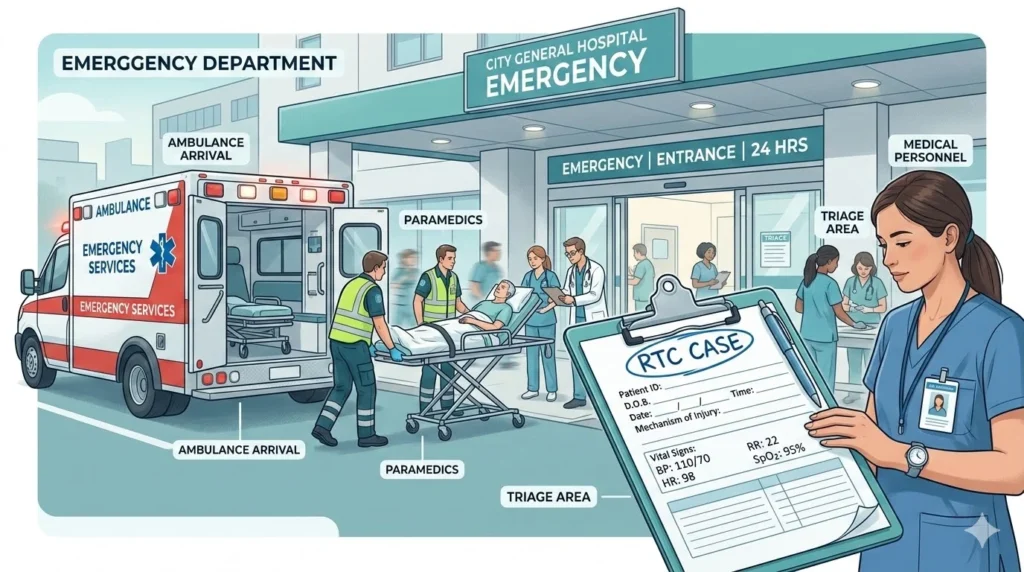

RTC in medical terms most commonly means “Road Traffic Collision.” Healthcare professionals use this abbreviation to describe injuries or medical cases that result from vehicle accidents on public roads.
Medical language often includes abbreviations that help professionals communicate quickly and efficiently. One abbreviation that frequently appears in hospital records, emergency reports, and clinical documentation is RTC. If you have seen this term in medical notes, accident reports, or emergency department summaries, you might wonder exactly what it means.
Understanding medical abbreviations like RTC is important because they provide context about how an injury occurred. In many cases, this single abbreviation can indicate the entire background of a patient’s condition.
In this guide, you will learn what RTC means in medical terms, where it is used in healthcare settings, how doctors and paramedics use it in documentation, and what other meanings it can have in different medical contexts.
What Does RTC Mean in Medical Terms?
In healthcare, RTC most commonly stands for “Road Traffic Collision.”
This term refers to an accident involving one or more vehicles on a public road that results in injuries or medical evaluation.
Medical professionals use RTC to quickly document that a patient’s injuries were caused by a traffic related incident.
Examples of situations that may be labeled as RTC include:
- Car accidents
- Motorcycle crashes
- Bicycle collisions with vehicles
- Pedestrian accidents involving cars or trucks
Because emergency departments frequently treat trauma from vehicle accidents, RTC is a widely recognized abbreviation in medical records and hospital communication.
Why Medical Professionals Use the Term RTC
Healthcare environments require fast and precise communication. As a result, abbreviations help medical staff record information quickly while still maintaining clarity.
The abbreviation RTC provides immediate context about the mechanism of injury, which is a critical factor in trauma assessment.
Knowing that a patient was involved in a road traffic collision helps doctors evaluate risks such as:
- Head injuries
- Internal bleeding
- Spinal trauma
- Broken bones
- Chest injuries
Therefore, documenting RTC helps guide the diagnostic process and treatment decisions.
Origin and Use of RTC in Healthcare
The abbreviation RTC became common in emergency medicine and trauma care. Hospitals, paramedics, and emergency responders began using it as a shorthand way to identify injuries caused by vehicle accidents.
Historically, the term RTA (Road Traffic Accident) was used more frequently. However, many healthcare organizations now prefer RTC.
Why RTC Replaced RTA in Many Places
Many medical and public safety organizations shifted from “accident” to “collision” for an important reason.
The word accident suggests that an event could not be prevented. In contrast, collision is considered more neutral and fact based.
As a result, modern trauma documentation increasingly uses RTC instead of RTA.
Where RTC Appears in Medical Settings
Healthcare professionals use RTC in several types of documentation and communication.
1. Emergency Department Reports
When patients arrive at the emergency room after a vehicle crash, the case may be recorded as an RTC.
Example:
Patient presented after RTC with complaints of chest pain and neck stiffness.
2. Ambulance and Paramedic Reports
Paramedics frequently document RTC in their initial reports to hospitals.
Example:
Adult male involved in RTC. Patient was driver of vehicle. Complains of severe leg pain.
3. Hospital Medical Records
Doctors often include RTC in patient histories.
Example:
Injury occurred following RTC two hours prior to hospital arrival.
4. Trauma Team Communication
During trauma cases, teams may refer to a patient simply as an RTC case.
Example:
This is a high speed RTC with suspected spinal injury.
Common Injuries Associated With RTC Cases
Because vehicle accidents can produce significant force, RTC cases often involve serious injuries.
Some common medical issues include:
- Head trauma or concussion
- Whiplash injuries
- Broken ribs
- Fractures in arms or legs
- Internal bleeding
- Spinal cord injuries
- Soft tissue damage
However, not every RTC results in severe trauma. Some patients may only experience minor injuries such as bruises or muscle strain.
Examples of RTC in Medical Context
Below are examples showing how healthcare professionals might use the abbreviation.
Neutral Clinical Example
Patient admitted after RTC. Complains of headache and dizziness.
Emergency Situation
Severe RTC reported. Patient unconscious with suspected head trauma.
Mild Injury Case
Patient evaluated after low speed RTC. Reports neck stiffness but no fractures detected.
Follow Up Medical Note
Patient recovering well after injuries sustained during RTC last week.
Table of Example Medical Sentences Using RTC
| Situation | Example Sentence |
|---|---|
| Emergency admission | Patient arrived via ambulance after RTC with chest pain |
| Initial paramedic report | Driver involved in RTC complaining of shoulder pain |
| Trauma assessment | High impact RTC suspected to involve spinal injury |
| Follow up visit | Patient recovering from fractures sustained during RTC |
These examples show how the abbreviation provides immediate context for medical staff.
RTC Compared With Similar Medical Abbreviations
Several related abbreviations may appear in trauma reports. Understanding the differences can help avoid confusion.
| Abbreviation | Meaning | Usage |
|---|---|---|
| RTC | Road Traffic Collision | Modern term for vehicle related injury cases |
| RTA | Road Traffic Accident | Older term still used in some regions |
| MVA | Motor Vehicle Accident | Common in North American medical reports |
| MVC | Motor Vehicle Collision | Often used in trauma documentation |
Although these terms describe similar situations, RTC and MVC are increasingly preferred because they avoid implying fault or inevitability.
Other Meanings of RTC in Medical Context
While Road Traffic Collision is the most common meaning, RTC can occasionally represent other medical phrases depending on context.
1. Return to Clinic
In some medical notes, RTC means the patient should come back for follow up care.
Example:
RTC in two weeks for evaluation.
This meaning is more common in outpatient notes.
2. Real Time Clock in Medical Devices
Certain medical equipment includes a Real Time Clock component that tracks time for monitoring systems.
This meaning appears mainly in biomedical engineering documentation rather than clinical records.
Polite or Professional Alternatives to RTC in Documentation
Although abbreviations save time, some professionals prefer more descriptive wording in patient communication.
Alternatives may include:
- Vehicle collision injury
- Traffic related injury
- Motor vehicle collision case
- Injury caused by road accident
Using full descriptions can be especially helpful in patient friendly reports or public health documents.
When Patients Might See the Term RTC
Patients sometimes encounter RTC in medical paperwork such as:
- Hospital discharge summaries
- Emergency department notes
- Insurance medical reports
- Legal medical documentation
If a patient sees RTC in their records, it simply indicates that their injuries were associated with a road traffic collision.
Frequently Asked Questions
1. What does RTC stand for in medical terms?
RTC most commonly stands for Road Traffic Collision, referring to injuries caused by vehicle accidents.
2. Is RTC the same as RTA?
They describe the same type of event, but RTC is now preferred in many healthcare systems.
3. Why do doctors write RTC in medical notes?
Doctors use RTC to quickly document the cause of a patient’s injuries.
4. Can RTC mean something else in medical records?
Yes. In some cases it can mean Return to Clinic, which refers to a follow up appointment.
5. Is RTC used worldwide in healthcare?
Yes. The abbreviation is widely recognized, especially in emergency medicine and trauma care.
6. What injuries are common in RTC cases?
Common injuries include fractures, head trauma, whiplash, and internal injuries.
7. What is the difference between RTC and MVC?
Both refer to vehicle collisions. MVC stands for Motor Vehicle Collision and is common in North America.
8. Should patients worry if RTC appears in their records?
No. It simply indicates the cause of injury and helps medical staff understand the situation.
Conclusion
Understanding medical abbreviations helps make sense of clinical documents and hospital reports. In most healthcare contexts, RTC means Road Traffic Collision, referring to injuries caused by vehicle related incidents on public roads.
Key points to remember:
- RTC is widely used in emergency medicine and trauma care
- It helps medical teams quickly identify the cause of injury
- The term often replaces the older abbreviation RTA
- In some cases, RTC may also mean Return to Clinic in follow up notes
- Patients may see the abbreviation in hospital or insurance documentation
Learning terms like RTC makes medical language easier to understand and helps patients feel more confident when reviewing healthcare records.
Discover More Post
EYP Meaning in Text What It Stands For and How to Use It for …
SMH Meaning in Text: Examples, and How to Use It in 2026