
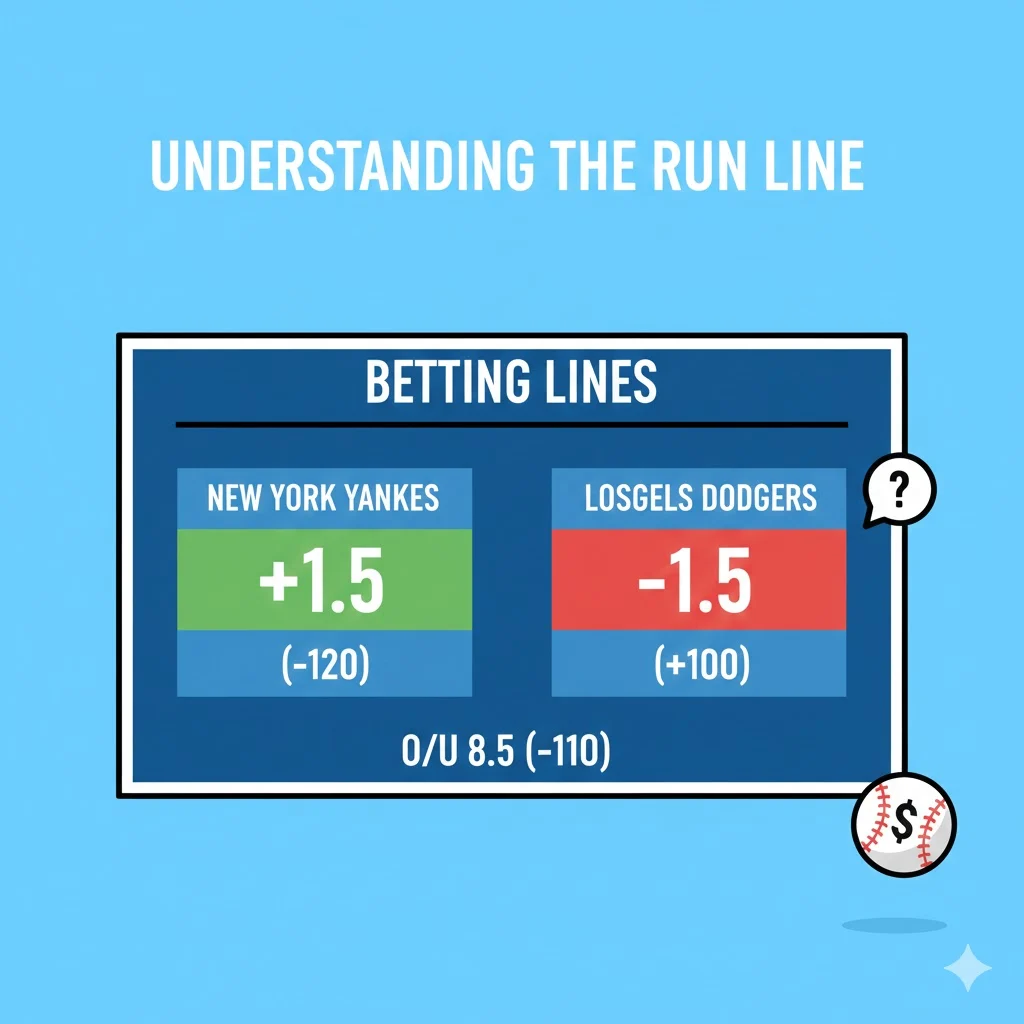

In baseball, a run line is a type of betting line that combines the point spread and the moneyline. It is typically set at 1.5 runs, meaning the favored team must win by 2 or more runs for the bet to win, while the underdog can lose by 1 run or win outright for the bet to pay out.
If you are new to baseball betting, the term run line may seem confusing at first. Unlike a simple moneyline, which only requires picking the winner, a run line introduces a margin of victory. Understanding it can improve your ability to read betting odds and make informed decisions.
This guide explains exactly what a run line means in baseball, how it works in real betting scenarios, common examples, and how it compares to other betting types. By the end, you’ll know how to interpret and use run lines like a pro.
What Does Run Line Mean in Baseball?
A run line in baseball is a point spread designed to level the betting field between a favorite and an underdog.
The standard run line is 1.5 runs. This means:
- The favorite team must win by 2 or more runs for a bet on them to win.
- The underdog team can either win outright or lose by 1 run for a bet on them to win.
Essentially, the run line adds context to a game’s outcome beyond just who wins or loses. It’s used primarily in sports betting and is important for understanding odds beyond a traditional moneyline.
Origin and Popularity of the Run Line
Why the Run Line Exists
Baseball games often have low-scoring outcomes, which can make simple moneyline betting predictable when one team is clearly stronger. To make betting more exciting and fair, sportsbooks introduced the run line, which is similar to a point spread in football or basketball.
Popularity
- Run lines are standard in U.S. sportsbooks and online betting platforms.
- They are especially popular for MLB games because of the sport’s low-scoring nature.
- Bettors use run lines to increase potential payouts when betting on favorites, or to hedge risk when betting on underdogs.
How Run Line Works
The mechanics of a run line are simple but require attention to detail.
Standard Setup
- Favorite: -1.5 runs
- Underdog: +1.5 runs
Here’s how it works in practice:
- If you bet on the favorite (-1.5), the team must win by 2 or more runs.
- If you bet on the underdog (+1.5), the team can lose by 1 run or win outright.
Examples of Run Line Outcomes
| Game Result | Favorite (-1.5) Bet | Underdog (+1.5) Bet |
|---|---|---|
| Favorite wins 3-1 | Win | Lose |
| Favorite wins 2-1 | Win | Lose |
| Favorite wins 1-0 | Lose | Win |
| Underdog wins 4-3 | Lose | Win |
| Underdog wins 5-0 | Lose | Win |
This table shows how the 1.5-run cushion affects the outcome of bets.
Run Line vs Moneyline
The moneyline is the most straightforward baseball bet: you pick the winner. No margin of victory is involved.
Comparison Table
| Type | Definition | Key Difference |
|---|---|---|
| Moneyline | Bet on the team to win outright | No margin needed |
| Run Line | Bet on a team with +1.5 or -1.5 runs | Margin of 1.5 runs required |
For example, a moneyline bet on a strong favorite pays less because the outcome is likely. A run line bet on the same favorite can increase potential payout, but the team must win by at least 2 runs.
Examples of Run Line in Real Betting
Example 1: Betting on a Favorite
- Yankees vs Red Sox
- Yankees: -1.5 (+120)
- Red Sox: +1.5 (-140)
If you bet $100 on the Yankees at -1.5:
- Yankees win 3-1 → you win $120
- Yankees win 2-1 → you win $120
- Yankees win 1-0 → you lose your bet
Example 2: Betting on an Underdog
- Dodgers vs Giants
- Dodgers: -1.5 (+110)
- Giants: +1.5 (-130)
If you bet $100 on the Giants at +1.5:
- Giants win 4-3 → you win $100
- Giants lose 5-4 → you win $100
- Giants lose 3-0 → you lose your bet
These examples show that betting with a run line can protect underdog bets or make favorite bets more profitable.
Tips for Using Run Line Effectively
- Understand team strength: Favorites don’t always cover the run line, especially against strong pitching.
- Check starting pitchers: Starting pitchers heavily influence run scoring in MLB.
- Look for trends: Teams with strong bullpens may cover the -1.5 more often.
- Consider venue: Some ballparks favor higher scoring, which may affect run line outcomes.
- Avoid betting on favorites blindly: The higher payout is tempting, but they must win by 2 or more runs.
Common Misconceptions About Run Line
- It is the same as a point spread in football: Not exactly. While the idea is similar, run lines are usually fixed at 1.5 runs because baseball scores are lower.
- It guarantees higher payouts: Not always. Favorite run line bets carry risk if the team wins by only 1 run.
- Underdogs are safe bets: They can lose by 2 or more runs, so underdog betting still carries risk.
Run Line in Context with Other Baseball Bets
Run line betting is often combined with:
- Over/Under (Total runs): Betting on total runs scored in a game
- Prop bets: Bets on individual players or game events
- Parlays: Multiple bets combined for higher potential payout
For example, you could bet on the favorite to cover the run line and the total runs to go over 8.5 in the same ticket.
Polite and Professional Explanation of Run Line
When explaining the run line to someone new, you can say:
“The run line is essentially a spread that gives the underdog a 1.5-run advantage and requires the favorite to win by at least 2 runs. It balances the odds and makes betting more interesting.”
This phrasing is clear, professional, and avoids slang.
Frequently Asked Questions
1. What does run line mean in baseball betting?
A run line is a betting line that adds a 1.5-run margin to a favorite or underdog.
2. Why is the standard run line 1.5 runs?
Because baseball games often have low scores, 1.5 runs balances the risk between favorites and underdogs.
3. Can the run line change?
Yes, some sportsbooks adjust it, but most stick to the standard 1.5 runs.
4. What happens if the favorite wins by exactly 1 run?
A bet on the favorite loses because they did not cover the run line. A bet on the underdog wins.
5. How does the run line affect payouts?
Favorite bets usually pay more than a simple moneyline because the margin of victory is required. Underdogs pay less because of the 1.5-run cushion.
6. Is run line betting safer than moneyline betting?
Not necessarily. It depends on the matchup, starting pitchers, and scoring trends.
7. Can you bet on the run line and total runs in the same game?
Yes. Many bettors combine them for parlays or more advanced strategies.
8. Why is run line important for new bettors?
It helps understand how betting odds work beyond just picking the winner and introduces risk management concepts.
Conclusion
A run line in baseball is more than just a number; it is a way for sportsbooks to balance favorites and underdogs.
Key takeaways:
- The run line is typically set at 1.5 runs
- Favorites must win by 2 or more runs to cover
- Underdogs can lose by 1 run or win outright
- It differs from moneyline betting by adding a margin of victory
- Understanding the run line improves betting strategy and payout potential
With this knowledge, you can approach baseball betting with confidence and understand how each game’s odds reflect both outcome and margin
Discover More Post
What Does F1B Mean in Dogs? Simple Explanation for Dog …
What Does Inc Mean in Business? Definition and Examples …


