
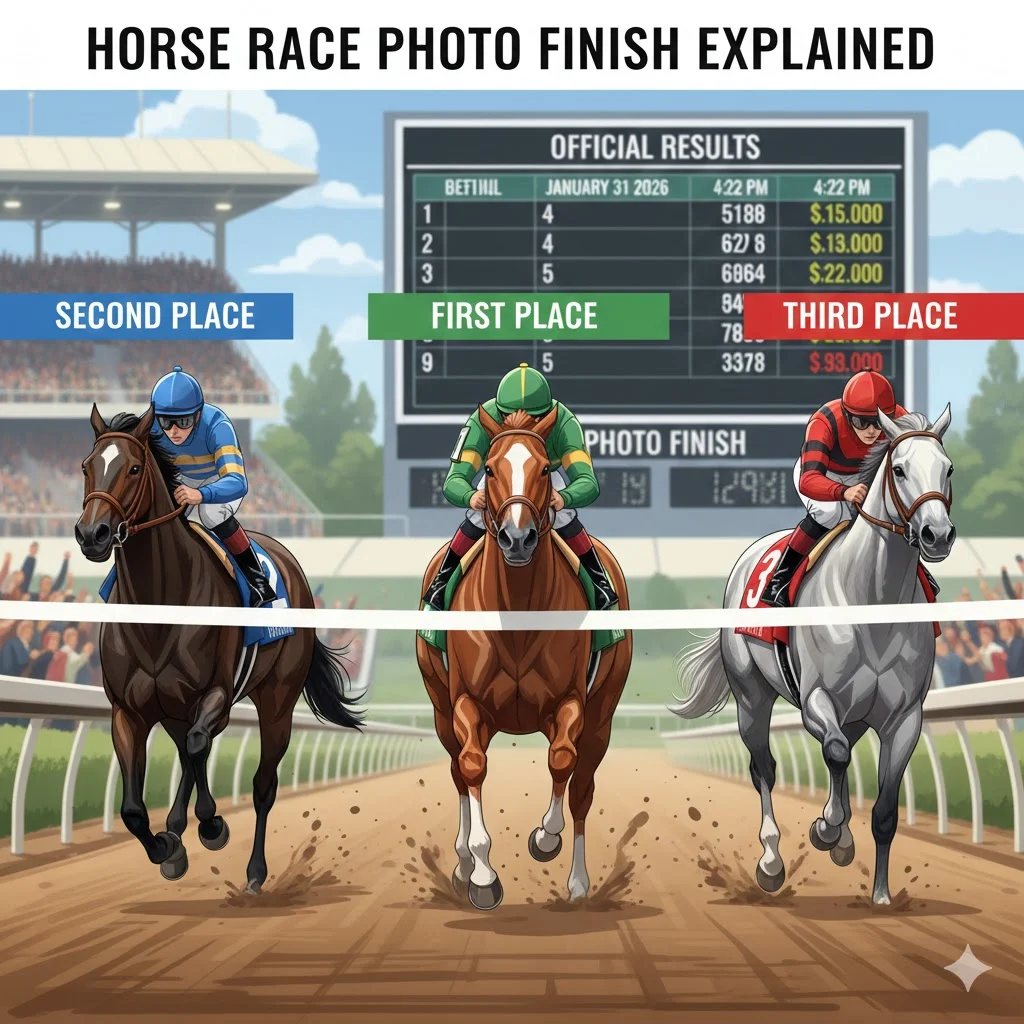

In horse racing, show means a horse finishes first, second, or third in a race. When you place a show bet, you win if your chosen horse ends the race in any of these three positions.
Horse racing has its own language, and for newcomers, the betting terms can feel confusing at first. Words like win, place, and show appear on betting boards, tickets, and race programs, yet their meanings are not always obvious. Among them, show is one of the most common and beginner friendly terms you will encounter.
In this guide, you will learn what show means in horse racing, how show bets work, how payouts are calculated, and how show compares to other popular betting options. By the end, you will have a clear understanding of when and why bettors choose show wagers.
What Does Show Mean in Horse Racing?
In horse racing, show refers to a finishing position within the top three.
If you bet a horse to show, your bet wins if that horse finishes:
- First
- Second
- Third
As a result, show bets are considered one of the safest and lowest risk wagers in horse racing.
Understanding the Basics of Show Bets
A show bet is a type of straight bet, meaning it depends on the performance of a single horse.
Instead of predicting only the winner, you are giving your horse three chances to succeed. Because of this higher probability, the payout for a show bet is usually lower than for win or place bets.
Key Characteristics of Show Bets
- Low risk compared to other wagers
- Smaller payouts
- Ideal for beginners
- Commonly used in combination betting strategies
How Show Bets Work Step by Step
To better understand show betting, it helps to break the process down.
First, you select a horse before the race begins.
Next, you place a show bet at the betting window or online.
Then, the race is run.
Finally, if your horse finishes first, second, or third, you receive a payout.
If your horse finishes fourth or worse, the bet loses.
Show vs Win vs Place Explained
Horse racing betting revolves around three core straight bets. Understanding how show compares to win and place is essential.
Comparison Table
| Bet Type | Winning Position | Risk Level | Typical Payout |
|---|---|---|---|
| Win | First place only | High | Highest |
| Place | First or second | Medium | Moderate |
| Show | First, second, or third | Low | Lowest |
Because show offers more ways to win, it naturally pays less than the other two options.
Example of a Show Bet in Action
Imagine a race with eight horses.
You place a ten dollar show bet on Horse Number Four.
Race results:
- Horse Number Six
- Horse Number Four
- Horse Number One
Since Horse Number Four finished second, your show bet wins.
Even though your horse did not win the race, finishing in the top three is enough for a successful show wager.
How Show Payouts Are Calculated
Show payouts depend on the pari mutuel system, which means payouts are based on how much money is bet on each horse.
Here is how it generally works:
- All show bets go into a single pool
- The track takes a percentage called the takeout
- The remaining money is divided among winning bettors
Because popular horses attract more money, their show payouts tend to be smaller.
Typical Show Payout Example
Suppose you bet two dollars on a horse to show.
If the payout is:
- Two dollars and forty cents
You receive:
- Your original two dollars
- Plus forty cents in profit
Although the profit is modest, the chance of winning is much higher than with other bets.
Why Show Bets Pay Less
Many bettors wonder why show payouts are so low.
The main reason is probability. Since a horse only needs to finish in the top three, the odds of success are significantly higher.
Additionally, experienced bettors often place large amounts on heavy favorites to show, which further reduces payouts.
When Bettors Use Show Bets
Show bets are popular in several situations.
First, beginners often use them to learn how betting works without risking much money.
Second, conservative bettors use show wagers to protect their bankroll.
Third, some players include show bets as part of larger betting systems.
In short, show bets are about consistency rather than big wins.
Show Betting Strategies
While show betting is simple, some strategies can improve decision making.
Common Approaches
- Betting favorites with strong past performance
- Avoiding races with extremely large fields
- Using show bets in combination with win bets
- Betting on horses with consistent top three finishes
However, it is important to remember that no strategy guarantees profit.
Show in Exotic and Combination Bets
Although show is most commonly used as a straight bet, it also plays a role in exotic wagering.
For example:
- Trifecta bets involve predicting first, second, and third
- Superfecta bets extend to fourth place
In these cases, understanding what it means to finish “in the show” helps you read race results correctly.
Does Show Always Mean Third Place?
This is a common point of confusion.
Show does not mean third place only.
Instead, it includes first, second, or third.
If a horse finishes first, it has technically also placed and shown.
Alternate Meanings of Show in Horse Racing
Outside of betting, the word show can appear in other horse related contexts.
For example:
- Horse shows refer to competitions like dressage or jumping
- Show ring describes where horses are judged on appearance or performance
However, in betting discussions, show almost always refers to a top three finish.
Professional and Casual Use of Show
The term show is widely used by:
- Professional handicappers
- Track announcers
- Casual fans
- Online betting platforms
Because it is short and well understood, it appears frequently on betting slips and race summaries.
Common Mistakes About Show Bets
Even simple bets can be misunderstood.
One common mistake is assuming show bets pay well on favorites.
Another mistake is ignoring track takeout, which reduces payouts.
A third error is betting show on long shots expecting big returns.
Understanding these limits helps set realistic expectations.
Frequently Asked Questions
1. What does show mean in horse racing betting?
It means your horse must finish first, second, or third for the bet to win.
2. Is show the safest bet in horse racing?
Yes. Show bets are generally considered the lowest risk straight bet.
3. Do show bets pay much money?
No. Because the risk is low, the payouts are usually small.
4. Can a horse win and still count as a show?
Yes. A winning horse also qualifies as a show finish.
5. Is show better than place?
Show is safer, but place typically pays more.
6. Why are show payouts sometimes very low?
Heavy betting on favorites and the pari mutuel system reduce payouts.
7. Can beginners start with show bets?
Absolutely. Show bets are ideal for learning how betting works.
8. Is show used in every horse race?
Yes. Show betting is available in nearly all standard horse races.
Conclusion
So, what does show mean in horse racing? It means your horse finishes in the top three, giving you a higher chance of winning compared to other bets.
To recap:
- Show bets win if the horse finishes first, second, or third
- They carry low risk and low reward
- They are popular with beginners and cautious bettors
- They play a role in understanding race results and exotic bets
If you are new to horse racing, starting with show bets can help you learn the sport while minimizing losses.
Discover More Post
What Does Up and Down Mean in Golf? Explained with …
What Does Establish Justice Mean in the Preamble? Clear …
What Does Falling Action Mean in a Story? Definition and …


