
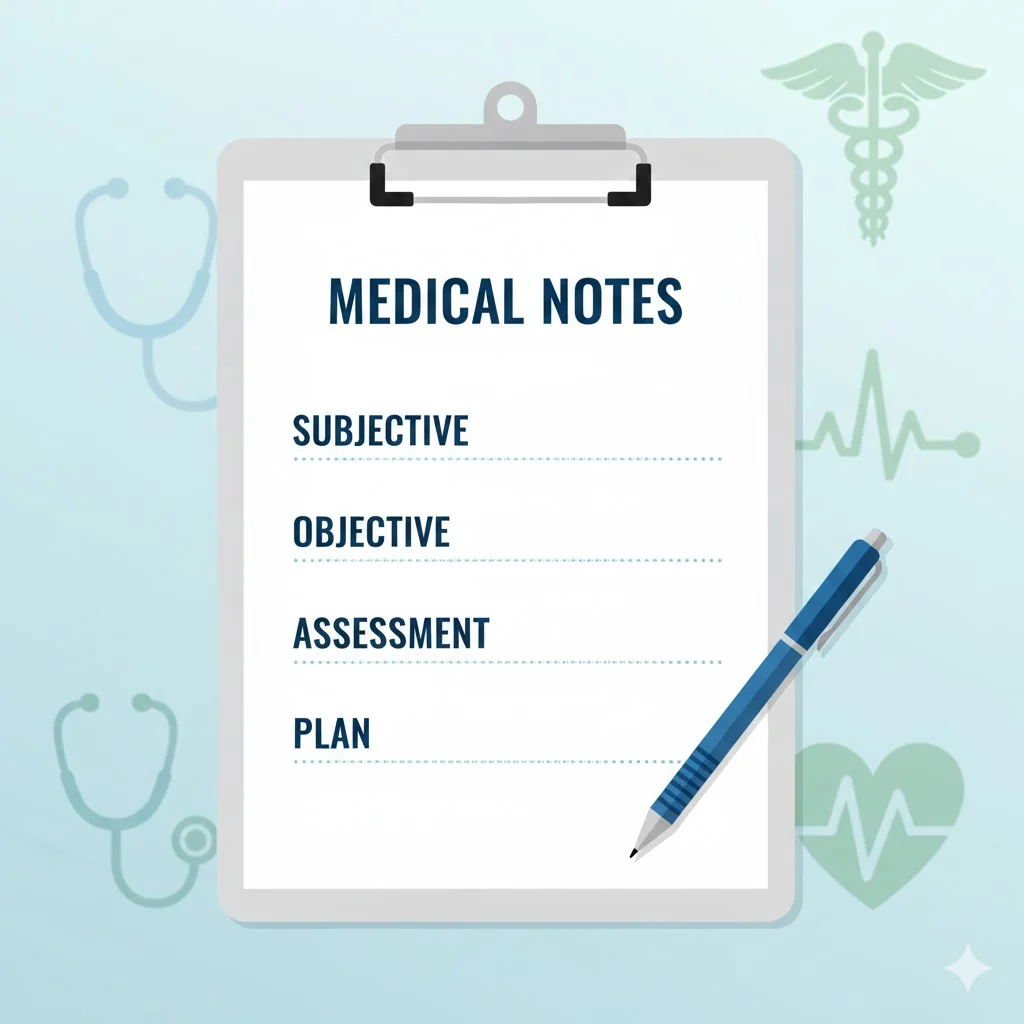

SOAP in medical terms stands for Subjective, Objective, Assessment, and Plan. It is a structured documentation method used by healthcare professionals to record patient encounters clearly, logically, and consistently.
If you have ever reviewed a medical chart or read a clinical note, you have likely encountered the term SOAP. At first, the word may seem confusing, especially because it is commonly associated with cleaning products. However, in healthcare, SOAP has a precise and highly important meaning.
In today’s medical environment, accurate documentation is essential. Therefore, healthcare providers rely on standardized systems like SOAP to organize information efficiently. In this article, you will learn what SOAP means in medical terms, how it originated, why it is still widely used, and how each section contributes to quality patient care.
What Does SOAP Mean in Medical Terms?
In medical documentation, SOAP is an acronym made up of four components that guide clinical notes.
Specifically, SOAP stands for:
- Subjective
- Objective
- Assessment
- Plan
Together, these four sections form a SOAP note. As a result, patient information is presented in a logical order that mirrors clinical thinking. Because of this structure, SOAP notes are easy to read, review, and update over time.
Why SOAP Notes Are Important in Healthcare
First of all, SOAP notes promote clarity. Without a clear structure, medical records can quickly become disorganized and difficult to interpret.
In addition, SOAP notes:
- Improve communication between healthcare professionals
- Support accurate diagnoses and treatment decisions
- Provide consistent legal and professional documentation
- Make patient progress easier to track
- Enhance continuity of care across settings
For these reasons, SOAP notes have become a foundational tool in healthcare documentation worldwide.
Origin and History of SOAP Notes
To better understand SOAP, it is helpful to examine its history.
In the 1960s, Dr. Lawrence Weed introduced SOAP as part of the Problem Oriented Medical Record system. At that time, many medical records lacked structure, which often led to incomplete or unclear documentation.
As a solution, SOAP notes were designed to follow a logical flow of clinical reasoning. Over time, this approach proved effective. Consequently, SOAP was adopted in hospitals, clinics, and medical training programs around the world.
Understanding Each Part of SOAP
In order to use SOAP correctly, it is important to understand the role of each section. Not only does each component serve a specific purpose, but each one also builds on the previous section.
S: Subjective
To begin with, the Subjective section records information provided directly by the patient.
This part focuses on personal experiences that cannot be measured objectively.
Common elements include:
- Patient reported symptoms
- Pain descriptions
- Medical history
- Personal concerns
Examples:
- Patient reports headache for three days
- Patient describes sharp chest pain
- Patient feels nauseous in the morning
Because this information is based on the patient’s perception, it is considered subjective.
O: Objective
Next, the Objective section includes data that the healthcare provider can observe or measure.
Unlike subjective information, objective data is factual and verifiable.
Common elements include:
- Vital signs
- Physical examination findings
- Laboratory test results
- Imaging results
Examples:
- Blood pressure 130 over 85
- Temperature 38 degrees Celsius
- Swelling observed in left ankle
As a result, this section provides measurable evidence to support clinical decisions.
A: Assessment
After reviewing subjective and objective information, the provider moves on to the Assessment.
At this stage, clinical judgment is applied. The provider analyzes the collected data to determine the patient’s condition.
This section may include:
- A diagnosis
- Possible differential diagnoses
- Evaluation of improvement or decline
Examples:
- Findings consistent with respiratory infection
- Symptoms improving since last visit
- Likely muscle strain
In essence, the assessment explains what the provider believes is happening with the patient.
P: Plan
Finally, the Plan outlines the next steps in care.
This section describes how the condition will be treated or managed moving forward.
Common elements include:
- Medications
- Diagnostic testing
- Referrals
- Follow up instructions
- Lifestyle recommendations
Examples:
- Begin prescribed medication
- Order blood work
- Schedule follow up in two weeks
Therefore, the plan ensures continuity and clear direction in patient care.
Example of a SOAP Note
To illustrate how SOAP works in practice, consider the example below.
SOAP Note Example Table
| Section | Example |
|---|---|
| Subjective | Patient reports sore throat and fever for two days |
| Objective | Temperature 38.5 degrees Celsius, red throat observed |
| Assessment | Suspected throat infection |
| Plan | Prescribe antibiotics and advise rest |
Because each section is clearly defined, the note is easy to understand at a glance.
Where SOAP Is Commonly Used
Today, SOAP notes are used in many healthcare settings.
For example, they are written by:
- Physicians
- Nurses
- Nurse practitioners
- Physician assistants
- Physical therapists
- Mental health professionals
As healthcare teams grow more collaborative, SOAP notes help ensure everyone has the same understanding of the patient’s condition.
SOAP in Nursing and Allied Health
In addition to physicians, many allied health professionals depend on SOAP notes.
For instance:
- Nurses use SOAP notes to document patient responses
- Physical therapists track mobility and recovery
- Mental health providers record therapy progress
Consequently, SOAP supports consistent communication across disciplines.
SOAP vs Other Medical Documentation Formats
Although SOAP is widely used, it is not the only documentation method available.
Documentation Comparison Table
| Format | Main Purpose |
|---|---|
| SOAP | Structured clinical reasoning |
| Narrative Notes | Free form documentation |
| PIE Notes | Problem focused care |
| DARP Notes | Action and response tracking |
Nevertheless, SOAP remains one of the most recognized and taught formats in healthcare.
Common Mistakes When Using SOAP Notes
Even with a clear structure, errors can occur.
Common mistakes include:
- Mixing subjective and objective data
- Writing vague assessments
- Omitting clear plans
- Using unclear abbreviations
Therefore, proper training and attention to detail are essential when writing SOAP notes.
Alternate Meanings of SOAP Outside Medicine
Outside the medical field, SOAP can mean something entirely different.
For example:
- Soap used for cleaning
- SOAP protocols in technology
- Soap operas in entertainment
However, within healthcare, SOAP almost always refers to Subjective, Objective, Assessment, and Plan.
Professional and Educational Use of SOAP
Because of its importance, SOAP is widely taught in healthcare education.
It is commonly used in:
- Medical schools
- Nursing programs
- Allied health courses
- Clinical training placements
Moreover, SOAP notes serve as legal records and support insurance documentation.
Frequently Asked Questions
1. What does SOAP mean in medical terms?
SOAP stands for Subjective, Objective, Assessment, and Plan.
2. Who uses SOAP notes?
Doctors, nurses, therapists, and many other healthcare professionals use them.
3. Why are SOAP notes important?
They ensure organized, accurate, and standardized documentation.
4. Are SOAP notes used internationally?
Yes, SOAP notes are recognized and used worldwide.
5. Are SOAP notes only for doctors?
No, many healthcare professionals rely on SOAP notes.
6. Are SOAP notes part of electronic medical records?
Yes, most electronic health record systems support SOAP formatting.
7. Can patients read SOAP notes?
In many healthcare systems, patients can access their records.
8. Is SOAP still relevant today?
Yes, SOAP remains essential in modern healthcare documentation.
Conclusion
So, what does SOAP mean in medical terms? It refers to a structured documentation system made up of Subjective, Objective, Assessment, and Plan.
In conclusion:
- SOAP organizes patient information clearly
- It improves communication among healthcare teams
- It supports accurate diagnosis and treatment
- It continues to be widely used across medical professions
By understanding SOAP notes, you gain valuable insight into how healthcare providers document and manage patient care.
Discover More Post
What Does PIM Mean in Hockey? Simple Explanation for New …
What Does Delta H Mean in Chemistry? Simple Explanation …
What Does MF Mean in Text? Meaning, Usage, and Examples


