
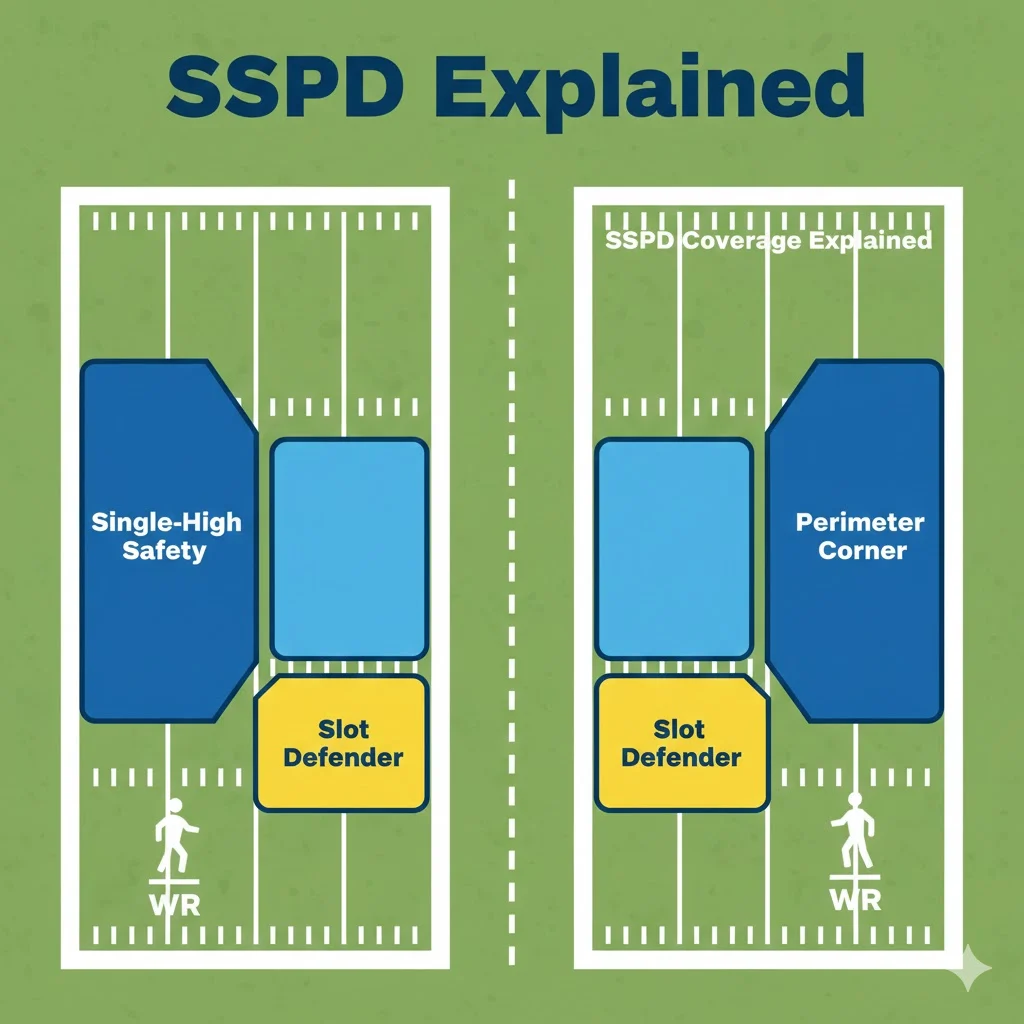

SSPD in fantasy football most commonly stands for “Same Side Passing Defense.” It refers to how well a defense performs against passing plays directed to one side of the field, usually the left or right side. Fantasy managers use SSPD to evaluate wide receiver matchups and make smarter start or sit decisions.
Fantasy football is full of advanced stats and abbreviations that can feel overwhelming at first. While some terms like PPR or ADP are widely known, others appear quietly in matchup charts, analytics tools, or expert breakdowns. One of those lesser known but increasingly useful terms is SSPD.
At first glance, SSPD can look confusing or even unfamiliar. However, once you understand what it means and how it is used, it can become a powerful tool in your weekly fantasy decision making. This guide explains what SSPD means in fantasy football, where it comes from, how analysts use it, and how you can apply it to gain an edge over your league mates.
What Does SSPD Mean in Fantasy Football?
In fantasy football, SSPD means Same Side Passing Defense.
In simple terms, it measures how effective a defense is at stopping passes thrown to a specific side of the field. That side is usually determined by where the wide receiver lines up, either the left side or the right side of the offensive formation.
Because many wide receivers primarily play on one side, SSPD helps fantasy managers predict how difficult a matchup may be for that receiver.
Why SSPD Matters in Fantasy Football
Fantasy football success often comes down to matchup details. While overall defensive rankings are useful, they can sometimes hide important weaknesses.
SSPD matters because:
- Wide receivers frequently line up on the same side
- Cornerbacks usually stay on one side instead of shadowing
- Defenses can be strong on one side and weak on the other
- Passing production often follows matchup advantages
As a result, SSPD provides a more precise view than general pass defense rankings.
Breaking Down Same Side Passing Defense
To better understand SSPD, it helps to look at how defenses are structured.
Most NFL defenses assign cornerbacks to either the left or right side of the field. Those cornerbacks face different receivers depending on alignment.
SSPD evaluates:
- Completion percentage allowed to that side
- Yards allowed on that side
- Touchdowns allowed on that side
- Efficiency metrics tied to that side
Fantasy analysts then compare this data to where a wide receiver typically lines up.
How Fantasy Analysts Use SSPD
Fantasy experts use SSPD as a matchup indicator rather than a standalone stat.
For example, if a defense struggles against left side receivers and your wide receiver plays primarily on the left, that matchup becomes more attractive.
On the other hand, if a receiver lines up against a shutdown corner on his usual side, expectations may need to be lowered.
Because of this, SSPD is often paired with snap alignment data.
Practical Example of SSPD in Action
Imagine this scenario:
- A wide receiver lines up on the left side 70 percent of the time
- The opposing defense ranks poorly in left side passing defense
- The cornerback on that side allows high yards per target
In that case, fantasy analysts may highlight the receiver as a strong start due to favorable SSPD.
Conversely, if the defense excels on that side, the receiver may be labeled a risky play.
SSPD Example Table
| Scenario | What SSPD Indicates | Fantasy Impact |
|---|---|---|
| Weak left side defense | High passing success allowed | Boost for left side receivers |
| Strong right side defense | Limited passing success | Downgrade for right side receivers |
| Slot heavy receiver | SSPD less relevant | Look at slot coverage instead |
| Shadow coverage expected | SSPD less reliable | Check cornerback matchups |
This table shows why SSPD is most useful for outside receivers.
SSPD vs General Pass Defense Rankings
A common mistake is relying only on overall pass defense stats.
General rankings show how a defense performs as a whole. SSPD, however, focuses on a specific vulnerability.
Here is how they differ.
Key Differences Table
| Metric | General Pass Defense | SSPD |
|---|---|---|
| Scope | Entire defense | One side of field |
| Precision | Broad | Highly specific |
| Best for | Team trends | Individual matchups |
| Fantasy use | Baseline evaluation | Weekly start decisions |
Because of this, SSPD works best as a complementary stat.
When SSPD Is Most Useful
SSPD is not equally important in every situation. It shines in certain contexts.
It is most helpful when:
- A receiver plays mostly on one side
- The defense does not use shadow coverage
- Cornerback matchups are predictable
- You are deciding between similar players
Meanwhile, it is less useful for slot receivers or teams with frequent pre snap motion.
Limitations of SSPD
Although SSPD is valuable, it is not perfect.
Some limitations include:
- Defensive schemes can change weekly
- Injuries can alter cornerback assignments
- Motion and formation shifts reduce alignment predictability
- Small sample sizes early in the season
Because of these factors, SSPD should support decisions, not replace broader analysis.
Common Fantasy Football Terms Related to SSPD
To better understand SSPD, it helps to compare it with related concepts.
Related Terms Comparison
| Term | Meaning | How It Differs |
|---|---|---|
| CB Matchup | Individual cornerback coverage | Player specific |
| Shadow Coverage | Corner follows receiver | Ignores side alignment |
| Slot Coverage | Defense vs slot receivers | Middle of field focus |
| Pass Defense Rank | Overall defense | Less detailed |
SSPD fits neatly between broad team stats and individual coverage data.
Alternate Meanings of SSPD
Outside of fantasy football analytics, SSPD can have different meanings in other fields.
Examples include:
- Signal or system related abbreviations in technology
- Internal metrics used by specific platforms
- League specific or tool specific shorthand
In fantasy football discussions, however, SSPD almost always refers to Same Side Passing Defense when used in matchup analysis.
How to Use SSPD in Your Weekly Lineup Decisions
To apply SSPD effectively, follow a simple process.
First, identify where your wide receiver lines up most often.
Next, check the opposing defense’s SSPD data for that side.
Then, confirm whether the defense uses shadow coverage.
Finally, weigh SSPD alongside volume, quarterback play, and game script.
Used this way, SSPD becomes a confidence booster rather than a guessing tool.
Friendly, Neutral, and Cautionary Usage Examples
Neutral Analysis
This receiver has a favorable SSPD matchup against the left side corner.
Optimistic Take
Based on SSPD, this looks like a breakout spot for him this week.
Cautious Tone
Despite strong volume, SSPD suggests a tougher matchup than usual.
Tone often depends on how strong the mismatch appears.
Frequently Asked Questions
1. What does SSPD stand for in fantasy football?
SSPD stands for Same Side Passing Defense.
2. Is SSPD an official NFL stat?
No. It is an analytical metric used by fantasy analysts and data platforms.
3. Does SSPD matter for all wide receivers?
It matters most for outside receivers who line up on one side consistently.
4. Is SSPD useful for slot receivers?
Not usually, since slot alignment changes frequently.
5. Can SSPD change week to week?
Yes. Injuries, scheme changes, and matchups can affect it.
6. Should I use SSPD alone to set my lineup?
No. It works best alongside volume, talent, and game context.
7. Why do analysts mention SSPD in matchup articles?
Because it highlights specific defensive weaknesses that general stats miss.
8. Is SSPD helpful in DFS formats?
Yes. It can be especially useful when searching for matchup based upside.
Conclusion
So, what does SSPD mean in fantasy football? It refers to Same Side Passing Defense, a metric that evaluates how well a defense performs against passes thrown to one side of the field.
To recap:
- SSPD focuses on defensive performance by field side
- It helps identify favorable wide receiver matchups
- It is most useful for outside receivers
- It works best when combined with other stats
- It adds clarity to close start or sit decisions
Once you understand SSPD, you gain a sharper view of matchups that many casual players overlook. Over time, using it wisely can give you a real competitive edge.
Discover More Post
What Does + and − Mean in Betting? Easy Odds Explanation …
What Does Total Games Mean in Tennis? Definition …
What Does TR Mean in College? Schedule Meaning …

