
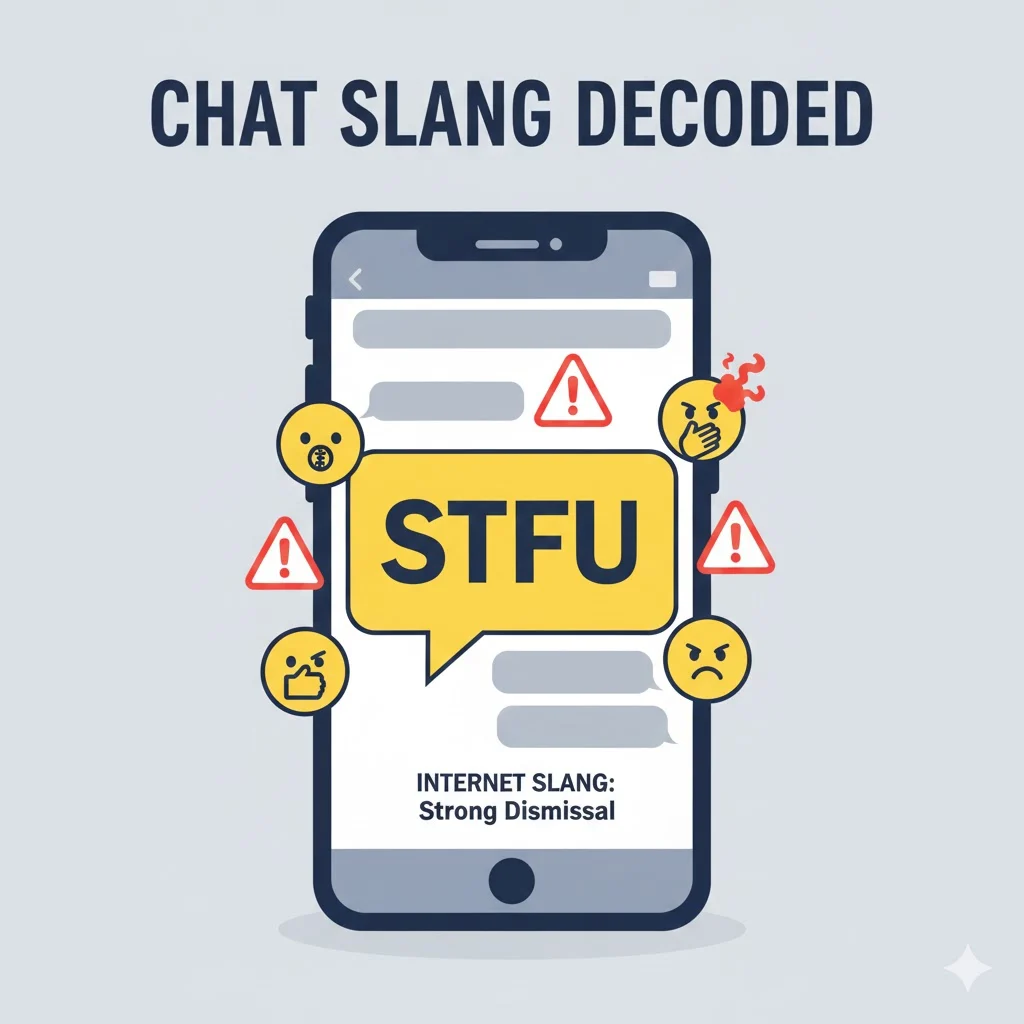

STFU is an internet slang abbreviation that stands for “shut the f* up.”** It is used in texting and online messaging to tell someone to be quiet, often in a rude or angry way.
Texting has its own language, and sometimes it can feel like a whole new world of abbreviations, slang, and shorthand. One of the most common and most aggressive acronyms you will encounter is STFU. If you have ever seen it in a message, comment, or social media post, you might have wondered, what does STFU mean in texting?
In this article, we will explain the meaning of STFU, how it is used, why people use it, and how to respond when someone says it to you. You will also learn when it might be okay to use it, and when it is best to avoid it.
What Does STFU Mean in Texting?
STFU stands for “shut the f* up.”**
It is a strong and often offensive phrase used to tell someone to stop talking or to stop sharing opinions. In most cases, it is considered rude or aggressive.
In texting, STFU is used to express frustration, annoyance, anger, or sometimes jokingly between friends.
Origin and Popularity of STFU
Where Did STFU Come From?
STFU began as part of internet slang culture, which started growing in the early 2000s. As online forums, chat rooms, and social media platforms became popular, users started using abbreviations to communicate faster.
STFU became widely used because it is short, quick to type, and communicates a strong emotion clearly.
Why STFU Became Popular
People use STFU because it:
- Saves time typing
- Communicates anger or frustration quickly
- Fits well into memes, comments, and online reactions
- Can be used jokingly among close friends
However, it remains a rude expression and is not appropriate for professional or polite conversations.
How STFU Is Used in Texting
STFU can be used in different situations, depending on tone, context, and the relationship between the people involved.
1. Angry or Serious Tone
Example:
- “STFU, you are lying.”
In this case, the sender is clearly upset or angry.
2. Joking or Playful Tone (Among Friends)
Example:
- “STFU, you always win 😭😂”
In this case, STFU is used jokingly and is not meant to be hurtful.
3. Online Arguments or Drama
Example:
- “STFU, you don’t know what you are talking about.”
This is a common use in social media fights or heated debates.
Tone and Context: How STFU Can Sound Different
STFU is not always meant to be hostile, but it is usually interpreted as rude because of its aggressive nature. Understanding tone and context is important.
Friendly or Playful Tone
It can sound funny or exaggerated when used with:
- Emojis
- Sarcastic punctuation
- A close friend who knows your sense of humor
Example:
- “STFU, you’re too funny 😂”
Serious or Mean Tone
When used without humor or emojis, it sounds harsh and insulting.
Example:
- “STFU. I’m done talking to you.”
When Is STFU Appropriate?
It is rarely appropriate in formal situations, but it may be acceptable in these cases:
- Between close friends who understand each other
- In a playful, joking context
- In online gaming or meme culture
- When used as a humorous reaction
Even in these cases, you should be careful because the phrase can still be hurtful or offensive.
When Is STFU Not Appropriate?
STFU should be avoided in the following situations:
- Professional communication
- Family conversations
- With people you do not know well
- In sensitive or emotional discussions
- In situations where respect is important
Using STFU in these contexts can cause conflict and damage relationships.
Polite Alternatives to STFU
If you want to express annoyance without being rude, you can use a more polite or professional alternative:
| STFU Alternative | Example |
|---|---|
| Please be quiet | “Please be quiet, I need to focus.” |
| Can we pause this conversation? | “Can we pause this conversation for now?” |
| I need some space | “I need some space, let’s talk later.” |
| Let’s talk later | “Let’s talk later when we’re calmer.” |
| I don’t want to discuss this | “I don’t want to discuss this right now.” |
Using these phrases helps keep conversations respectful, especially when emotions are high.
STFU vs Other Similar Texting Acronyms
| Acronym | Meaning | Tone |
|---|---|---|
| STFU | Shut the f*** up | Harsh |
| GTFO | Get the f*** out | Harsh |
| LOL | Laugh out loud | Friendly |
| IDK | I don’t know | Neutral |
| SMH | Shaking my head | Disapproving |
While STFU and GTFO are aggressive, the others are more neutral or friendly.
Examples of STFU in Texting (With Context)
Example 1: Serious and Angry
Friend 1: “You ruined everything.”
Friend 2: “STFU. You are overreacting.”
Example 2: Joking Between Friends
Friend 1: “I beat you again.”
Friend 2: “STFU 😂 You only won because I was distracted.”
Example 3: Online Argument
Person 1: “Your opinion is wrong.”
Person 2: “STFU, you don’t know what you’re talking about.”
Example 4: Avoiding Drama
Person 1: “We need to talk about this.”
Person 2: “Not right now. STFU.”
Alternate Meanings of STFU
In texting, STFU is almost always “shut the f*** up.” However, in rare cases, people may use it in a joking or playful way to mean “stop talking” without the offensive tone.
In general, it is best to assume it is the rude meaning unless the context is clearly friendly.
Frequently Asked Questions
1. What does STFU mean in texting?
STFU stands for “shut the f*** up,” and it is a rude way to tell someone to be quiet.
2. Is STFU rude?
Yes. It is considered rude and aggressive.
3. Can STFU be used jokingly?
Yes, among close friends and in a playful context, it can be used jokingly.
4. Should I use STFU with strangers?
No. Using STFU with people you do not know can lead to conflict.
5. What is a polite alternative to STFU?
A polite alternative is “Please be quiet” or “Can we pause this conversation?”
6. Is STFU common in memes?
Yes. STFU is often used in memes and online jokes.
7. Does STFU mean “stop talking”?
Yes, but in a harsh and rude way.
8. Is STFU appropriate in professional conversations?
No. It is never appropriate in professional settings.
Conclusion
So, what does STFU mean in texting? It means “shut the f* up,”** and it is usually used to express anger or frustration. While it may be used jokingly among friends, it is generally considered rude and should be avoided in professional or formal conversations.
If you want to keep communication respectful, choose a polite alternative instead. This will help prevent conflict and maintain positive relationships.
Discover More Post
What Does PIM Mean in Hockey? Simple Explanation for New …
What Does ETOH Mean in Medical Terms? Clear Explanation