
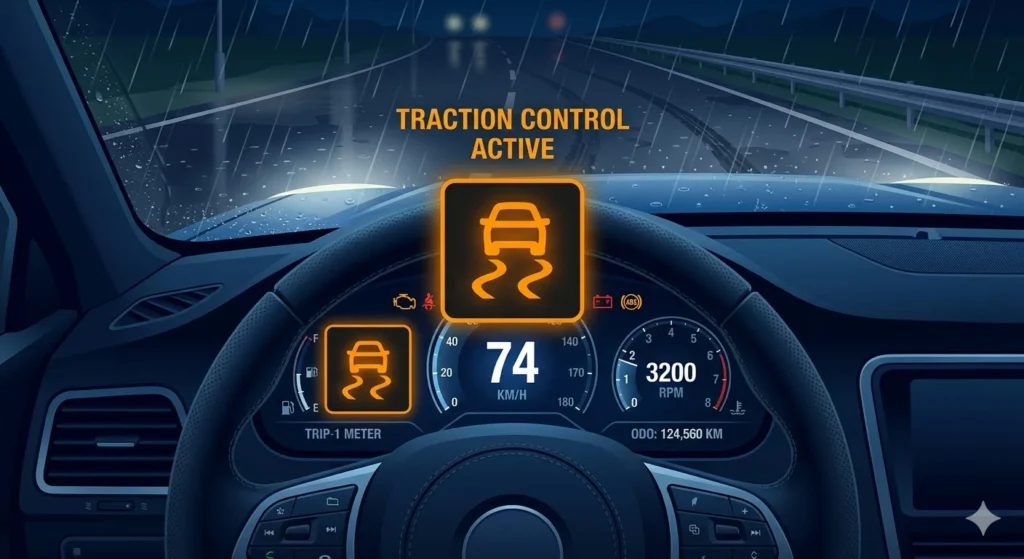

TC in a car stands for “Traction Control.” It is a safety system designed to prevent wheel spin during acceleration by controlling engine power or applying brakes to specific wheels, helping the driver maintain stability, especially in slippery conditions.
Modern cars are full of acronyms and dashboard lights that can confuse even experienced drivers. One of the most common ones you might see is TC. If you’ve noticed a TC light on your dashboard or read about it in your vehicle’s manual, you may have wondered: “What does TC mean in a car?”
Understanding TC is important for safety, vehicle performance, and even driving confidence. In this article, we will explain what TC means, how it works, why it is important, and when to turn it on or off. You will also learn how it differs from related systems like ABS and ESP and see practical examples from real driving scenarios.
What Does TC Mean in a Car?
In automotive terms, TC stands for Traction Control.
Traction control is an electronic safety system that helps prevent wheel spin when your tires lose grip on the road. This is especially useful in wet, icy, or uneven conditions where losing traction could cause the car to skid or slide.
By detecting wheel spin, TC automatically adjusts engine power and sometimes applies brakes to individual wheels to maintain stability.
How Traction Control Works
Traction control systems use sensors and the vehicle’s computer to monitor wheel speed. When the system detects that one wheel is spinning faster than the others (meaning it has lost grip), it responds in several ways:
- Reducing Engine Power: The system can limit fuel injection or throttle response to prevent further spinning.
- Applying Brakes to Specific Wheels: TC can brake the slipping wheel to redirect power to wheels with traction.
- Maintaining Stability: By controlling engine output and braking, TC helps drivers maintain better control on slippery surfaces.
Most modern cars integrate TC with other safety systems like Anti-lock Braking System (ABS) and Electronic Stability Control (ESC).
Why TC Is Important
Traction control improves both safety and drivability.
Benefits of Traction Control
- Reduces the risk of skidding on wet, icy, or gravel roads.
- Improves acceleration on slippery surfaces.
- Supports novice drivers by helping maintain control in challenging conditions.
- Works with other systems like ABS to enhance overall vehicle stability.
Although TC can’t replace safe driving practices, it acts as a critical safety net in unexpected conditions.
TC vs Other Car Systems
It is easy to confuse TC with similar acronyms or dashboard lights. Here is a comparison:
| System | Meaning | Function | When It Activates |
|---|---|---|---|
| TC | Traction Control | Prevents wheel spin | During acceleration on slippery surfaces |
| ABS | Anti-lock Braking System | Prevents wheel lock during braking | During hard braking or skidding |
| ESP / ESC | Electronic Stability Program / Control | Helps maintain overall vehicle stability | During sudden steering or loss of control |
While TC focuses primarily on wheel spin, ABS focuses on braking safety, and ESP focuses on vehicle stability in corners or sudden maneuvers. Many modern cars combine these systems for optimal safety.
Examples of TC in Action
Understanding TC becomes easier when you see real-life scenarios:
1. Rainy Road
While accelerating on a wet street, one of your wheels begins to spin. TC automatically reduces engine power and applies brakes to that wheel, helping you continue moving without losing control.
2. Snowy Drive
Driving on a snow-covered driveway, your wheels start to slip. TC adjusts the power distribution, preventing the car from sliding sideways.
3. Gravel or Loose Surface
When driving on gravel, sudden acceleration may cause tires to spin. Traction control kicks in, keeping the car stable and controllable.
When to Turn TC On or Off
Generally, TC should remain on for normal driving, especially in slippery or uneven conditions. However, there are times when turning it off may be beneficial:
Situations to Leave TC On
- Wet or icy roads
- Loose gravel or dirt
- Rainy or snowy weather
Situations to Consider Turning TC Off
- Deep snow or sand where you need more wheel spin to move
- High-performance driving on a racetrack where controlled wheel spin is desired
- Certain off-road conditions where full power is needed
It is important to check your car’s manual before disabling TC, as doing so can reduce safety in everyday driving.
Common Misunderstandings About TC
- TC will not prevent all accidents: It helps maintain traction but can’t prevent collisions.
- TC is not a substitute for careful driving: Slippery roads still require slow and controlled driving.
- TC is not always noticeable: You might only see a TC light flash on the dashboard during activation.
Dashboard TC Light
Most vehicles display a TC light when the system is active or when there is a malfunction. The light often looks like a car with squiggly lines underneath or simply the letters TC.
- Flashing TC light: System is actively controlling wheel spin.
- Steady TC light: There might be a malfunction, and the system could be disabled.
Polite and Professional Terms for TC
While TC is widely understood in automotive discussions, you can also refer to it more formally as:
- Traction Control System
- Electronic Traction Control
In manuals, service documents, or automotive writing, these terms are preferred.
Frequently Asked Questions
1. What does TC mean on a car dashboard?
TC stands for Traction Control, a system that prevents wheel spin for better safety.
2. Does TC work all the time?
TC activates when the system detects wheel spin, usually during acceleration on slippery surfaces.
3. Can I turn off TC safely?
Yes, but only in specific conditions such as deep snow, sand, or track driving.
4. Is TC the same as ABS?
No. ABS prevents wheel lock during braking, while TC prevents wheel spin during acceleration.
5. Why is my TC light flashing?
It is flashing because the system is actively controlling traction to prevent wheel slip.
6. Can TC improve fuel efficiency?
Indirectly. By preventing wheel spin, TC can reduce unnecessary power loss, but it is mainly a safety system.
7. Is TC standard in all cars?
Most modern vehicles include TC, especially sedans, SUVs, and trucks.
8. How does TC interact with ESC?
TC is often integrated with Electronic Stability Control (ESC) to provide overall vehicle stability in corners or slippery conditions.
Conclusion
In summary, TC in a car stands for Traction Control, a vital safety system that helps maintain stability during acceleration, especially on slippery roads.
Key points to remember:
- TC prevents wheel spin by controlling engine power and braking
- It works alongside ABS and ESC to enhance safety
- The system is active in wet, icy, or loose conditions
- Understanding when to leave it on or turn it off can improve driving confidence
Knowing what TC means allows you to better interpret your dashboard and drive safely in a variety of conditions.
Discover More Post
What Does Jireh Mean in the Bible? Meaning and Biblical …
What Does PF Mean in Fantasy Football? Complete Guide …