
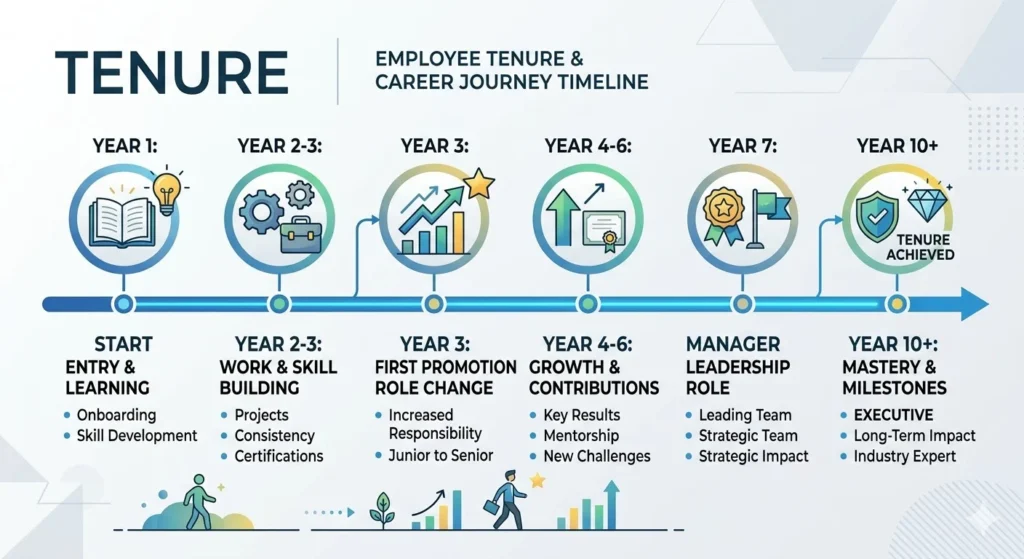

Tenure in a job refers to the length of time an employee has worked for an employer or held a specific position. It can also describe a level of job security, especially in certain professions like education, where tenure protects employees from being dismissed without cause.
If you have ever reviewed a resume, browsed job listings, or had a workplace conversation, you have probably heard the term tenure. At first, it may sound formal or even academic. However, it is actually a very practical concept that affects hiring decisions, promotions, and job stability.
Understanding what tenure means in a job helps you better evaluate career growth, workplace expectations, and long term opportunities. In this guide, you will learn the full meaning of tenure, how it is used in different industries, and why it matters for both employees and employers.
What Does Tenure Mean in a Job?
In simple terms, tenure refers to how long someone has been employed in a particular job, role, or organization.
For example:
- If someone has worked at a company for 5 years, their tenure is 5 years
- If someone recently joined a company, their tenure is short
In addition, tenure can sometimes indicate job stability and experience level, especially in professional environments.
Why Tenure Matters in the Workplace
Tenure plays an important role in both hiring and career development.
For employees, it can reflect:
- Loyalty and commitment
- Experience and skill development
- Career progression
For employers, tenure helps evaluate:
- Employee retention
- Workforce stability
- Organizational health
As a result, both short and long tenure can send different signals depending on the context.
Types of Tenure in a Job
Although tenure usually refers to time spent in a role, it can have slightly different meanings depending on the field.
1. General Employment Tenure
First, in most industries, tenure simply means the duration of employment.
Examples:
- “Her tenure at the company lasted 8 years.”
- “He has a short tenure because he just joined last month.”
This is the most common and widely used meaning.
2. Academic Tenure
In education, tenure has a more specific meaning.
Academic tenure refers to a permanent or long term position that offers strong job protection, usually granted after a probationary period.
For example:
- A professor may work for several years before earning tenure
- Once granted, they cannot be easily dismissed without valid reasons
Because of this, tenure in academia is often associated with job security and professional recognition.
3. Leadership or Role Based Tenure
Tenure can also refer to the time someone spends in a specific role, not just at a company.
Examples:
- “Her tenure as manager lasted three years.”
- “During his tenure as CEO, the company grew rapidly.”
This usage focuses on time in a position rather than overall employment.
Real World Usage of Tenure
Tenure appears frequently in professional communication.
For example, in resumes:
- “Led projects during a five year tenure at the company.”
In workplace discussions:
- “Employees with longer tenure often receive more benefits.”
In job interviews:
- “Can you explain the short tenure in your previous roles?”
These examples show how tenure helps provide context about experience.
Examples of Tenure in Context
Positive Tone 😊
- “She has a long tenure with the company, which shows strong commitment.”
- “His tenure reflects deep experience in the industry.”
Neutral Tone
- “Her tenure lasted two years.”
- “The average employee tenure here is three years.”
Slightly Negative or Concerned Tone 😐
- “He has had very short tenures in multiple jobs.”
- “The company struggles with low employee tenure.”
Tone depends on context. Longer tenure is often viewed positively, but not always.
Tenure vs Related Terms
Understanding tenure becomes easier when compared with similar workplace concepts.
Comparison Table
| Term | Meaning | Key Difference |
|---|---|---|
| Tenure | Length of time in a job | Focuses on duration |
| Experience | Skills gained over time | Focuses on ability |
| Seniority | Rank based on time served | Linked to hierarchy |
| Employment History | Record of past jobs | Broader than tenure |
| Job Stability | Consistency in employment | Related but not identical |
Key Insight
While tenure measures time, experience measures what you learned, and seniority reflects your position relative to others.
What Is Considered Good Tenure?
There is no single answer, but context matters.
Generally:
- Less than 1 year may be considered short
- 2 to 5 years is often seen as stable
- 5 or more years suggests strong commitment
However, this varies by industry. For example, tech roles may have shorter average tenure compared to government jobs.
Common Misconceptions About Tenure
Longer Tenure Is Always Better
Not necessarily. While long tenure shows loyalty, it may also raise questions about adaptability if someone never changes roles.
Short Tenure Is Always Bad
This is not always true. Short tenure can reflect:
- Career exploration
- Contract roles
- Industry norms
Context is essential when evaluating tenure.
Alternate Meanings of Tenure
Although tenure is mainly used in employment, it can have other meanings in different contexts.
For example:
- In law, tenure can refer to property ownership
- In education, it refers to job protection for teachers or professors
Still, in most workplace discussions, tenure means length of employment.
Polite and Professional Alternatives to Tenure
If you want to vary your language, here are some alternatives.
Common Alternatives
- Length of employment
- Time with the company
- Years of service
Professional Phrases
- “During my time at the organization”
- “Over the course of my role”
- “Throughout my employment period”
These alternatives can sound smoother in resumes or interviews.
When and How to Use Tenure
Using tenure correctly can improve your professional communication.
Best Situations to Use It
- Writing resumes
- Preparing for interviews
- Discussing career growth
- Analyzing workforce trends
Tips for Natural Use
- Add context such as achievements
- Avoid focusing only on duration
- Combine tenure with results and skills
Example:
- “During my three year tenure, I led multiple successful projects.”
Frequently Asked Questions
1. What does tenure mean in a job?
Tenure refers to the length of time an employee has worked in a job or with an organization.
2. Is tenure the same as experience?
No. Tenure measures time, while experience refers to skills and knowledge gained.
3. What is considered long tenure?
Typically, five or more years in a role or company is considered long tenure.
4. Why do employers care about tenure?
Employers use tenure to assess stability, commitment, and retention.
5. Is short tenure bad on a resume?
Not always. It depends on the reason and industry context.
6. What does tenure mean in education jobs?
In education, tenure refers to a position that offers strong job security after a probation period.
7. Can tenure affect promotions?
Yes. Longer tenure can sometimes lead to promotions or increased responsibilities.
8. How can I explain short tenure in an interview?
Be honest and focus on what you learned and achieved during that time.
Conclusion
So, what does tenure mean in a job? It simply refers to how long someone has worked in a role or organization, but its importance goes far beyond just time.
To recap:
- Tenure measures duration of employment
- It can reflect stability and commitment
- It varies in meaning across industries
- It is often considered alongside experience and performance
- Both short and long tenure have valid explanations
Understanding tenure helps you present your career more effectively and interpret others’ professional backgrounds with greater clarity.
Discover More Post
What Does Wyll Mean , How to Use It 2026 – DefineHubs.com –
GTS Meaning in Text: What It Stands For and How to Use It in …
IMO Meaning in Text Examples, and Usage Guide in 2026