
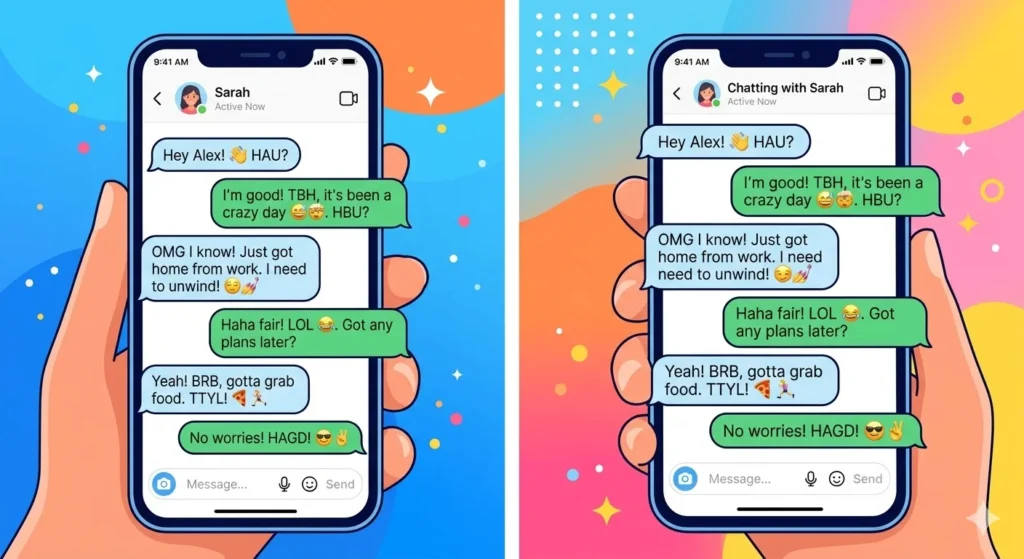

“What does this mean in texting?” is a question people ask when they encounter an unfamiliar abbreviation, emoji, symbol, or slang used in digital messages. It refers to the process of understanding the meaning behind common texting shortcuts, internet slang, and social media expressions used in modern communication.
Texting has transformed the way people communicate. Instead of long sentences and formal language, messages today often include abbreviations, emojis, and short phrases that carry a lot of meaning in just a few characters. Because of this, many people frequently search online asking “what does this mean in texting?” when they come across something confusing.
Whether it is a mysterious acronym like “TBH,” an emoji reaction, or a phrase that seems unclear, texting language can sometimes feel like its own secret code. Fortunately, once you understand the patterns behind texting slang, it becomes much easier to interpret messages accurately.
This guide explains what the phrase “what does this mean in texting” refers to, why texting slang exists, how these expressions are used in everyday conversations, and how to interpret them correctly.
Understanding Texting Language
Texting language is a form of digital shorthand used in messages, social media posts, and online chats. Instead of typing full sentences, people often shorten words or replace them with symbols.
These shortcuts make communication:
- Faster
- More casual
- More expressive
- Easier on mobile devices
As a result, texting language has developed into a unique style of communication that blends words, symbols, and emojis.
Why People Ask “What Does This Mean in Texting?”
Many people search this question when they encounter unfamiliar text language. This usually happens in a few common situations.
First, someone may receive a message containing an acronym they do not recognize. For example, a friend might text “BRB” or “IMO.”
Second, emojis can sometimes carry meanings beyond their literal appearance. A simple emoji might express sarcasm, humor, or affection depending on the context.
Third, internet slang evolves quickly. New phrases and abbreviations appear regularly, which can make it difficult to keep up.
Because of these reasons, asking “what does this mean in texting?” helps people understand digital conversations more clearly.
Common Types of Texting Expressions
Text messages usually contain several types of shorthand expressions. Understanding these categories makes it easier to interpret messages.
1. Acronyms
Acronyms are abbreviations formed from the first letters of a phrase.
Examples include:
- LOL
Laughing out loud - BRB
Be right back - IMO
In my opinion - IDK
I do not know
Acronyms are among the most common elements of texting language.
2. Shortened Words
Sometimes people shorten words simply to type faster.
Examples include:
- Thx instead of thanks
- Pls instead of please
- Msg instead of message
- Ppl instead of people
These shortened forms are widely used in casual conversations.
3. Emojis
Emojis add emotion and tone to text messages. Without facial expressions or voice, emojis help clarify the meaning behind words.
Examples include:
- 😊 Friendly or happy tone
- 😂 Strong laughter
- 😒 Annoyance or sarcasm
- ❤️ Love or affection
Because emojis can carry multiple meanings, people often search for their interpretation.
4. Slang and Internet Phrases
Online culture frequently creates new expressions that spread quickly.
Examples include:
- TBH
To be honest - SMH
Shaking my head - TMI
Too much information
These phrases often become popular through social media platforms and online communities.
Examples of Texting Expressions and Their Meanings
The following table shows some commonly used texting expressions and what they usually mean.
Texting Meaning Examples
| Text Expression | Meaning | Example Message |
|---|---|---|
| LOL | Laughing out loud | That video was hilarious LOL |
| BRB | Be right back | Need to grab food BRB |
| TBH | To be honest | TBH I liked the first movie more |
| IDK | I do not know | IDK what time the event starts |
| IMO | In my opinion | IMO that restaurant is the best |
Learning these common expressions can make texting conversations easier to understand.
How Context Changes the Meaning in Texting
Understanding texting language is not only about knowing definitions. Context also plays a major role.
For instance, the phrase “LOL” does not always mean someone is literally laughing. In many cases, it simply softens the tone of a message.
Example:
That meeting was long lol
Here, “lol” adds a casual and friendly tone rather than indicating loud laughter.
Similarly, emojis can change meaning depending on the conversation.
Example:
Sure 🙂
In some contexts, this might signal agreement. In other cases, it may indicate polite hesitation.
Therefore, interpreting texting language requires attention to the overall conversation.
Tone in Texting Messages
Text messages often rely on subtle cues to convey tone. Understanding these cues can help avoid misunderstandings.
Friendly Tone
Messages that include emojis or casual phrases usually feel relaxed and positive.
Example:
Thanks for helping me earlier 😊
Neutral Tone
Straightforward messages without extra symbols tend to sound neutral.
Example:
I will arrive at 3 pm.
Slightly Negative or Frustrated Tone
Some phrases or emojis can signal frustration.
Example:
I already explained that 😒
Recognizing tone helps interpret what someone truly means in a message.
Tips for Understanding Texting Language
If you frequently find yourself wondering what a text message means, a few strategies can help.
First, read the message carefully within the conversation context.
Second, look at the emoji or punctuation used alongside the words.
Third, search unfamiliar acronyms or phrases when necessary.
Finally, remember that texting language is usually informal and flexible, so meanings may vary slightly depending on the person.
Alternate Meanings of the Phrase
The question “what does this mean in texting” can also refer to interpreting other elements in digital communication.
For example, people may ask this question when they encounter:
- A confusing emoji
- A symbol or punctuation pattern
- A slang phrase from social media
- A message that seems sarcastic or indirect
Although the exact expression may vary, the goal is always the same: understanding the intended meaning behind a message.
Polite Ways to Ask for Clarification in Texting
Sometimes the easiest solution is simply asking the sender what they meant. Fortunately, there are polite ways to do this.
Examples include:
- “Just to clarify, what did you mean by that?”
- “Sorry, I am not familiar with that abbreviation.”
- “Could you explain that part of the message?”
These responses keep the conversation respectful while clearing up confusion.
Frequently Asked Questions
1. Why do people use abbreviations in texting?
People use abbreviations to type faster and keep messages short and casual.
2. Are texting abbreviations considered informal?
Yes. Most texting slang and acronyms are informal and used mainly in casual communication.
3. Do emojis change the meaning of a text message?
Yes. Emojis often add tone, emotion, or emphasis to a message.
4. Is texting language different from standard English?
Yes. Texting language often uses shortened words, slang, and symbols that are not part of formal writing.
5. How can I learn common texting slang?
You can learn it by observing conversations, using online guides, or searching unfamiliar terms.
6. Do texting meanings change over time?
Yes. Internet language evolves quickly, and new expressions appear frequently.
7. Should texting slang be used in professional messages?
In most cases, professional communication should avoid slang and abbreviations.
8. What should I do if I do not understand a text message?
You can politely ask the sender for clarification or look up the term online.
Conclusion
So, what does “this mean in texting” refer to? It describes the process of interpreting abbreviations, emojis, slang, and symbols commonly used in digital conversations.
Because texting language evolves quickly, unfamiliar expressions appear regularly. However, once you understand the basics of acronyms, emojis, and internet slang, reading text messages becomes much easier.
To remember the key points:
- Texting language uses shortcuts for faster communication
- Acronyms and emojis are extremely common
- Context often determines the exact meaning
- Asking for clarification is perfectly acceptable
By becoming familiar with these patterns, you can confidently understand modern texting conversations and avoid confusion.
Discover More Post
What Does Acute Mean in Math? Simple Definition and …
What Does Gordo Mean in Spanish? Meaning, Usage, and …
What Does NIL Mean in Sports? Name Image and Likeness …