
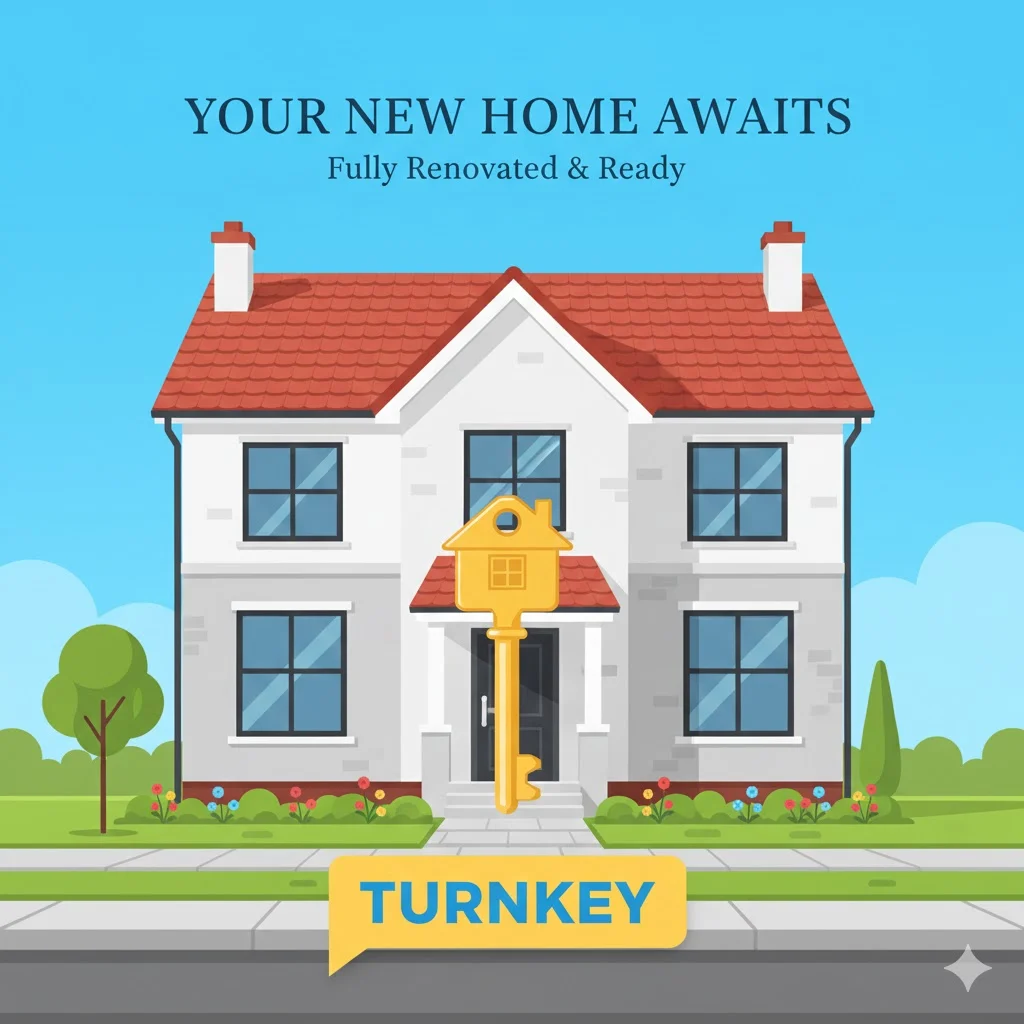

Turnkey in real estate means a property that is fully renovated, move-in ready, and requires no immediate repairs or upgrades. It is designed for buyers who want a hassle-free purchase and a home that is ready to live in or rent out immediately.
If you have ever searched for homes, scrolled through real estate listings, or listened to property investors talk about opportunities, you have likely come across the word turnkey. It is one of those real estate terms that sounds simple, yet it carries a lot of meaning for buyers and investors.
Turnkey properties promise convenience and speed, but they also come with specific expectations. This article will explain what turnkey means in real estate, how it works, what to watch out for, and how to determine if a turnkey property is the right choice for you.
What Does Turnkey Mean in Real Estate?
In real estate, turnkey describes a property that is fully renovated, updated, and ready to move into or rent out immediately.
A turnkey home typically includes:
- Updated kitchen and bathrooms
- New flooring and paint
- Updated electrical and plumbing
- Modern fixtures and appliances
- Clean and functional systems
Because turnkey properties are ready for immediate use, they are especially popular among:
- First time homebuyers
- Busy professionals
- Real estate investors
- People relocating to a new area
Turnkey properties can be sold by homeowners, investors, or property management companies. The main advantage is that buyers do not need to spend time or money on repairs or renovations.
Origin and Popularity of Turnkey in Real Estate
Where Does the Term Come From?
The term turnkey originally comes from the idea of handing someone the keys to a property that is completely ready. The buyer only needs to “turn the key” and move in.
This concept became popular in the real estate world because it communicates:
- Convenience
- Speed
- Predictability
- Lower hassle
Why Turnkey Became Popular
Turnkey properties became more popular as more people started investing in real estate without having the time or expertise to renovate homes.
Investors also love turnkey properties because they can:
- Start earning rental income immediately
- Avoid renovation delays
- Reduce the risk of unexpected repair costs
For buyers, turnkey homes are attractive because they reduce stress and time spent on home improvement projects.
Turnkey vs Fixer Upper: A Key Comparison
To fully understand what turnkey means, it helps to compare it to its opposite: a fixer upper.
Turnkey vs Fixer Upper Table
| Feature | Turnkey Property | Fixer Upper |
|---|---|---|
| Condition | Move in ready | Needs repairs |
| Renovation | Completed | Required |
| Time investment | Low | High |
| Cost of repairs | None or minimal | High |
| Ideal for | Busy buyers or investors | DIY or budget buyers |
| Risk level | Lower | Higher |
A turnkey home is designed for convenience, while a fixer upper is designed for customization and cost savings.
What Turnkey Really Includes
Turnkey properties can vary in quality and scope, so it is important to know what to expect.
Common Turnkey Features
A true turnkey property often includes:
- New paint and flooring
- Updated kitchen appliances
- Modern bathrooms
- Updated HVAC system
- New windows or roof if needed
- Clean and safe electrical and plumbing
- Updated insulation
Turnkey Does Not Always Mean Luxury
Turnkey does not automatically mean high-end. Some turnkey homes are simple and modest but still fully functional and updated.
The key idea is that the property is ready to use without repairs.
Examples of Turnkey in Real Estate Listings
Here are real-life examples of how the term is used.
Example 1: Home Buyer Listing
“Beautiful turnkey home in a great neighborhood. Move in ready with updated kitchen and bathrooms.”
Example 2: Investor Listing
“Turnkey rental property with tenants in place. Fully renovated and ready for immediate income.”
Example 3: Property Management Listing
“Turnkey solution for investors. We handle renovation, tenant placement, and management.”
These examples show how the term is used to attract buyers who want a hassle-free purchase.
Turnkey in Real Estate Investing
Turnkey properties are very popular among investors because they reduce the time and stress involved in buying and managing properties.
Benefits for Investors
Turnkey properties offer:
- Faster return on investment
- Immediate rental income
- Lower renovation risk
- Easier property management
However, investors should still carefully review the property and verify the quality of renovations.
Turnkey Property Pros and Cons
Understanding the advantages and disadvantages can help you decide if a turnkey property is right for you.
Pros of Turnkey Properties
- Move in ready
- No renovation stress
- Time saving
- Predictable costs
- Great for rental income
Cons of Turnkey Properties
- Higher purchase price
- Potential for hidden issues
- Less opportunity to customize
- May be marketed with inflated value
It is essential to perform due diligence and verify the condition before purchasing.
How to Verify a Turnkey Property Is Truly Turnkey
Not all properties labeled as turnkey are truly ready.
Here are key steps to confirm the condition:
Inspection Checklist
- Get a professional home inspection
- Check HVAC, plumbing, and electrical systems
- Verify the roof condition
- Review permits for renovations
- Ask for receipts or records of work completed
- Confirm appliances are new and functional
These steps protect you from hidden costs and ensure the property matches the description.
Polite and Professional Alternatives to “Turnkey”
If you prefer more formal wording, here are alternatives you can use:
- Move-in ready
- Fully renovated
- Fully updated
- Ready for immediate occupancy
- Renovated and functional
- Updated and maintained
These terms are often used in professional listings and marketing materials.
Alternate Meanings of Turnkey
Outside real estate, turnkey can also mean:
- A complete solution ready to use
- A product or service that is fully operational
- A system or business that is ready to start immediately
In real estate, turnkey always refers to the property being move-in ready.
Frequently Asked Questions
1. What does turnkey mean in real estate?
Turnkey means a property that is fully renovated and ready to move in or rent out immediately.
2. Are turnkey homes always expensive?
Turnkey homes can be more expensive because they include renovations, but prices vary depending on location and quality.
3. Is turnkey the same as move-in ready?
Yes, turnkey and move-in ready are very similar and often used interchangeably.
4. Are turnkey properties good for investors?
Yes, turnkey properties are popular with investors because they reduce renovation time and risk.
5. What should I check before buying a turnkey property?
You should inspect the home, verify renovations, check permits, and review repair records.
6. Can turnkey properties have hidden problems?
Yes, if the renovation quality is poor or if inspections are skipped, hidden issues can exist.
7. Do turnkey properties include furniture?
Turnkey usually does not include furniture unless it is specified as furnished.
8. Are turnkey properties only for homes?
No, turnkey can also apply to commercial properties, rental units, and even businesses.
Conclusion
Turnkey properties offer a convenient and fast way to buy a home or invest in real estate. They are fully renovated, updated, and ready for immediate occupancy, which makes them especially attractive for busy buyers and investors.
Before purchasing a turnkey property, it is important to verify the renovations, review inspection reports, and confirm that the home meets your expectations.
If you value time, convenience, and peace of mind, a turnkey property can be a great choice.
Discover More Post
What Does PIM Mean in Hockey? Simple Explanation for New …
What Does ETOH Mean in Medical Terms? Clear Explanation