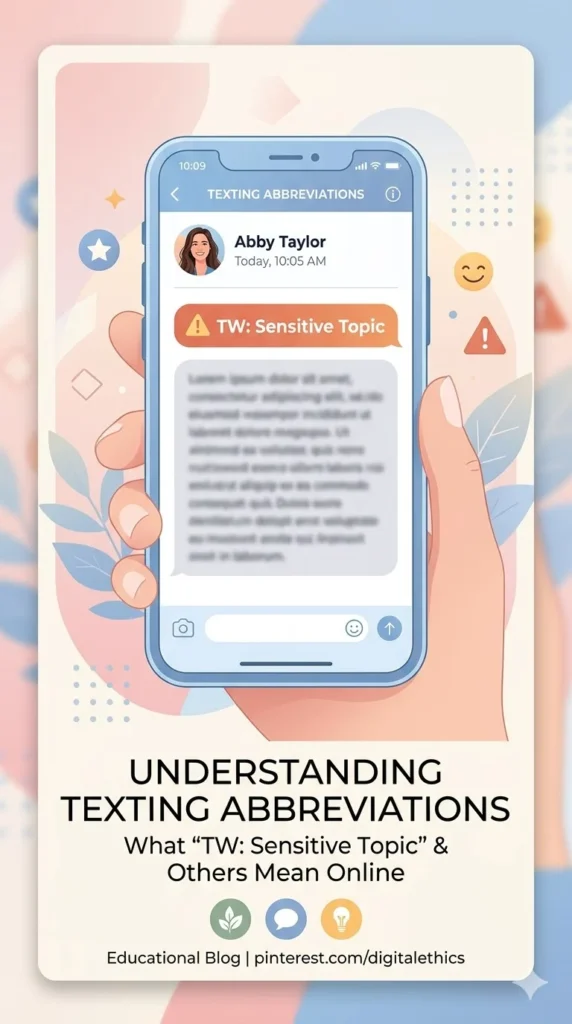

- TW in text usually means Trigger Warning. It is used before potentially sensitive or disturbing content to alert readers so they can decide whether they want to continue reading. People commonly use TW on social media, forums, messages, and online discussions.
If you spend time on social media, online forums, or messaging platforms, you have probably seen the abbreviation TW at the beginning of posts or messages. For many people, especially those unfamiliar with internet culture, it can raise an obvious question: what does TW mean in text?
Although it looks simple, TW carries an important purpose online. It helps people prepare for content that might be emotionally difficult, distressing, or uncomfortable. Because of this, it has become widely used across platforms such as social media, blogs, and online communities.
In this guide, you will learn the full meaning of TW, where it came from, how people use it in real conversations, and how it compares with similar abbreviations.
What Does TW Mean in Text?
In texting and online communication, TW stands for Trigger Warning.
A trigger warning is a short notice placed before content that may cause emotional distress or remind someone of a traumatic experience. By including this warning, the writer gives readers the option to skip or prepare for the content.
For example:
TW: violence
TW: discussion of mental health
TW: graphic injury
After the warning, the message or content follows.
Why People Use TW in Messages and Posts
Online conversations often include personal stories, news discussions, or serious topics. Sometimes these topics involve sensitive experiences such as trauma, abuse, violence, or mental health struggles.
Because of that, people add TW to show respect and awareness.
Common reasons for using TW include:
• Giving readers time to prepare emotionally
• Allowing people to skip difficult content
• Showing empathy in discussions
• Creating safer online spaces
• Respecting community guidelines on certain platforms
As a result, TW has become a common practice in many online communities.
Origin and Popularity of TW
The concept of trigger warnings did not begin with texting. In fact, the idea originally appeared in mental health and trauma recovery spaces.
Early Use
Initially, therapists and support groups used warnings to help individuals avoid content that could trigger traumatic memories or emotional reactions.
Growth on the Internet
Later, as online communities expanded, the concept moved into digital communication. Social media users began placing TW at the start of posts to warn readers about sensitive topics.
Today, the abbreviation is widely recognized across many platforms, including:
• Social media platforms
• Discussion forums
• Messaging apps
• Online communities
• Blog posts and personal stories
Because the internet spreads trends quickly, the use of TW became common in everyday online conversations.
How TW Is Used in Text Messages
In texting or online posts, TW usually appears before the main message. It often includes a short description of the sensitive topic.
Here are some typical formats:
TW: violence
TW: mental health discussion
TW: eating disorder mention
TW: injury
Sometimes people also add a brief explanation after the warning.
Example:
TW: accident discussion
I wanted to talk about something that happened on my drive today.
This format gives readers a moment to decide whether they want to continue reading.
Examples of TW in Real Conversations
To better understand how TW works in real communication, here are several examples with different tones.
Friendly Tone
TW: injury
I twisted my ankle during practice today but I am feeling better now.
In this case, the warning prepares readers before discussing the injury.
Neutral Informational Tone
TW: discussion of grief
I wanted to share something personal about losing a family member.
Here, the writer simply provides a heads up before discussing a sensitive topic.
Supportive Community Tone
TW: mental health
Today I want to talk about my experience with anxiety and how therapy helped.
In supportive spaces, TW is often used before personal stories.
Where You Commonly See TW Online
Although TW appears in texts and messages, it is especially common on certain platforms.
Typical places include:
• Social media posts
• Online support communities
• Blog articles discussing serious topics
• Comment sections
• Group chats
In many cases, community guidelines encourage or require trigger warnings before discussing sensitive topics.
TW Compared With Similar Internet Terms
Because online communication uses many abbreviations, it helps to understand how TW compares with related terms.
Comparison Table
| Term | Meaning | Purpose |
|---|---|---|
| TW | Trigger Warning | Alerts readers to sensitive content |
| CW | Content Warning | Similar to TW but often broader |
| NSFW | Not Safe For Work | Warns about explicit or inappropriate content |
| FYI | For Your Information | Provides general information |
| PSA | Public Service Announcement | Shares an important notice |
Both TW and CW are often used interchangeably, although some communities prefer one over the other.
TW vs CW: What Is the Difference?
While TW and CW are very similar, there is a small distinction.
Trigger Warning (TW)
Focuses on content that could trigger traumatic memories or emotional reactions.
Content Warning (CW)
Used for a wider range of sensitive topics that may not necessarily involve trauma.
Examples of CW topics may include:
• spoilers
• political discussions
• graphic descriptions
• disturbing news
Despite this difference, many people use TW and CW in the same way online.
Alternate Meanings of TW in Text
Although Trigger Warning is the most common meaning in online communication, the abbreviation TW can have other meanings depending on context.
Possible alternate meanings include:
• Taiwan
• Time Will Tell
• Triggered Warning (a variation of Trigger Warning)
However, when TW appears before a message or post, it almost always means Trigger Warning.
Polite Alternatives to TW
Some people prefer to write out the full phrase instead of using the abbreviation.
Here are a few alternatives:
Content warning
Sensitive topic ahead
Please note this post discusses a difficult subject
Heads up about sensitive content
Using these phrases can sometimes sound clearer, especially in professional or formal writing.
Tips for Using TW Properly
Using TW effectively helps maintain respectful communication online.
Here are some helpful tips.
First, place the warning before the sensitive content.
Second, briefly mention the topic being discussed.
Third, avoid overusing warnings for everyday topics.
Finally, consider your audience and the platform.
Following these simple guidelines helps ensure the warning serves its intended purpose.
Frequently Asked Questions
1. What does TW mean in texting?
In texting, TW usually means Trigger Warning, which alerts readers about sensitive or potentially distressing content.
2. What is a trigger warning?
A trigger warning is a notice placed before content that may cause emotional distress or remind someone of traumatic experiences.
3. Is TW the same as CW?
They are very similar. TW refers specifically to triggers related to trauma, while CW is a broader content warning.
4. Why do people use TW online?
People use TW to give readers the choice to avoid or prepare for difficult content.
5. Is TW required on social media?
It depends on the platform or community. Some groups encourage it, while others leave it optional.
6. Can TW be used in everyday texting?
Yes. People sometimes add TW in personal messages when discussing sensitive topics.
7. Does TW always mean Trigger Warning?
Most of the time it does, especially when it appears at the beginning of a message.
8. Should I always use TW for serious topics?
Not always. However, it is helpful when discussing topics that may be distressing for some readers.
Conclusion
So, what does TW mean in text? In most cases, it stands for Trigger Warning, a short notice used before sensitive or potentially distressing content.
Understanding this abbreviation is useful because it appears frequently in online conversations. In addition, using trigger warnings can help make discussions more respectful and considerate.
To summarize the key points:
TW means Trigger Warning
It alerts readers about sensitive topics
It is widely used in texting, social media, and online communities
It often appears before personal stories or serious discussions
It is similar to content warnings but focuses more on emotional triggers
Once you understand how TW works, recognizing and using it in digital communication becomes simple and natural.
Discover More Post
What Does BR Mean in Text? Simple Meaning and Examples …
What Does IR Mean in Football? Injured Reserve Explained …
What Does CDT Mean in Time? Central Daylight Time (2026)