
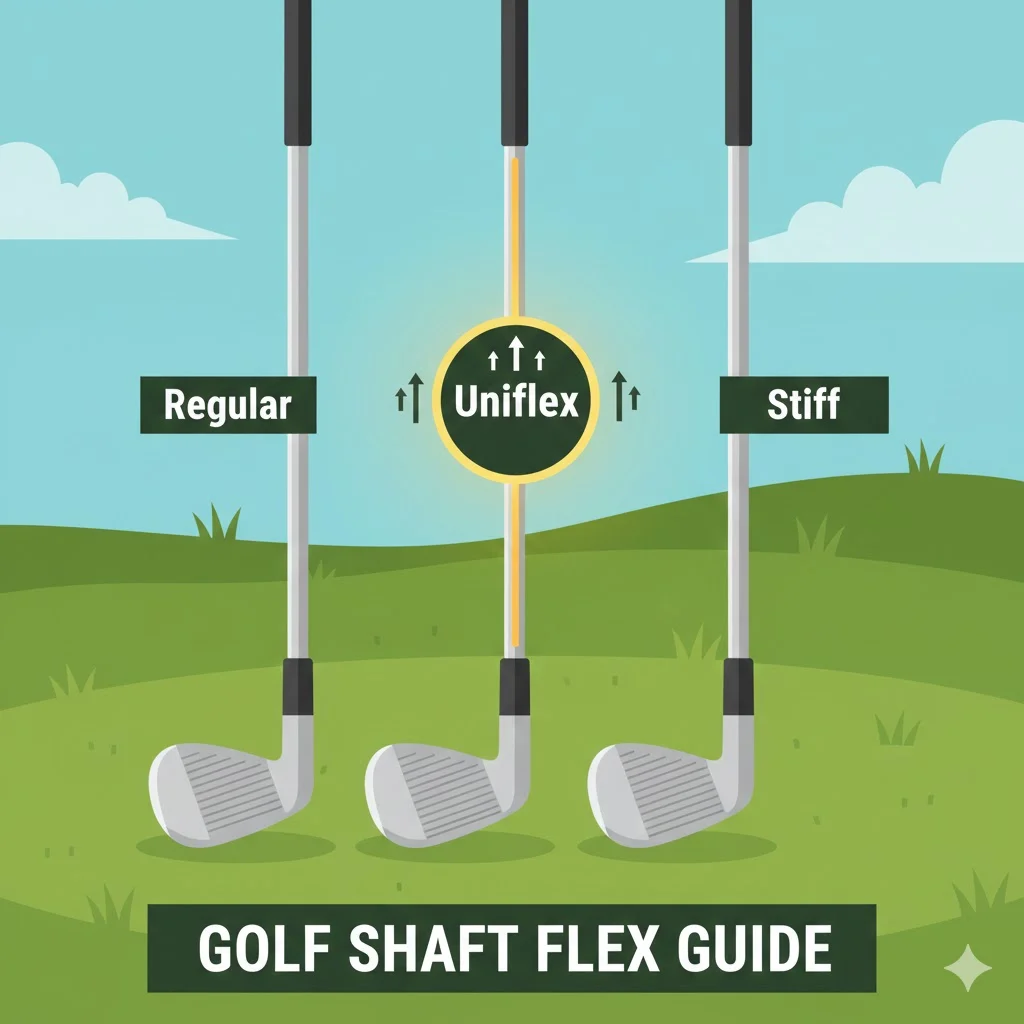

Uniflex in golf clubs refers to a shaft flex that sits between regular and stiff flex. It is designed to suit a wide range of golfers by offering a balanced mix of control, distance, and smooth feel without being too soft or too rigid.
If you have ever browsed golf clubs online or checked the shaft label on an iron or driver, you may have noticed the term Uniflex. At first, it can feel confusing. It is not discussed as often as regular or stiff flex, yet many golfers use Uniflex shafts without fully understanding what they are.
Understanding what Uniflex means in golf clubs can help you choose equipment that better matches your swing speed, tempo, and overall playing style. In this guide, you will learn what Uniflex means, how it feels during the swing, who it is best suited for, and how it compares to other shaft flex options.
What Does Uniflex Mean in Golf Clubs?
In golf clubs, Uniflex describes a mid range shaft flex that falls between regular flex and stiff flex.
In simple terms, a Uniflex shaft is built for golfers whose swing speed is not clearly slow enough for regular flex or fast enough for stiff flex. Because of this, Uniflex is often marketed as a versatile option that works well for many players.
As a result, Uniflex is sometimes described as a “one flex fits many” shaft.
Why Shaft Flex Matters in Golf
Before diving deeper into Uniflex, it is helpful to understand why shaft flex matters in the first place.
Shaft flex influences:
- Ball flight
- Launch angle
- Shot consistency
- Distance control
- Overall feel during the swing
If the shaft is too flexible, the club may feel unstable and lead to inconsistent shots. On the other hand, if the shaft is too stiff, the ball may launch lower and lose distance. Therefore, choosing the right flex can improve both comfort and performance.
Where Uniflex Fits Among Shaft Flex Options
Most golf shafts fall into these common categories:
- Ladies
- Senior
- Regular
- Stiff
- Extra stiff
Uniflex sits between regular and stiff, offering a balanced middle option.
Shaft Flex Comparison Table
| Shaft Flex | Typical Swing Speed | General Feel |
|---|---|---|
| Regular | Moderate | Softer and easier to load |
| Uniflex | Moderate to moderately fast | Balanced and stable |
| Stiff | Fast | Firm and controlled |
Because Uniflex overlaps both regular and stiff, it gives manufacturers flexibility when designing clubs for a broad range of players.
How Uniflex Feels During the Swing
One of the most common questions golfers ask is how Uniflex actually feels.
In general, a Uniflex shaft:
- Feels firmer than regular flex
- Feels smoother and easier to load than stiff flex
- Provides stable feedback without harshness
For many golfers, this creates a comfortable sense of control while still allowing the shaft to work naturally during the swing.
Who Should Use a Uniflex Shaft?
Uniflex shafts are best suited for golfers whose swing speed falls between traditional flex categories.
Uniflex Is Often a Good Choice If:
- Your swing speed sits between regular and stiff
- You want a smooth feel with added control
- You are improving and gaining swing speed
- You play recreational golf and value consistency
- You prefer a versatile setup without custom fitting
Because of its balanced design, Uniflex works well for many players across different experience levels.
Who Might Not Benefit from Uniflex
Although Uniflex suits many golfers, it is not ideal for everyone.
It may not be the best option if:
- Your swing speed is very slow
- Your swing speed is very fast or aggressive
- You already know you fit clearly into regular or stiff flex
- You require highly specific custom fitting for competitive play
In these cases, a more targeted shaft flex may deliver better results.
Why Manufacturers Use Uniflex Shafts
Golf manufacturers often include Uniflex shafts in iron sets and game improvement clubs.
There are several reasons for this:
- It simplifies production and inventory
- It appeals to a broad range of golfers
- It reduces confusion for newer players
- It performs well for average swing speeds
Since many golfers fall into the middle range, Uniflex becomes a practical and accessible option.
Uniflex in Irons vs Drivers
Uniflex is far more common in iron sets than in drivers.
Uniflex in Irons
- Designed for consistency and control
- Helps with distance spacing between clubs
- Works well for recreational and improving players
- Common in complete club sets
Uniflex in Drivers
- Less common overall
- Drivers benefit more from precise fitting
- Swing speed differences are more noticeable
For these reasons, Uniflex appears more frequently in irons than in woods.
Uniflex vs Regular Flex
Understanding the difference between Uniflex and regular flex can make choosing easier.
Key Differences
- Regular flex bends more easily
- Uniflex offers slightly more resistance
- Uniflex provides more control for stronger swings
- Regular flex can feel smoother for slower tempos
If regular flex feels too soft and stiff feels too firm, Uniflex often provides the right balance.
Uniflex vs Stiff Flex
Comparing Uniflex to stiff flex further highlights its role as a middle option.
Key Differences
- Stiff flex requires faster swing speed
- Uniflex is more forgiving
- Uniflex often produces slightly higher launch
- Stiff flex offers tighter control for very strong swings
Golfers transitioning toward faster swing speeds often find Uniflex more comfortable than stiff.
Common Myths About Uniflex Shafts
Several misconceptions surround Uniflex shafts.
Myth 1: Uniflex Is Only for Beginners
In reality, many experienced golfers use Uniflex when their swing speed fits the profile.
Myth 2: Uniflex Means Lower Performance
When matched correctly, Uniflex can deliver excellent distance and consistency.
Myth 3: All Uniflex Shafts Are Identical
In fact, flex profiles vary by brand, material, and shaft design.
How to Know If Uniflex Is Right for You
To determine whether Uniflex suits your game, consider:
- Your average swing speed
- How regular and stiff shafts feel to you
- Your shot consistency and ball flight
- Your comfort during the swing
Testing clubs at a driving range or during a fitting session can provide the clearest answer.
Polite and Professional Explanation of Uniflex
If you need to explain Uniflex to someone else, a clear and respectful description works best.
Example:
Uniflex refers to a mid range golf shaft flex designed for players whose swing speed falls between regular and stiff.
Frequently Asked Questions
1. What does Uniflex mean in golf clubs?
It refers to a shaft flex between regular and stiff, designed for moderate swing speeds.
2. Is Uniflex softer than stiff?
Yes. Uniflex is softer than stiff but firmer than regular.
3. Is Uniflex good for beginners?
It can be, especially for beginners with average swing speed who want room to improve.
4. Do professional golfers use Uniflex?
Most professionals use custom fitted shafts, typically stiff or extra stiff.
5. Is Uniflex the same across all brands?
No. Shaft profiles can vary between manufacturers.
6. Can Uniflex improve distance?
Yes. When properly matched, it can improve launch and consistency.
7. Is Uniflex suitable for older golfers?
Some older golfers with moderate swing speed may benefit, although senior flex is often preferred.
8. Is Uniflex better than regular flex?
Neither is universally better. The best option depends on your swing.
Conclusion
So, what does Uniflex mean in golf clubs? It refers to a shaft flex designed to bridge the gap between regular and stiff, offering balance, versatility, and comfort for a wide range of golfers.
To recap:
- Uniflex sits between regular and stiff flex
- It suits moderate to moderately fast swing speeds
- It offers a smooth yet stable feel
- It is commonly used in iron sets
- It works best when matched to your swing
Choosing the right shaft flex can make a noticeable difference in your performance. For many golfers, Uniflex provides an ideal blend of forgiveness and control