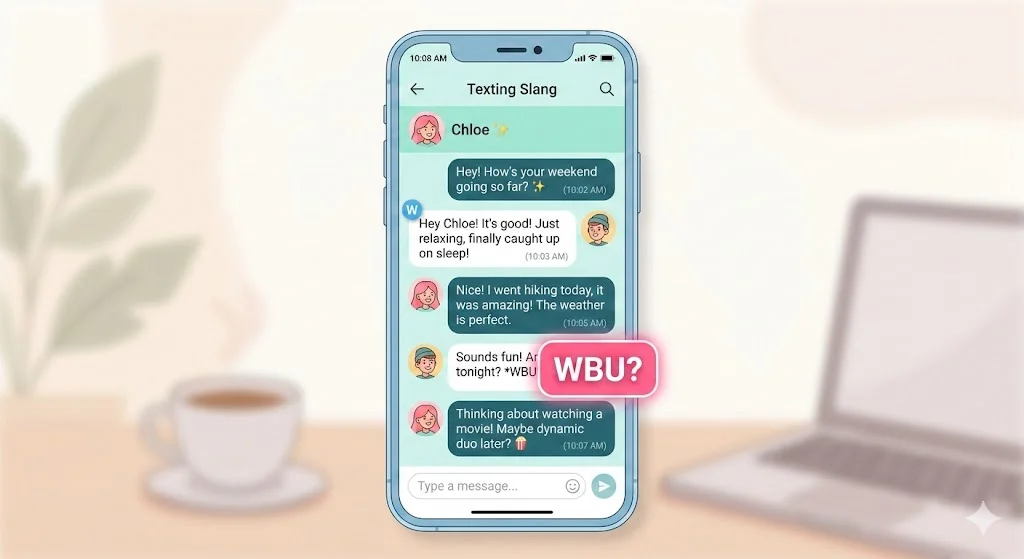

WBU stands for “What About You?” in texting and online conversations. People use it to ask someone else the same question that was just asked or answered, keeping the conversation balanced and engaging.
If you spend time texting, chatting on social media, or messaging friends online, you have probably seen the abbreviation WBU. At first glance it might seem confusing, especially if you are not familiar with texting slang. However, once you understand it, you will notice that WBU is one of the most common and useful abbreviations in digital conversations.
Modern texting language often relies on short forms to save time and make conversations flow quickly. In this guide, you will learn exactly what WBU means in texting, how it is used in real conversations, when it is appropriate to use it, and how it compares with similar abbreviations.
What Does WBU Mean in Texting?
In texting and online messaging, WBU means “What About You?”
It is typically used after someone answers a question and wants to ask the same question back to the other person.
For example:
Friend: I’m watching a movie tonight. WBU?
You: I’m just relaxing at home.
In this case, WBU invites the other person to share their answer as well.
Because texting conversations move quickly, abbreviations like WBU help keep messages short and natural.
Origin and Popularity of WBU
The abbreviation WBU became popular with the rise of texting and instant messaging. Early SMS messages had character limits, which encouraged people to shorten common phrases.
Over time, internet culture and social media platforms helped spread these abbreviations even further.
Today, WBU is commonly used on many platforms, including:
- Text messages
- Instagram direct messages
- Snapchat chats
- WhatsApp conversations
- Online gaming chats
- Twitter replies
Because it is short and easy to understand, WBU has become a standard part of online communication.
How WBU Is Used in Conversations
The main purpose of WBU is to turn the focus of a conversation back to the other person.
Instead of repeating the full phrase “What about you?” people simply write WBU.
Here are some common situations where it appears.
1. Asking the Same Question Back
Often, someone answers a question and then uses WBU to ask the other person the same thing.
Example:
Person A: I’m studying tonight. WBU?
Person B: I’m finishing some work.
This keeps the conversation flowing naturally.
2. Continuing Small Talk
WBU is frequently used in casual conversations to keep chatting.
Example:
Friend: I had pizza for dinner. WBU?
Friend: I made pasta.
Simple exchanges like this are common in everyday texting.
3. Showing Interest in the Other Person
Using WBU shows that you care about the other person’s answer.
Example:
Friend: I’m feeling tired today. WBU?
You: I’m pretty tired too.
Because of this, WBU helps maintain balanced communication.
Examples of WBU in Real Text Messages
To understand how WBU sounds in context, look at these examples with different tones.
Friendly Tone 😊
Text message:
I just finished watching a great show. WBU?
Reply:
I’m playing games with my friends.
This type of conversation feels relaxed and friendly.
Neutral Tone
Message:
I’m working late tonight. WBU?
Reply:
I’m heading home now.
The tone here is simple and informational.
Curious or Interested Tone
Message:
I’m planning a trip next month. WBU?
Reply:
I might travel later this year.
In this case, WBU invites the other person to share their plans.
WBU vs Similar Texting Abbreviations
Several abbreviations in texting have similar purposes. Understanding the differences helps you use them correctly.
Comparison Table
| Abbreviation | Meaning | Usage |
|---|---|---|
| WBU | What about you | Asking the other person the same question |
| HBU | How about you | Very similar to WBU |
| WYD | What are you doing | Asking about current activity |
| WYA | Where are you | Asking about location |
| LMK | Let me know | Requesting information |
Among these, WBU and HBU are the closest in meaning.
WBU vs HBU
Although both expressions are similar, there is a small difference in tone.
WBU
What about you
More direct and commonly used
HBU
How about you
Slightly softer or more conversational
Examples:
I’m going out tonight. WBU?
I’m going out tonight. HBU?
Both are correct, and most people use them interchangeably.
Common Situations Where WBU Appears
You will often see WBU in conversations about everyday topics.
Examples include:
Daily activities
I’m going to the gym later. WBU?
Food choices
I had burgers today. WBU?
Weekend plans
I’m visiting family this weekend. WBU?
Mood or feelings
I’m feeling great today. WBU?
Because it is flexible, WBU works in many casual contexts.
Alternate Meanings of WBU
In most cases, WBU means “What About You.”
However, like many internet abbreviations, it can sometimes appear with slightly different interpretations depending on context.
Possible alternate meanings include:
What about u
What about you doing
What about your opinion
Despite these variations, the core idea remains the same. The speaker is asking the other person to share their response.
Polite or Professional Alternatives to WBU
Although WBU is perfectly acceptable in casual messages, it may not be suitable for formal or professional communication.
Instead, you can use these alternatives.
Casual but clearer:
- What about you?
- How about you?
Professional alternatives:
- And what are your thoughts?
- How do you feel about it?
- What is your perspective?
Using full phrases usually sounds more polished in professional settings.
Tips for Using WBU Naturally
While WBU is easy to use, a few simple tips can make conversations smoother.
First, use it in casual conversations rather than formal emails.
Second, make sure you answer the question before asking WBU.
Example:
Correct:
I’m staying home tonight. WBU?
Less natural:
WBU?
Finally, avoid overusing abbreviations in serious discussions where clarity matters more than speed.
Example Table of WBU Conversations
| Situation | Example Message | Meaning |
|---|---|---|
| Asking about plans | I’m going to the beach tomorrow. WBU? | Asking the other person’s plans |
| Talking about food | I had sushi tonight. WBU? | Asking what the other person ate |
| Sharing mood | I’m feeling great today. WBU? | Asking how the other person feels |
| Daily activities | I’m studying for exams. WBU? | Asking what the other person is doing |
This simple structure shows how flexible WBU can be in texting.
Frequently Asked Questions
1. What does WBU stand for in texting?
WBU stands for “What About You?”
2. Is WBU informal?
Yes. It is mainly used in casual texting and online conversations.
3. Is WBU the same as HBU?
Yes. Both mean almost the same thing, though HBU stands for “How About You.”
4. Can WBU be used on social media?
Yes. It is commonly used on Instagram, Snapchat, WhatsApp, and other messaging platforms.
5. Should I use WBU in professional messages?
It is better to avoid it in professional settings and write the full phrase instead.
6. Is WBU commonly used by younger people?
Yes. It is popular among teenagers and young adults who frequently use texting slang.
7. Can WBU start a conversation?
Usually, it appears after someone shares their answer first.
8. Is WBU considered polite?
In casual conversations, it is polite because it shows interest in the other person’s response.
Conclusion
So, what does WBU mean in texting? Simply put, it means “What About You?” and is used to ask the other person the same question that was just discussed.
Here are the key points to remember:
WBU stands for What About You
It is commonly used in texting and online chats
It helps keep conversations balanced
It works best in casual communication
It is similar to HBU but slightly more direct
Once you recognize and use WBU, texting conversations become easier and more natural.
Discover More Post
What Does TB Mean in Baseball? Total Bases Explained …
What Does Proximal Mean in Anatomy? Clear Definition and …