
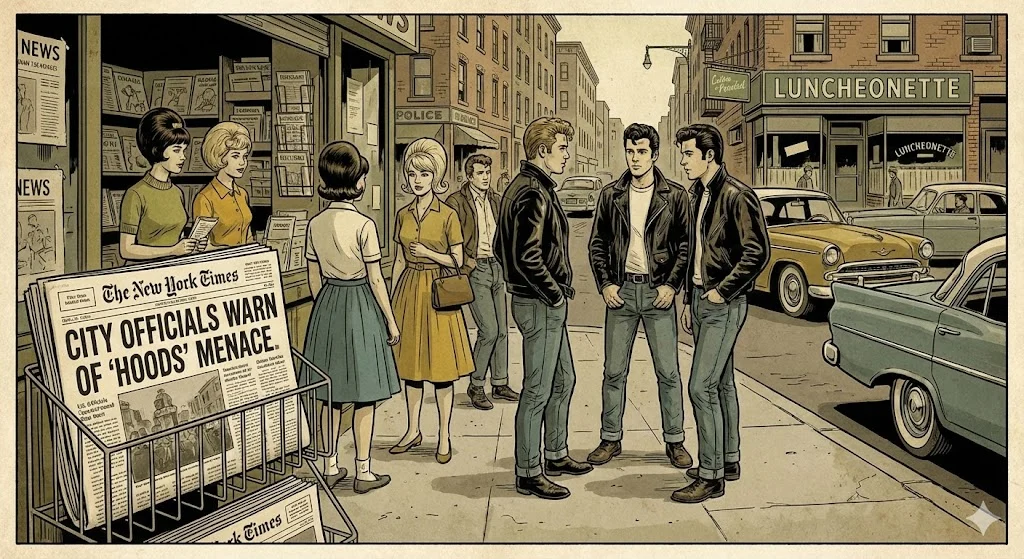

In the 1960s, the word hood most commonly meant a young troublemaker or delinquent, often associated with street crime, rebellion, or gang activity. It was a slang term with a negative or cautionary tone, frequently used by adults, the media, and law enforcement to describe unruly youth.
Language often reflects the fears, values, and social tensions of its time. Few decades shaped modern slang as powerfully as the 1960s, an era marked by social change, youth rebellion, civil rights movements, and cultural upheaval. During this period, the word hood carried a very specific meaning that differs sharply from how it is often used today.
If you have heard the term in old movies, books, or songs and wondered what does hood mean in the 1960s, this guide will give you a clear and historically accurate explanation. We will explore its origins, how it was used in everyday language, the tone it carried, and how its meaning has evolved over time.
What Did Hood Mean in the 1960s?
In the 1960s, hood was slang for a delinquent, criminal, or violent young person, especially someone involved in street gangs or petty crime.
At that time, calling someone a hood implied:
- Aggressive or threatening behavior
- Disrespect for authority
- Criminal or near criminal activity
- Moral disapproval
Rather than being a casual or playful term, hood was often used as a warning label.
The Origin of the Word Hood
To understand its 1960s meaning, it helps to know where the word came from.
Early Roots
The term hood is a shortened form of hoodlum, a word that appeared in American English in the late 1800s. Hoodlum referred to a violent criminal or gang member, particularly in urban areas.
Over time, the shorter version hood became more common in spoken language.
Entry into Popular Slang
By the 1940s and 1950s, hood had already entered mainstream American slang. However, it was during the 1960s that the word became especially widespread due to media coverage of youth crime and social unrest.
Why Hood Was So Common in the 1960s
Several cultural and social factors helped push the word hood into everyday use.
Rising Youth Culture
The 1960s marked the rise of teenage identity as a powerful social force. Adults often viewed rebellious youth as dangerous or uncontrollable, and words like hood reflected those fears.
Media Sensationalism
Newspapers, television, and radio frequently used the term to describe:
- Street gangs
- Protesters portrayed as violent
- Juvenile delinquents
As a result, hood became a convenient shorthand for “troublemaking youth.”
Law and Order Narratives
Politicians and police departments used terms like hood to emphasize crime and justify tougher policing. This reinforced its negative image in the public mind.
How Hood Was Used in Everyday Language
In the 1960s, hood appeared most often in informal speech, headlines, and dialogue. It was rarely used neutrally.
Common Usage Examples
- “Those hoods are causing trouble again.”
- “The neighborhood is full of teenage hoods.”
- “The cops arrested a group of hoods last night.”
In each case, the speaker is expressing concern, fear, or disapproval.
Emotional Tone of Hood in the 1960s
The tone of hood during this era was almost always negative.
Negative or Alarmed Tone
Most commonly, the word suggested danger or criminal intent.
Example:
“These hoods are ruining the city.”
Dismissive or Judgmental Tone
Sometimes, it was used to stereotype or dismiss young people.
Example:
“He is just another hood with no future.”
Unlike modern slang, there was little irony or humor attached to the word at the time.
Hood in 1960s Movies and Television
Popular media played a major role in shaping how people understood the word.
Film Examples
In crime dramas and youth rebellion films, hoods were often portrayed as:
- Leather jacket wearing gang members
- Street fighters
- Symbols of moral decay
Movies such as urban crime dramas used the term to heighten tension and create clear villains.
Television and News
News broadcasts regularly referred to suspects as hoods, especially when covering riots or protests. This usage blurred the line between criminal activity and political dissent.
Hood vs Related Terms in the 1960s
Several similar words were used during the same period. However, each carried slightly different meanings.
Comparison Table
| Term | Meaning in the 1960s | Tone |
|---|---|---|
| Hood | Delinquent or criminal youth | Strongly negative |
| Hoodlum | Violent criminal | Very negative |
| Punk | Disrespectful or troublesome youth | Mild to negative |
| Juvenile delinquent | Legal term for youth crime | Formal |
| Gang member | Organized street criminal | Negative |
Among these, hood was one of the most casual yet harsh labels.
Was Hood Ever Used Positively in the 1960s?
In most cases, no.
During the 1960s, hood did not carry pride or cultural identity. Instead, it functioned as an insult or warning. Any positive or reclaimed meanings developed decades later.
Therefore, hearing hood used warmly or humorously in a modern context would have sounded strange or inappropriate in the 1960s.
Alternate Meanings of Hood in the 1960s
Although slang dominated public attention, hood still had standard dictionary meanings.
Literal Meanings
- A covering for the head
- Part of a car covering the engine
- A garment hood
These meanings existed alongside the slang usage. However, context usually made the intended meaning clear.
Polite or Formal Alternatives Used at the Time
In more professional or formal settings, people avoided the word hood.
Instead, they used phrases like:
- Juvenile offender
- Troubled youth
- Young criminal
- Delinquent minor
These alternatives were considered more appropriate for legal, academic, or journalistic contexts.
How the Meaning of Hood Changed After the 1960s
Although this article focuses on the 1960s, it is important to note that the word did not stay frozen in time.
Later Shifts
In later decades, especially from the 1980s onward, hood became associated with:
- Neighborhood identity
- Urban pride
- Cultural belonging
This newer meaning is very different from its 1960s usage and should not be confused with it.
Common Misunderstandings About Hood in the 1960s
Several misconceptions often appear when people look back at old slang.
- Hood did not mean neighborhood in the 1960s
- Hood was not a term of pride
- Hood was mainly used by outsiders judging youth
- Hood carried moral judgment, not cultural identity
Understanding these points helps avoid anachronistic interpretations.
Frequently Asked Questions
1. What did hood mean in the 1960s?
It meant a delinquent or criminal young person, usually with a negative tone.
2. Was hood considered an insult in the 1960s?
Yes. It was generally insulting or at least strongly judgmental.
3. Did hood refer to gangs in the 1960s?
Often, yes. It was commonly used to describe gang members or suspected gang members.
4. Was hood slang or a formal term?
It was slang and rarely used in formal writing.
5. Did teenagers call themselves hoods?
In most cases, no. The label was applied by adults and authorities.
6. Was hood used in the civil rights era?
Yes, especially in media coverage of protests, sometimes unfairly.
7. Did hood have racial implications?
In some contexts, it was used in racially biased ways, especially in media narratives.
8. Is the meaning of hood today the same as in the 1960s?
No. The meaning has changed significantly over time.
Conclusion
So, what does hood mean in the 1960s? During that era, it was a slang term used to describe a troublesome or criminal youth, often with fear, judgment, or moral disapproval attached.
To recap:
- Hood came from the word hoodlum
- It was strongly negative in tone
- Media and social fear fueled its popularity
- It was not used as a positive identity
- Its meaning has evolved since then
Understanding historical slang like hood offers valuable insight into how language reflects social attitudes. By viewing the word in its original context, we gain a clearer picture of both the language and the era that shaped it.